Argentina's obsession with dark arts finally backfires in World Cup final
Argentina's trademark intensity delivered trophies for five years, but it deserted them when it mattered most. As Spain lifted the World Cup, Lionel Messi was left watching a final that never gave him the chance to shape the game on football's biggest stage.
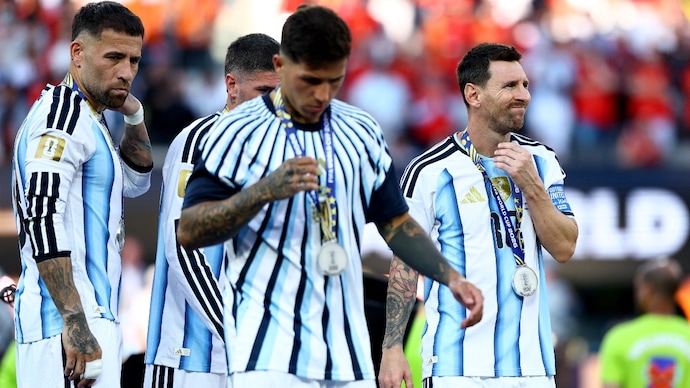
For the better part of five years, Argentina have convinced the football world that emotion can be a tactical weapon.
Lionel Scaloni built a side in the image of Argentine football itself. They celebrated tackles as loudly as goals, embraced confrontation as readily as possession and turned every knockout match into a battle of nerve as much as ability. Opponents rarely faced just their quality on the ball. They faced a team that refused to give an inch. World Cup Final: Highlights
It worked. Argentina won two Copa America titles, lifted the 2022 World Cup and arrived at another final with the chance to become the first nation since Brazil in 1962 to retain football's biggest prize.
Against Spain, however, the edge that had defined this golden generation finally became its undoing.
Lionel Messi has not announced the end of his international career and may yet wear Argentina's colours again. But if this proves to be his final World Cup appearance, there will always be a lingering feeling that he deserved a better stage on which to close this chapter of his remarkable career.
WHEN THE GAME CHANGED
There is nothing inherently wrong with playing aggressively. Every great side knows when to make a tactical foul, slow the tempo or frustrate an opponent. Under Scaloni, Argentina mastered those moments without ever losing sight of the bigger objective. Against Spain, they did.
Spain were not spectacular, but they remained faithful to their identity. Luis de la Fuente's side dominated possession, trusted their passing and believed patience would eventually create an opening. Argentina, by contrast, spent much of the evening disrupting rather than dictating. Shirt pulls became routine, challenges flew in, and every stoppage became another opportunity to break Spain's rhythm.
The result was a statistic that barely seemed believable. Argentina failed to register a single shot during normal time, becoming the first team to do so in a World Cup final. For a side led by Lionel Messi, it was extraordinary.
They spent so much energy stopping Spain from playing that they almost forgot to play themselves. In fact, Argentina committed 25 fouls against Spain — the most by any team in a World Cup match since, guess when? The 2022 final against France, when they gave away 26.
THE COST OF INTENSITY
The physical price of that approach became clear long before Ferran Torres scored the winner in extra time.
Lisandro Martinez was forced off before half-time after another typically committed display. Leandro Paredes, already on a booking, did not return after the interval. Cristian Romero, who had thrown himself into challenge after challenge, was forced off in the second half, while Rodrigo De Paul also departed as Scaloni's plans unravelled.
By extra time, Argentina's coach was no longer making substitutions to change the game. He was making them because circumstances demanded it.
The contrast with Spain could hardly have been greater. De la Fuente introduced Ferran Torres, Nico Williams and Dani Olmo to inject pace and creativity into the contest. Scaloni's changes were increasingly reactive, limiting his ability to alter the tactical picture.
When Torres eventually found the breakthrough in the 106th minute, it felt like the reward for a team still thinking about how to win rather than simply how to survive.
A FINAL WITHOUT MESSI
It would be easy to conclude that age finally caught up with Messi.
The reality was more complicated.
At 39, Messi no longer controls matches through constant dribbles or endless sprints. His influence comes in moments: a perfectly weighted pass, a disguised through ball or a clever movement that unlocks a defence. Those moments, however, require teammates making runs and creating space around him.
Argentina rarely offered either.
Spain crowded the spaces around their captain, comfortable that there was little movement beyond him. Possession was too brief to establish any rhythm, attacks fizzled out before they reached dangerous areas and Messi found himself waiting for opportunities that never arrived.
The defining image of his evening was not a missed chance or a spectacular save. It was of the greatest player of his generation standing in advanced positions, waiting for a game that never reached him.
A CRUEL LESSON
Even the closing moments reflected Argentina's evening. Already carrying a yellow card, Enzo Fernandez lunged into another needless challenge in stoppage time and was shown a second booking. It was an avoidable dismissal that summed up a team whose emotions had finally overtaken its judgement.
None of this changes Messi's legacy. One defeat cannot diminish everything he has achieved for Argentina or erase the joy this team has brought its supporters over the past five years.
But this final will always leave a sense of what might have been. Argentina did not lose because Spain overwhelmed them or because they lacked talent. They lost because they abandoned the balance that had made them champions. The aggression that once complemented their football gradually replaced it, leaving them physically depleted, tactically restricted and unable to mount a meaningful attacking threat.
World Cup finals are usually remembered for moments of genius. This one became a reminder that even the finest teams can lose themselves when emotion overtakes execution.
For five years, Argentina lived on the edge and almost always found a way to come out on top. On the biggest stage of all, that same edge finally consumed them, leaving Messi with a World Cup final that, if it proves to be his last, simply did not do justice to the greatest player of his generation.
FIFA World Cup | FIFA World Cup Schedule | FIFA World Cup Points Table | Football News
For the better part of five years, Argentina have convinced the football world that emotion can be a tactical weapon.
Lionel Scaloni built a side in the image of Argentine football itself. They celebrated tackles as loudly as goals, embraced confrontation as readily as possession and turned every knockout match into a battle of nerve as much as ability. Opponents rarely faced just their quality on the ball. They faced a team that refused to give an inch. World Cup Final: Highlights
It worked. Argentina won two Copa America titles, lifted the 2022 World Cup and arrived at another final with the chance to become the first nation since Brazil in 1962 to retain football's biggest prize.
Against Spain, however, the edge that had defined this golden generation finally became its undoing.
Lionel Messi has not announced the end of his international career and may yet wear Argentina's colours again. But if this proves to be his final World Cup appearance, there will always be a lingering feeling that he deserved a better stage on which to close this chapter of his remarkable career.
WHEN THE GAME CHANGED
There is nothing inherently wrong with playing aggressively. Every great side knows when to make a tactical foul, slow the tempo or frustrate an opponent. Under Scaloni, Argentina mastered those moments without ever losing sight of the bigger objective. Against Spain, they did.
Spain were not spectacular, but they remained faithful to their identity. Luis de la Fuente's side dominated possession, trusted their passing and believed patience would eventually create an opening. Argentina, by contrast, spent much of the evening disrupting rather than dictating. Shirt pulls became routine, challenges flew in, and every stoppage became another opportunity to break Spain's rhythm.
The result was a statistic that barely seemed believable. Argentina failed to register a single shot during normal time, becoming the first team to do so in a World Cup final. For a side led by Lionel Messi, it was extraordinary.
They spent so much energy stopping Spain from playing that they almost forgot to play themselves. In fact, Argentina committed 25 fouls against Spain — the most by any team in a World Cup match since, guess when? The 2022 final against France, when they gave away 26.
THE COST OF INTENSITY
The physical price of that approach became clear long before Ferran Torres scored the winner in extra time.
Lisandro Martinez was forced off before half-time after another typically committed display. Leandro Paredes, already on a booking, did not return after the interval. Cristian Romero, who had thrown himself into challenge after challenge, was forced off in the second half, while Rodrigo De Paul also departed as Scaloni's plans unravelled.
By extra time, Argentina's coach was no longer making substitutions to change the game. He was making them because circumstances demanded it.
The contrast with Spain could hardly have been greater. De la Fuente introduced Ferran Torres, Nico Williams and Dani Olmo to inject pace and creativity into the contest. Scaloni's changes were increasingly reactive, limiting his ability to alter the tactical picture.
When Torres eventually found the breakthrough in the 106th minute, it felt like the reward for a team still thinking about how to win rather than simply how to survive.
A FINAL WITHOUT MESSI
It would be easy to conclude that age finally caught up with Messi.
The reality was more complicated.
At 39, Messi no longer controls matches through constant dribbles or endless sprints. His influence comes in moments: a perfectly weighted pass, a disguised through ball or a clever movement that unlocks a defence. Those moments, however, require teammates making runs and creating space around him.
Argentina rarely offered either.
Spain crowded the spaces around their captain, comfortable that there was little movement beyond him. Possession was too brief to establish any rhythm, attacks fizzled out before they reached dangerous areas and Messi found himself waiting for opportunities that never arrived.
The defining image of his evening was not a missed chance or a spectacular save. It was of the greatest player of his generation standing in advanced positions, waiting for a game that never reached him.
A CRUEL LESSON
Even the closing moments reflected Argentina's evening. Already carrying a yellow card, Enzo Fernandez lunged into another needless challenge in stoppage time and was shown a second booking. It was an avoidable dismissal that summed up a team whose emotions had finally overtaken its judgement.
None of this changes Messi's legacy. One defeat cannot diminish everything he has achieved for Argentina or erase the joy this team has brought its supporters over the past five years.
But this final will always leave a sense of what might have been. Argentina did not lose because Spain overwhelmed them or because they lacked talent. They lost because they abandoned the balance that had made them champions. The aggression that once complemented their football gradually replaced it, leaving them physically depleted, tactically restricted and unable to mount a meaningful attacking threat.
World Cup finals are usually remembered for moments of genius. This one became a reminder that even the finest teams can lose themselves when emotion overtakes execution.
For five years, Argentina lived on the edge and almost always found a way to come out on top. On the biggest stage of all, that same edge finally consumed them, leaving Messi with a World Cup final that, if it proves to be his last, simply did not do justice to the greatest player of his generation.
FIFA World Cup | FIFA World Cup Schedule | FIFA World Cup Points Table | Football News
For the better part of five years, Argentina have convinced the football world that emotion can be a tactical weapon.
Lionel Scaloni built a side in the image of Argentine football itself. They celebrated tackles as loudly as goals, embraced confrontation as readily as possession and turned every knockout match into a battle of nerve as much as ability. Opponents rarely faced just their quality on the ball. They faced a team that refused to give an inch. World Cup Final: Highlights
It worked. Argentina won two Copa America titles, lifted the 2022 World Cup and arrived at another final with the chance to become the first nation since Brazil in 1962 to retain football's biggest prize.
Against Spain, however, the edge that had defined this golden generation finally became its undoing.
Lionel Messi has not announced the end of his international career and may yet wear Argentina's colours again. But if this proves to be his final World Cup appearance, there will always be a lingering feeling that he deserved a better stage on which to close this chapter of his remarkable career.
WHEN THE GAME CHANGED
There is nothing inherently wrong with playing aggressively. Every great side knows when to make a tactical foul, slow the tempo or frustrate an opponent. Under Scaloni, Argentina mastered those moments without ever losing sight of the bigger objective. Against Spain, they did.
Spain were not spectacular, but they remained faithful to their identity. Luis de la Fuente's side dominated possession, trusted their passing and believed patience would eventually create an opening. Argentina, by contrast, spent much of the evening disrupting rather than dictating. Shirt pulls became routine, challenges flew in, and every stoppage became another opportunity to break Spain's rhythm.
The result was a statistic that barely seemed believable. Argentina failed to register a single shot during normal time, becoming the first team to do so in a World Cup final. For a side led by Lionel Messi, it was extraordinary.
They spent so much energy stopping Spain from playing that they almost forgot to play themselves. In fact, Argentina committed 25 fouls against Spain — the most by any team in a World Cup match since, guess when? The 2022 final against France, when they gave away 26.
THE COST OF INTENSITY
The physical price of that approach became clear long before Ferran Torres scored the winner in extra time.
Lisandro Martinez was forced off before half-time after another typically committed display. Leandro Paredes, already on a booking, did not return after the interval. Cristian Romero, who had thrown himself into challenge after challenge, was forced off in the second half, while Rodrigo De Paul also departed as Scaloni's plans unravelled.
By extra time, Argentina's coach was no longer making substitutions to change the game. He was making them because circumstances demanded it.
The contrast with Spain could hardly have been greater. De la Fuente introduced Ferran Torres, Nico Williams and Dani Olmo to inject pace and creativity into the contest. Scaloni's changes were increasingly reactive, limiting his ability to alter the tactical picture.
When Torres eventually found the breakthrough in the 106th minute, it felt like the reward for a team still thinking about how to win rather than simply how to survive.
A FINAL WITHOUT MESSI
It would be easy to conclude that age finally caught up with Messi.
The reality was more complicated.
At 39, Messi no longer controls matches through constant dribbles or endless sprints. His influence comes in moments: a perfectly weighted pass, a disguised through ball or a clever movement that unlocks a defence. Those moments, however, require teammates making runs and creating space around him.
Argentina rarely offered either.
Spain crowded the spaces around their captain, comfortable that there was little movement beyond him. Possession was too brief to establish any rhythm, attacks fizzled out before they reached dangerous areas and Messi found himself waiting for opportunities that never arrived.
The defining image of his evening was not a missed chance or a spectacular save. It was of the greatest player of his generation standing in advanced positions, waiting for a game that never reached him.
A CRUEL LESSON
Even the closing moments reflected Argentina's evening. Already carrying a yellow card, Enzo Fernandez lunged into another needless challenge in stoppage time and was shown a second booking. It was an avoidable dismissal that summed up a team whose emotions had finally overtaken its judgement.
None of this changes Messi's legacy. One defeat cannot diminish everything he has achieved for Argentina or erase the joy this team has brought its supporters over the past five years.
But this final will always leave a sense of what might have been. Argentina did not lose because Spain overwhelmed them or because they lacked talent. They lost because they abandoned the balance that had made them champions. The aggression that once complemented their football gradually replaced it, leaving them physically depleted, tactically restricted and unable to mount a meaningful attacking threat.
World Cup finals are usually remembered for moments of genius. This one became a reminder that even the finest teams can lose themselves when emotion overtakes execution.
For five years, Argentina lived on the edge and almost always found a way to come out on top. On the biggest stage of all, that same edge finally consumed them, leaving Messi with a World Cup final that, if it proves to be his last, simply did not do justice to the greatest player of his generation.
FIFA World Cup | FIFA World Cup Schedule | FIFA World Cup Points Table | Football News

