What doomsday? AI superintelligence is coming and Mark Zuckerberg wants everyone to have it
Mark Zuckerberg wants you to have AI superintelligence. The Meta CEO has claimed that superintelligence can do a lot of good for humanity, hitting back at doom narratives over AI's future.
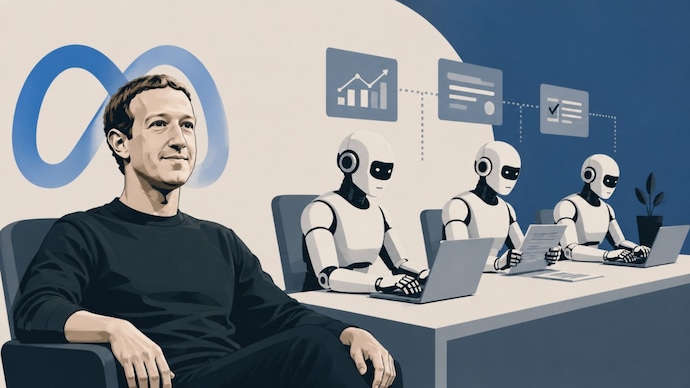
As AI tools become more advanced, they can do a lot more – from answering queries to now writing code or completing tasks. Now, the AI industry wants to reach superintelligence, where AI can start to think like a human. Mark Zuckerberg wants this superintelligence to be made available for everyone, and not just to a few. At the same time, Zuckerberg hit back against doom narratives over the negative impact AI superintelligence may have on humanity.
The Meta CEO claimed that reaching superintelligence was no longer a question, rather it was important to understand who will actually get access to it. "The defining question of our age isn’t whether superintelligence will exist, but who will have access to it,” Mark Zuckerberg wrote for the Wall Street Journal. Will it be centralised and restricted to a few institutions, or will it be a tool that empowers everyone?"
Zuckerberg’s comments come at a time when advanced AI models like Anthropic’s Claude Mythos were originally released to a limited group of companies due to how powerful they are.
Mark Zuckerberg insists that AI should be distributed widely rather than controlled by a small number of institutions, and used to expand what people can create, build and learn. The Meta CEO’s approach rests on "individual empowerment as the source of prosperity, invention as the primary purpose of superintelligence, and balance of power as the foundation of safety.”
Mark Zuckerberg hits back at doom narratives
The Meta chief took a jibe at other AI companies that have often talked about how powerful AI models may wipe out large numbers of jobs and that the safest response is to keep such systems under tight control.
Mark Zuckerberg found it amusing to see the same AI companies that are working on powerful AI models talk about such negative possibilities. “It is surprising that the discourse from many of those who are developing artificial intelligence is so filled with doom,” he wrote. “I don’t understand why anyone who believes that AI will eliminate most jobs and much of humanity’s relevance would rush to build that future.”
Instead, Mark Zuckerberg wants you to see AI as any other technology that humanity has created in the past. And the Meta chief believes that superintelligence will allow humans to reach new heights, even on an individual level. He said, “Invention, not automation, will be the greatest contribution of superintelligence.”
So much so that Zuckerberg sees a future where AI will create more jobs, and people will be able to do a lot more when they have access to superintelligence. “If superintelligence is widely distributed, then I believe we will see more jobs in the future, not fewer. It will be significantly easier to start businesses without raising large amounts of capital,” he added. “I expect the economy will become more entrepreneurial with a greater number of people working at small businesses rather than larger companies.”
Superintelligence should not be controlled by few, says Zuckerberg
But to make Zuckerberg’s vision a reality, everyone will need access to superintelligence. Mark Zuckerberg says that proper distribution will serve as a means of “checks and balances,” reducing the influence of a select few. He explained, “If only a handful of institutions have superintelligence, they will inevitably exercise a controlling influence over economics, science and politics. Even with the best intentions, that concentration would limit people’s ability to choose their own future.”
To make his point clear, the Meta chief cited a thought experiment of a superintelligent lawyer. “Imagine only one person had a superintelligent lawyer. He would have an unfair advantage in court—even if his position was wrong on the merits. That would lead to a worse society,” Mark Zuckerberg said. “But now imagine everyone has a superintelligent lawyer. Justice would be carried out much more fairly and efficiently than it is today.”
Mark Zuckerberg’s comments also addressed concerns over the potential misuse of powerful AI models. He reckoned that over the course of time, people will work together to ensure proper safety. For instance, the Meta chief cited the example of open-source software for cybersecurity. Zuckerberg explained, “The history of open-source software has shown that giving everyone full access to powerful systems will be the best way to protect safety and security over time.”
On the other hand, the Meta CEO accepted that there was a need for coordination in other areas. “For other risks, including biological risks, more coordination between governments and other institutions on responsibly deploying capable models will be helpful,” he said.
Do note that Mark Zuckerberg’s remarks over the potential abundance humans may have with AI are similar to tech trillionaire Elon Musk’s views. Musk has repeatedly claimed that AI may bring abundance for all. Though in the Tesla CEO’s future, humans will no longer work with robots taking all the jobs.
On the other hand, AI leaders like Anthropic CEO Dario Amodei and OpenAI’s Sam Altman have expressed concerns over the impact of AI on jobs, white-collar roles in particular. Amodei recently also shared a blog post over the potential misuse of AI models for cyberattacks or surveillance by authoritarian governments.
As AI tools become more advanced, they can do a lot more – from answering queries to now writing code or completing tasks. Now, the AI industry wants to reach superintelligence, where AI can start to think like a human. Mark Zuckerberg wants this superintelligence to be made available for everyone, and not just to a few. At the same time, Zuckerberg hit back against doom narratives over the negative impact AI superintelligence may have on humanity.
The Meta CEO claimed that reaching superintelligence was no longer a question, rather it was important to understand who will actually get access to it. "The defining question of our age isn’t whether superintelligence will exist, but who will have access to it,” Mark Zuckerberg wrote for the Wall Street Journal. Will it be centralised and restricted to a few institutions, or will it be a tool that empowers everyone?"
Zuckerberg’s comments come at a time when advanced AI models like Anthropic’s Claude Mythos were originally released to a limited group of companies due to how powerful they are.
Mark Zuckerberg insists that AI should be distributed widely rather than controlled by a small number of institutions, and used to expand what people can create, build and learn. The Meta CEO’s approach rests on "individual empowerment as the source of prosperity, invention as the primary purpose of superintelligence, and balance of power as the foundation of safety.”
Mark Zuckerberg hits back at doom narratives
The Meta chief took a jibe at other AI companies that have often talked about how powerful AI models may wipe out large numbers of jobs and that the safest response is to keep such systems under tight control.
Mark Zuckerberg found it amusing to see the same AI companies that are working on powerful AI models talk about such negative possibilities. “It is surprising that the discourse from many of those who are developing artificial intelligence is so filled with doom,” he wrote. “I don’t understand why anyone who believes that AI will eliminate most jobs and much of humanity’s relevance would rush to build that future.”
Instead, Mark Zuckerberg wants you to see AI as any other technology that humanity has created in the past. And the Meta chief believes that superintelligence will allow humans to reach new heights, even on an individual level. He said, “Invention, not automation, will be the greatest contribution of superintelligence.”
So much so that Zuckerberg sees a future where AI will create more jobs, and people will be able to do a lot more when they have access to superintelligence. “If superintelligence is widely distributed, then I believe we will see more jobs in the future, not fewer. It will be significantly easier to start businesses without raising large amounts of capital,” he added. “I expect the economy will become more entrepreneurial with a greater number of people working at small businesses rather than larger companies.”
Superintelligence should not be controlled by few, says Zuckerberg
But to make Zuckerberg’s vision a reality, everyone will need access to superintelligence. Mark Zuckerberg says that proper distribution will serve as a means of “checks and balances,” reducing the influence of a select few. He explained, “If only a handful of institutions have superintelligence, they will inevitably exercise a controlling influence over economics, science and politics. Even with the best intentions, that concentration would limit people’s ability to choose their own future.”
To make his point clear, the Meta chief cited a thought experiment of a superintelligent lawyer. “Imagine only one person had a superintelligent lawyer. He would have an unfair advantage in court—even if his position was wrong on the merits. That would lead to a worse society,” Mark Zuckerberg said. “But now imagine everyone has a superintelligent lawyer. Justice would be carried out much more fairly and efficiently than it is today.”
Mark Zuckerberg’s comments also addressed concerns over the potential misuse of powerful AI models. He reckoned that over the course of time, people will work together to ensure proper safety. For instance, the Meta chief cited the example of open-source software for cybersecurity. Zuckerberg explained, “The history of open-source software has shown that giving everyone full access to powerful systems will be the best way to protect safety and security over time.”
On the other hand, the Meta CEO accepted that there was a need for coordination in other areas. “For other risks, including biological risks, more coordination between governments and other institutions on responsibly deploying capable models will be helpful,” he said.
Do note that Mark Zuckerberg’s remarks over the potential abundance humans may have with AI are similar to tech trillionaire Elon Musk’s views. Musk has repeatedly claimed that AI may bring abundance for all. Though in the Tesla CEO’s future, humans will no longer work with robots taking all the jobs.
On the other hand, AI leaders like Anthropic CEO Dario Amodei and OpenAI’s Sam Altman have expressed concerns over the impact of AI on jobs, white-collar roles in particular. Amodei recently also shared a blog post over the potential misuse of AI models for cyberattacks or surveillance by authoritarian governments.
As AI tools become more advanced, they can do a lot more – from answering queries to now writing code or completing tasks. Now, the AI industry wants to reach superintelligence, where AI can start to think like a human. Mark Zuckerberg wants this superintelligence to be made available for everyone, and not just to a few. At the same time, Zuckerberg hit back against doom narratives over the negative impact AI superintelligence may have on humanity.
The Meta CEO claimed that reaching superintelligence was no longer a question, rather it was important to understand who will actually get access to it. "The defining question of our age isn’t whether superintelligence will exist, but who will have access to it,” Mark Zuckerberg wrote for the Wall Street Journal. Will it be centralised and restricted to a few institutions, or will it be a tool that empowers everyone?"
Zuckerberg’s comments come at a time when advanced AI models like Anthropic’s Claude Mythos were originally released to a limited group of companies due to how powerful they are.
Mark Zuckerberg insists that AI should be distributed widely rather than controlled by a small number of institutions, and used to expand what people can create, build and learn. The Meta CEO’s approach rests on "individual empowerment as the source of prosperity, invention as the primary purpose of superintelligence, and balance of power as the foundation of safety.”
Mark Zuckerberg hits back at doom narratives
The Meta chief took a jibe at other AI companies that have often talked about how powerful AI models may wipe out large numbers of jobs and that the safest response is to keep such systems under tight control.
Mark Zuckerberg found it amusing to see the same AI companies that are working on powerful AI models talk about such negative possibilities. “It is surprising that the discourse from many of those who are developing artificial intelligence is so filled with doom,” he wrote. “I don’t understand why anyone who believes that AI will eliminate most jobs and much of humanity’s relevance would rush to build that future.”
Instead, Mark Zuckerberg wants you to see AI as any other technology that humanity has created in the past. And the Meta chief believes that superintelligence will allow humans to reach new heights, even on an individual level. He said, “Invention, not automation, will be the greatest contribution of superintelligence.”
So much so that Zuckerberg sees a future where AI will create more jobs, and people will be able to do a lot more when they have access to superintelligence. “If superintelligence is widely distributed, then I believe we will see more jobs in the future, not fewer. It will be significantly easier to start businesses without raising large amounts of capital,” he added. “I expect the economy will become more entrepreneurial with a greater number of people working at small businesses rather than larger companies.”
Superintelligence should not be controlled by few, says Zuckerberg
But to make Zuckerberg’s vision a reality, everyone will need access to superintelligence. Mark Zuckerberg says that proper distribution will serve as a means of “checks and balances,” reducing the influence of a select few. He explained, “If only a handful of institutions have superintelligence, they will inevitably exercise a controlling influence over economics, science and politics. Even with the best intentions, that concentration would limit people’s ability to choose their own future.”
To make his point clear, the Meta chief cited a thought experiment of a superintelligent lawyer. “Imagine only one person had a superintelligent lawyer. He would have an unfair advantage in court—even if his position was wrong on the merits. That would lead to a worse society,” Mark Zuckerberg said. “But now imagine everyone has a superintelligent lawyer. Justice would be carried out much more fairly and efficiently than it is today.”
Mark Zuckerberg’s comments also addressed concerns over the potential misuse of powerful AI models. He reckoned that over the course of time, people will work together to ensure proper safety. For instance, the Meta chief cited the example of open-source software for cybersecurity. Zuckerberg explained, “The history of open-source software has shown that giving everyone full access to powerful systems will be the best way to protect safety and security over time.”
On the other hand, the Meta CEO accepted that there was a need for coordination in other areas. “For other risks, including biological risks, more coordination between governments and other institutions on responsibly deploying capable models will be helpful,” he said.
Do note that Mark Zuckerberg’s remarks over the potential abundance humans may have with AI are similar to tech trillionaire Elon Musk’s views. Musk has repeatedly claimed that AI may bring abundance for all. Though in the Tesla CEO’s future, humans will no longer work with robots taking all the jobs.
On the other hand, AI leaders like Anthropic CEO Dario Amodei and OpenAI’s Sam Altman have expressed concerns over the impact of AI on jobs, white-collar roles in particular. Amodei recently also shared a blog post over the potential misuse of AI models for cyberattacks or surveillance by authoritarian governments.

