Why IBM says it faltered this quarter, read CEO Arvind Krishna's full letter here
IBM's stock just had the biggest single-day plunge since 1987, with CEO Arvind Krishna accepting that the company had "faltered" this quarter. But what happened? Here is Krishna's full letter to investors.
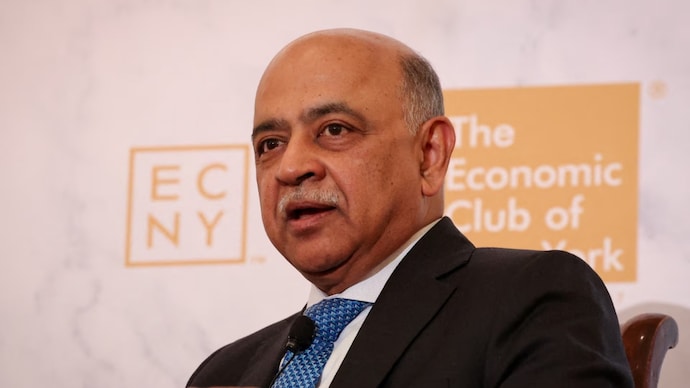
American giant IBM’s shares took the biggest hit in nearly 40 years on Tuesday. IBM CEO Arvind Krishna told investors that the company had “faltered” this quarter, as it struggled to complete certain deals. Krishna’s comments come at a time when the rise of AI tools has raised fears over the future of software products.
IBM’s shares plunged by 23 per cent on Tuesday, making it the biggest single-day drop in the company’s history since the 1987 "Black Monday" crash. The company also fell short of matching Wall Street expectations for revenue. IBM states that its revenue was expected at $17.2 billion, up 1 per cent year-on-year but below analyst estimates of $17.86 billion.
Why did IBM falter?
In his letter to investors, IBM CEO Arvind Krishna accepted that the company had “faltered.” He acknowledged that it had failed to adapt to changing conditions and the company also missed out on completing some large deals. “These conditions require our teams to execute perfectly, and this quarter we faltered. We did not adapt and move quickly enough, and numerous large deals failed to close on the timelines we expected, driving the majority of our shortfall,” Krishna said.
The IBM chief insisted that the company was not making excuses. He added, "These are not excuses, but they are realities."
Krishna added that clients were distracted by “rapidly-evolving, industry-wide cybersecurity concerns” during the quarter. Cybersecurity has become a major concern for businesses globally following the release of Anthropic’s Mythos model, which can find major vulnerabilities across different systems.
At a time when the memory crisis is impacting several sectors, Arvind Krishna explained that many of IBM’s customers had shifted capital expenditure to procuring memory and other infrastructure amid fears of future price hikes. He explained, “In the last few weeks of June, we saw clients shift their quarterly capex spend toward servers, storage, and memory purchases to secure supply-constrained infrastructure ahead of expected price increases.”
He added that IBM had expected some supply-chain-related disruption, but “did not anticipate the magnitude of the capex reprioritisation.”
Krishna also used the letter to underline IBM’s investment plans in AI and quantum computing. He said IBM and Red Hat had moved quickly after the introduction of Mythos to launch Lightwell, a $5 billion initiative backed by more than 20,000 engineers and aimed at addressing vulnerabilities in open-source software.
On quantum computing, Krishna said IBM and the US Department of Commerce had announced a letter of intent to build Anderon, which he described as the world’s first pure-play quantum wafer foundry.
You can read the full letter from Arvind Krishna below:
“I want to spend some time explaining what we experienced in the quarter that led to the Software and Infrastructure performance shortfall you see above.
When we discussed our expectations with you in April, we noted that we would be wrapping on the launch of z17 in the second quarter. Given this was the strongest start to a mainframe programme in our history, we expected Infrastructure revenue to decline low-single digits for the year, beginning this quarter. What played out was worse than our expectations, driven by a shortfall in our Z performance and the associated software stack, primarily in Transaction Processing. In the last few weeks of June, we saw clients shift their quarterly capex spend toward servers, storage, and memory purchases to secure supply-constrained infrastructure ahead of expected price increases. This dynamic impacted client buying patterns. While we anticipated some supply-chain related impact in our expectations, we did not anticipate the magnitude of the capex reprioritisation. In addition, clients were distracted with rapidly-evolving, industry-wide cybersecurity concerns in the quarter.
These conditions require our teams to execute perfectly, and this quarter we faltered. We did not adapt and move quickly enough, and numerous large deals failed to close on the timelines we expected, driving the majority of our shortfall.
These are not excuses, but they are realities. Our job is to help our clients through uncertainty, to find paths forward to grow their businesses no matter what is happening in the external environment.
While our second-quarter results are disappointing, our performance in many areas showed strength, reinforcing the conviction we have in our portfolio and strategy.
Within Software, Red Hat revenue growth accelerated sequentially to 11 per cent.
Recent acquisitions including both HashiCorp and Confluent delivered strong performance.
With clients prioritising infrastructure investments, Distributed Infrastructure had its best performance in reported history, up 37 per cent with strong growth in Power and Storage, and a backlog of approximately $500 million exiting the quarter.
Despite challenges this quarter, z17 remains at nearly 130 per cent programme-to-programme, well ahead of z16 which was our strongest programme on record, with clients representing 85 per cent of installed MIPs maintaining or growing capacity.
Continued growth in Consulting signings led by strong GenAI contribution.
Productivity initiatives contributed to continued operating non-GAAP PTI margin expansion in the quarter.
Importantly, we continue to innovate at speed and scale. After the introduction of Mythos, our teams across IBM and Red Hat quickly mobilised to take advantage of an unprecedented opportunity, launching Lightwell. Lightwell is a $5 billion commitment backed by new frontier AI capabilities and a global force of more than 20,000 engineers creating a trusted enterprise clearinghouse to address open source software vulnerabilities. Early adopters include organisations like Bank of America, BNY, Citi, Goldman Sachs, JPMorganChase, Mastercard, Morgan Stanley, Royal Bank of Canada, State Street, Visa, Wells Fargo and more. General availability of Lightwell was announced on 8 July.
Finally, quantum computing is no longer decades away, it is upon us, and we are investing aggressively. Recently, with the US Department of Commerce, we announced a letter of intent to build Anderon, the world’s first pure-play quantum wafer foundry supported by $1 billion in CHIPS incentives provided by the department and a $1 billion cash contribution by IBM. Shortly after that, we disclosed plans to invest more than $10 billion in quantum over the next five years, spanning R&D, capex, manufacturing scaling, M&A and ecosystem expansion. We remain on track to deliver the first large-scale fault-tolerant quantum computer by 2029.
While performance in the quarter was below our expectations, we have conviction in the strength of our portfolio and the strategic transformation of our business. To remedy challenges this quarter, we are undertaking new initiatives and accelerating others, all to improve our results going forward. We will hold our regularly scheduled conference call with you all on 22 July 2026, at 5 PM ET to go into deeper detail and discuss our full-year expectations.
Arvind Krishna, Chairman, President and Chief Executive Officer, IBM”
American giant IBM’s shares took the biggest hit in nearly 40 years on Tuesday. IBM CEO Arvind Krishna told investors that the company had “faltered” this quarter, as it struggled to complete certain deals. Krishna’s comments come at a time when the rise of AI tools has raised fears over the future of software products.
IBM’s shares plunged by 23 per cent on Tuesday, making it the biggest single-day drop in the company’s history since the 1987 "Black Monday" crash. The company also fell short of matching Wall Street expectations for revenue. IBM states that its revenue was expected at $17.2 billion, up 1 per cent year-on-year but below analyst estimates of $17.86 billion.
Why did IBM falter?
In his letter to investors, IBM CEO Arvind Krishna accepted that the company had “faltered.” He acknowledged that it had failed to adapt to changing conditions and the company also missed out on completing some large deals. “These conditions require our teams to execute perfectly, and this quarter we faltered. We did not adapt and move quickly enough, and numerous large deals failed to close on the timelines we expected, driving the majority of our shortfall,” Krishna said.
The IBM chief insisted that the company was not making excuses. He added, "These are not excuses, but they are realities."
Krishna added that clients were distracted by “rapidly-evolving, industry-wide cybersecurity concerns” during the quarter. Cybersecurity has become a major concern for businesses globally following the release of Anthropic’s Mythos model, which can find major vulnerabilities across different systems.
At a time when the memory crisis is impacting several sectors, Arvind Krishna explained that many of IBM’s customers had shifted capital expenditure to procuring memory and other infrastructure amid fears of future price hikes. He explained, “In the last few weeks of June, we saw clients shift their quarterly capex spend toward servers, storage, and memory purchases to secure supply-constrained infrastructure ahead of expected price increases.”
He added that IBM had expected some supply-chain-related disruption, but “did not anticipate the magnitude of the capex reprioritisation.”
Krishna also used the letter to underline IBM’s investment plans in AI and quantum computing. He said IBM and Red Hat had moved quickly after the introduction of Mythos to launch Lightwell, a $5 billion initiative backed by more than 20,000 engineers and aimed at addressing vulnerabilities in open-source software.
On quantum computing, Krishna said IBM and the US Department of Commerce had announced a letter of intent to build Anderon, which he described as the world’s first pure-play quantum wafer foundry.
You can read the full letter from Arvind Krishna below:
“I want to spend some time explaining what we experienced in the quarter that led to the Software and Infrastructure performance shortfall you see above.
When we discussed our expectations with you in April, we noted that we would be wrapping on the launch of z17 in the second quarter. Given this was the strongest start to a mainframe programme in our history, we expected Infrastructure revenue to decline low-single digits for the year, beginning this quarter. What played out was worse than our expectations, driven by a shortfall in our Z performance and the associated software stack, primarily in Transaction Processing. In the last few weeks of June, we saw clients shift their quarterly capex spend toward servers, storage, and memory purchases to secure supply-constrained infrastructure ahead of expected price increases. This dynamic impacted client buying patterns. While we anticipated some supply-chain related impact in our expectations, we did not anticipate the magnitude of the capex reprioritisation. In addition, clients were distracted with rapidly-evolving, industry-wide cybersecurity concerns in the quarter.
These conditions require our teams to execute perfectly, and this quarter we faltered. We did not adapt and move quickly enough, and numerous large deals failed to close on the timelines we expected, driving the majority of our shortfall.
These are not excuses, but they are realities. Our job is to help our clients through uncertainty, to find paths forward to grow their businesses no matter what is happening in the external environment.
While our second-quarter results are disappointing, our performance in many areas showed strength, reinforcing the conviction we have in our portfolio and strategy.
Within Software, Red Hat revenue growth accelerated sequentially to 11 per cent.
Recent acquisitions including both HashiCorp and Confluent delivered strong performance.
With clients prioritising infrastructure investments, Distributed Infrastructure had its best performance in reported history, up 37 per cent with strong growth in Power and Storage, and a backlog of approximately $500 million exiting the quarter.
Despite challenges this quarter, z17 remains at nearly 130 per cent programme-to-programme, well ahead of z16 which was our strongest programme on record, with clients representing 85 per cent of installed MIPs maintaining or growing capacity.
Continued growth in Consulting signings led by strong GenAI contribution.
Productivity initiatives contributed to continued operating non-GAAP PTI margin expansion in the quarter.
Importantly, we continue to innovate at speed and scale. After the introduction of Mythos, our teams across IBM and Red Hat quickly mobilised to take advantage of an unprecedented opportunity, launching Lightwell. Lightwell is a $5 billion commitment backed by new frontier AI capabilities and a global force of more than 20,000 engineers creating a trusted enterprise clearinghouse to address open source software vulnerabilities. Early adopters include organisations like Bank of America, BNY, Citi, Goldman Sachs, JPMorganChase, Mastercard, Morgan Stanley, Royal Bank of Canada, State Street, Visa, Wells Fargo and more. General availability of Lightwell was announced on 8 July.
Finally, quantum computing is no longer decades away, it is upon us, and we are investing aggressively. Recently, with the US Department of Commerce, we announced a letter of intent to build Anderon, the world’s first pure-play quantum wafer foundry supported by $1 billion in CHIPS incentives provided by the department and a $1 billion cash contribution by IBM. Shortly after that, we disclosed plans to invest more than $10 billion in quantum over the next five years, spanning R&D, capex, manufacturing scaling, M&A and ecosystem expansion. We remain on track to deliver the first large-scale fault-tolerant quantum computer by 2029.
While performance in the quarter was below our expectations, we have conviction in the strength of our portfolio and the strategic transformation of our business. To remedy challenges this quarter, we are undertaking new initiatives and accelerating others, all to improve our results going forward. We will hold our regularly scheduled conference call with you all on 22 July 2026, at 5 PM ET to go into deeper detail and discuss our full-year expectations.
Arvind Krishna, Chairman, President and Chief Executive Officer, IBM”

