Bhopal futuristic 'Algae Tree' goes viral. Internet is impressed
Bhopal has installed a new technology called 'algae tree' at Swami Vivekananda Park under the Smart City initiative. The microalgae-based unit will be used to tackle pollution and heat.
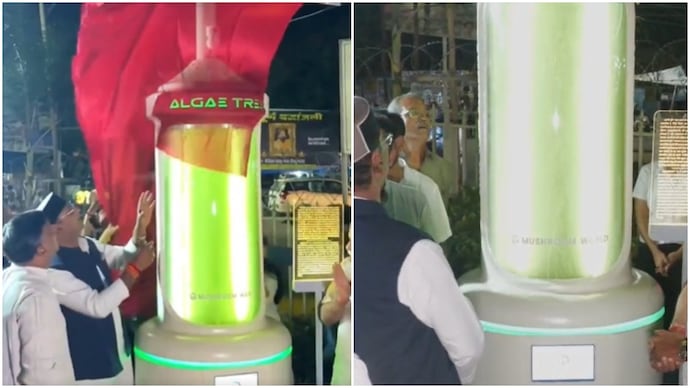
Bhopal has become the first city in India to install an “Algae Tree”, a futuristic carbon-capturing structure that claims to absorb as much carbon dioxide as 25 full-grown trees while releasing oxygen back into the atmosphere.
The technology has been installed at Swami Vivekananda Park under the city’s Smart City initiative and is already drawing widespread attention online. As videos and photos of the installation spread across social media, many users have praised the project as a creative response to worsening pollution, urban heat and climate concerns.
Developed by Mushroom World Group, the “Algae Tree” works using a microalgae-based system designed to absorb carbon dioxide from surrounding air and convert it into oxygen. According to the company, the project took nearly two years to develop and involved more than 50 researchers, engineers and specialists.
What makes the structure stand out is its compact efficiency. The company claims a single unit can absorb nearly 1.5 tonnes of carbon dioxide every year, roughly equivalent to the carbon absorption capacity of around 25 mature trees. Solar panels have also been installed on top of the structure, allowing it to partially operate using renewable energy.
Videos of the installation have flooded social media platforms where people praised the initiative and termed it as futuristic.
The installation comes at a time when Indian cities are grappling with rising temperatures, worsening air quality and shrinking green cover. Supporters of the project believe such technology could eventually help reduce local carbon levels in crowded urban areas where planting large numbers of trees is difficult.
Experts say the idea may not replace traditional green spaces, but it could act as an additional tool for improving air quality in dense cities.
For now, the Bhopal installation has become both a technological curiosity and a social media talking point, with many calling it a glimpse into how future Indian cities may attempt to fight pollution using a blend of nature and technology.
(With inputs from Dharmendra Sahu)
Bhopal has become the first city in India to install an “Algae Tree”, a futuristic carbon-capturing structure that claims to absorb as much carbon dioxide as 25 full-grown trees while releasing oxygen back into the atmosphere.
The technology has been installed at Swami Vivekananda Park under the city’s Smart City initiative and is already drawing widespread attention online. As videos and photos of the installation spread across social media, many users have praised the project as a creative response to worsening pollution, urban heat and climate concerns.
Developed by Mushroom World Group, the “Algae Tree” works using a microalgae-based system designed to absorb carbon dioxide from surrounding air and convert it into oxygen. According to the company, the project took nearly two years to develop and involved more than 50 researchers, engineers and specialists.
What makes the structure stand out is its compact efficiency. The company claims a single unit can absorb nearly 1.5 tonnes of carbon dioxide every year, roughly equivalent to the carbon absorption capacity of around 25 mature trees. Solar panels have also been installed on top of the structure, allowing it to partially operate using renewable energy.
Videos of the installation have flooded social media platforms where people praised the initiative and termed it as futuristic.
The installation comes at a time when Indian cities are grappling with rising temperatures, worsening air quality and shrinking green cover. Supporters of the project believe such technology could eventually help reduce local carbon levels in crowded urban areas where planting large numbers of trees is difficult.
Experts say the idea may not replace traditional green spaces, but it could act as an additional tool for improving air quality in dense cities.
For now, the Bhopal installation has become both a technological curiosity and a social media talking point, with many calling it a glimpse into how future Indian cities may attempt to fight pollution using a blend of nature and technology.
(With inputs from Dharmendra Sahu)

