Iran shuts down Hormuz, US insists Tehran doesn't control vital strait
Iran's Persian Gulf Strait Authority (PGSA), an agency created by Tehran in May to oversee shipping through the Strait of Hormuz, said vessels would not be allowed to pass through the waterway due to US military activity in the region.
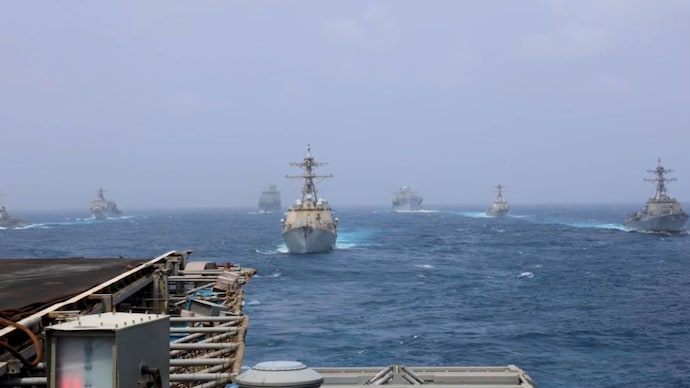
Iran has again declared the Strait of Hormuz closed to shipping, accusing the United States of carrying out "illegal movements" in the Gulf, while Washington insisted the strategic waterway remains open and commercial traffic is continuing as normal.
Iran's Persian Gulf Strait Authority (PGSA), an agency created by Tehran in May to oversee shipping through the Strait of Hormuz, said vessels would not be allowed to pass because of US military activity in the region.
"Due to the recent illegal movements of the United States military forces in the region, passage through the Strait of Hormuz is currently not possible," the agency said in a post on X.
"As soon as stability and calm are restored, all requests will be reviewed based on the schedule, and the necessary permits will be issued," it said.
The rival claims came just hours after Iran launched missiles and drones at Jordan, Kuwait, Oman and Qatar in retaliation for US attacks. Washington rejected Tehran's claim over the Strait of Hormuz, saying Iran has no authority to shut one of the world's busiest shipping lanes.
US REJECTS TEHRAN'S CLAIM
The United States quickly rejected Iran's declaration, saying the Strait of Hormuz remains open and that American forces are ready to protect freedom of navigation.
US Central Command said commercial vessels continue to move through the waterway despite Iran's repeated threats.
"The Strait of Hormuz is open to all vessels seeking to lawfully transit the international waterway. US forces are positioned and prepared to ensure that freedom of navigation remains available despite unwarranted Iranian aggression, harassment, threats, and arbitrary declarations. Iran does not control the strait. Traffic is flowing," the US military said on X.
The command also pushed back against claims made by Iran's Islamic Revolutionary Guard Corps (IRGC)-Navy.
"CLAIM: The Iranian commander for the Islamic Revolutionary Guard Corps-Navy recently said on state-owned media that no foreign vessels may pass through the Strait of Hormuz without being identified, tracked, and monitored by Iranian forces," it said on X.
It followed with its response.
"FACT: Iran does not control the Strait of Hormuz. It remains an international waterway. US forces are positioned and prepared to keep it that way," US military said.
TRUMP SAYS SHIPPING CONTINUES
US President Donald Trump also sought to reassure global markets, saying commercial shipping was continuing despite the latest military escalation.
Speaking during an interview on NBC's Meet the Press on Sunday, Trump said the Strait of Hormuz remains open to commercial traffic.
The competing statements from Tehran and Washington have created fresh uncertainty over conditions in the Gulf, where shipping companies are closely monitoring the security situation.
IRAN CALLS HORMUZ A STRATEGIC WEAPON
As the military confrontation deepened, one of Iran's senior advisers described the Strait of Hormuz as one of the country's most valuable strategic assets. Mohsen Rezaee, a former commander of the IRGC and adviser to Supreme Leader Mojtaba Khamenei, said the waterway was central to Iran's defence strategy.
"This strategic passage is more important than dozens of atomic bombs, and the Islamic Republic of Iran will protect it," Rezaee was quoted as saying by Iran's ISNA news agency.
STRIKES SPREAD ACROSS THE GULF
The dispute over the Strait of Hormuz comes against the backdrop of one of the most serious cycle of attacks and counter-attacks between the US and Iran in months.
Iran fired missiles and drones at US-linked facilities in Jordan, Kuwait, Oman, Qatar and the United Arab Emirates on Sunday. Qatar said three people, including a child, were injured by falling shrapnel after intercepting Iranian missiles.
Oman protested directly to Iran over drone attacks on its territory, while Bahrain said it intercepted several aerial threats. Jordan also reported missile strikes.
The US Embassy in Oman urged American citizens in Duqm and Musandam to shelter in place.
GLOBAL SHIPPING UNDER PRESSURE
Iran has repeatedly sought to tighten its grip over the strait since the conflict began. Although an interim agreement reached last month aimed to reopen the route while negotiations continued, Tehran has since pushed for a permanent system requiring ships to obtain Iranian authorisation before transiting the waterway.
Qatar also advised all vessels, including fishing boats, leisure craft and jet skis, to suspend operations because of the deteriorating security situation.
Despite Iran's claims, the US Navy-led Joint Maritime Information Center said an expanded southern route near Oman remains available for two-way commercial traffic.
US Central Command said American forces struck 140 Iranian military targets on Saturday night and more than 300 over three days. The military said the strikes were intended to reduce Iran's ability to target commercial shipping and civilian vessels moving through the Strait of Hormuz.
The Strait of Hormuz is one of the world's most important maritime chokepoints. Before the war, nearly one-fifth of global oil and liquefied natural gas shipments passed through the narrow waterway. Any disruption there has immediate consequences for global markets and fuel prices.
Iran has again declared the Strait of Hormuz closed to shipping, accusing the United States of carrying out "illegal movements" in the Gulf, while Washington insisted the strategic waterway remains open and commercial traffic is continuing as normal.
Iran's Persian Gulf Strait Authority (PGSA), an agency created by Tehran in May to oversee shipping through the Strait of Hormuz, said vessels would not be allowed to pass because of US military activity in the region.
"Due to the recent illegal movements of the United States military forces in the region, passage through the Strait of Hormuz is currently not possible," the agency said in a post on X.
"As soon as stability and calm are restored, all requests will be reviewed based on the schedule, and the necessary permits will be issued," it said.
The rival claims came just hours after Iran launched missiles and drones at Jordan, Kuwait, Oman and Qatar in retaliation for US attacks. Washington rejected Tehran's claim over the Strait of Hormuz, saying Iran has no authority to shut one of the world's busiest shipping lanes.
US REJECTS TEHRAN'S CLAIM
The United States quickly rejected Iran's declaration, saying the Strait of Hormuz remains open and that American forces are ready to protect freedom of navigation.
US Central Command said commercial vessels continue to move through the waterway despite Iran's repeated threats.
"The Strait of Hormuz is open to all vessels seeking to lawfully transit the international waterway. US forces are positioned and prepared to ensure that freedom of navigation remains available despite unwarranted Iranian aggression, harassment, threats, and arbitrary declarations. Iran does not control the strait. Traffic is flowing," the US military said on X.
The command also pushed back against claims made by Iran's Islamic Revolutionary Guard Corps (IRGC)-Navy.
"CLAIM: The Iranian commander for the Islamic Revolutionary Guard Corps-Navy recently said on state-owned media that no foreign vessels may pass through the Strait of Hormuz without being identified, tracked, and monitored by Iranian forces," it said on X.
It followed with its response.
"FACT: Iran does not control the Strait of Hormuz. It remains an international waterway. US forces are positioned and prepared to keep it that way," US military said.
TRUMP SAYS SHIPPING CONTINUES
US President Donald Trump also sought to reassure global markets, saying commercial shipping was continuing despite the latest military escalation.
Speaking during an interview on NBC's Meet the Press on Sunday, Trump said the Strait of Hormuz remains open to commercial traffic.
The competing statements from Tehran and Washington have created fresh uncertainty over conditions in the Gulf, where shipping companies are closely monitoring the security situation.
IRAN CALLS HORMUZ A STRATEGIC WEAPON
As the military confrontation deepened, one of Iran's senior advisers described the Strait of Hormuz as one of the country's most valuable strategic assets. Mohsen Rezaee, a former commander of the IRGC and adviser to Supreme Leader Mojtaba Khamenei, said the waterway was central to Iran's defence strategy.
"This strategic passage is more important than dozens of atomic bombs, and the Islamic Republic of Iran will protect it," Rezaee was quoted as saying by Iran's ISNA news agency.
STRIKES SPREAD ACROSS THE GULF
The dispute over the Strait of Hormuz comes against the backdrop of one of the most serious cycle of attacks and counter-attacks between the US and Iran in months.
Iran fired missiles and drones at US-linked facilities in Jordan, Kuwait, Oman, Qatar and the United Arab Emirates on Sunday. Qatar said three people, including a child, were injured by falling shrapnel after intercepting Iranian missiles.
Oman protested directly to Iran over drone attacks on its territory, while Bahrain said it intercepted several aerial threats. Jordan also reported missile strikes.
The US Embassy in Oman urged American citizens in Duqm and Musandam to shelter in place.
GLOBAL SHIPPING UNDER PRESSURE
Iran has repeatedly sought to tighten its grip over the strait since the conflict began. Although an interim agreement reached last month aimed to reopen the route while negotiations continued, Tehran has since pushed for a permanent system requiring ships to obtain Iranian authorisation before transiting the waterway.
Qatar also advised all vessels, including fishing boats, leisure craft and jet skis, to suspend operations because of the deteriorating security situation.
Despite Iran's claims, the US Navy-led Joint Maritime Information Center said an expanded southern route near Oman remains available for two-way commercial traffic.
US Central Command said American forces struck 140 Iranian military targets on Saturday night and more than 300 over three days. The military said the strikes were intended to reduce Iran's ability to target commercial shipping and civilian vessels moving through the Strait of Hormuz.
The Strait of Hormuz is one of the world's most important maritime chokepoints. Before the war, nearly one-fifth of global oil and liquefied natural gas shipments passed through the narrow waterway. Any disruption there has immediate consequences for global markets and fuel prices.

