Be careful with words: Iran warns Trump after his new attack threat during talks
US and Iran held talks in Switzerland aimed at ending the conflict, but tensions escalated sharply alongside the negotiations. President Donald Trump warned Iran over its proxies in Lebanon, drawing a strong response from Iranian negotiators, who said they were ready to respond to any escalation.
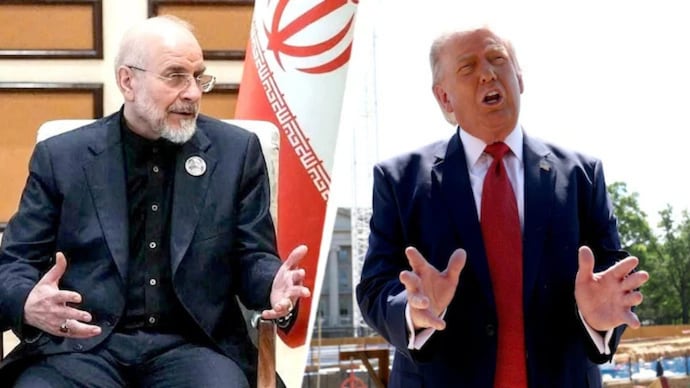
The war of words between Iran and the United States escalated on Sunday, even as both sides began talks in Switzerland aimed at ending the four-month-long conflict.
Shortly after US President Donald Trump warned Iran to rein in its proxies in Lebanon — a reference to Hezbollah — and stop attacks on Israel or face strikes, Iran’s top negotiator, Mohammad Bagher Qalibaf, issued a sharp response, advising Washington to “be careful with its words.” He also said Iran’s armed forces are prepared to respond to any escalation by the US.
In a post on Truth Social, Trump issued one of his strongest warnings minutes after the latest round of negotiations began in Switzerland.
“Iran must immediately stop their highly paid PROXIES in Lebanon from causing trouble. If they don’t, we’ll hit Iran very hard again, just like we did last week, only harder!!!” Trump wrote.
NO PHOTO OP, IRAN’S WALKOUT
Trump’s latest remarks did not go down well with the Iranian delegation, which refused to take part in a planned photo opportunity with American officials.
According to Iran’s Tasnim news agency, organisers and members of the US delegation had planned a handshake and joint photo session between the two sides before talks began.
However, Iranian chief negotiator Mohammad Bagher Ghalibaf and Foreign Minister Abbas Araghchi declined to participate. Iranian officials also informed organisers that they would not join any photo-op, calling it an American “media show.”
Later, the Iranian negotiating team briefly walked out of the meeting in protest. A source cited by Press TV said Iranian negotiators had formally raised objections with the American side.
The situation deteriorated to the extent that Iranian officials told Reuters the talks in Switzerland “have paused but not ended.”
DRAFT ON SANCTIONS WAIVERS FINALISED
Meanwhile, a member of the Iranian delegation told state-run media that a draft has been finalised regarding sanctions waivers for Iranian oil, adding that the waivers would be issued soon.
Iran’s Foreign Ministry spokesperson Esmail Baghaei, who is part of the delegation, said Sunday’s talks also focused on the release of Iranian funds frozen in global banks — a key pre-condition set by Iran for de-escalation.
Sources said the Iranian delegation also held discussions with Qatari officials on the operational procedures for releasing these funds. Ahead of Sunday’s talks, Qatar had announced it would release around $6 billion in frozen Iranian assets.
However, despite the discussions, sources quoted the Iranian delegation as warning that the future course of talks would depend on whether Israeli strikes in Lebanon come to an end. The delegation hinted that continued attacks against Hezbollah could lead Iran to refuse engagement on its nuclear programme — a key US demand.
VANCE DOWNPLAYS LEBANON FACTOR
While Trump and Iran kept tensions over Lebanon high, US Vice President J.D. Vance struck a more conciliatory tone, downplaying the impact of violence there and saying progress had been made toward ending hostilities.
“These things are always a little bit messy,” he said. Vance added that the US remains committed to securing a broader regional truce, calling the Lebanon ceasefire a critical step toward a wider settlement.
Even as Trump issued strong warnings, Vance told reporters that the President had asked the US delegation to “turn over a new leaf” in efforts to transform relations with Iran.
CALMER DAY IN LEBANON
Meanwhile, Sunday was one of the quieter days in Lebanon in recent weeks, with no reports of major overnight violence following two days of heavy Israeli strikes and Hezbollah fire on Israeli positions.
More than a million people have been displaced in Lebanon since March due to Israeli operations targeting Hezbollah fighters, who had fired across the border in support of Tehran.
In a potentially positive sign, several residents in southern Lebanon returned to their homes on Sunday after fleeing earlier.
However, the day ended on a tense note after Hezbollah chief Naim Qassem said Israel would not remain in Lebanon, adding that the group would respond to any violations from the Israeli side.
STRAIT OF HORMUZ REMAINS TENSE
The Strait of Hormuz remained a key pressure point for negotiators on Sunday, as tensions over Lebanon and Iranian oil sanctions continued to dominate discussions.
Iran’s Tasnim news agency, citing a source close to the negotiating team, reported that the Strait of Hormuz would not be reopened as long as a ceasefire in Lebanon was not respected.
The source added that the strategic shipping route would also remain closed until waivers permitting the sale of Iranian oil were issued.
The statement came a day after the US rejected Iran’s claim that it had closed the Strait of Hormuz, saying the vital waterway remained open and that American forces were monitoring the situation to ensure normal operations continued.
The war of words between Iran and the United States escalated on Sunday, even as both sides began talks in Switzerland aimed at ending the four-month-long conflict.
Shortly after US President Donald Trump warned Iran to rein in its proxies in Lebanon — a reference to Hezbollah — and stop attacks on Israel or face strikes, Iran’s top negotiator, Mohammad Bagher Qalibaf, issued a sharp response, advising Washington to “be careful with its words.” He also said Iran’s armed forces are prepared to respond to any escalation by the US.
In a post on Truth Social, Trump issued one of his strongest warnings minutes after the latest round of negotiations began in Switzerland.
“Iran must immediately stop their highly paid PROXIES in Lebanon from causing trouble. If they don’t, we’ll hit Iran very hard again, just like we did last week, only harder!!!” Trump wrote.
NO PHOTO OP, IRAN’S WALKOUT
Trump’s latest remarks did not go down well with the Iranian delegation, which refused to take part in a planned photo opportunity with American officials.
According to Iran’s Tasnim news agency, organisers and members of the US delegation had planned a handshake and joint photo session between the two sides before talks began.
However, Iranian chief negotiator Mohammad Bagher Ghalibaf and Foreign Minister Abbas Araghchi declined to participate. Iranian officials also informed organisers that they would not join any photo-op, calling it an American “media show.”
Later, the Iranian negotiating team briefly walked out of the meeting in protest. A source cited by Press TV said Iranian negotiators had formally raised objections with the American side.
The situation deteriorated to the extent that Iranian officials told Reuters the talks in Switzerland “have paused but not ended.”
DRAFT ON SANCTIONS WAIVERS FINALISED
Meanwhile, a member of the Iranian delegation told state-run media that a draft has been finalised regarding sanctions waivers for Iranian oil, adding that the waivers would be issued soon.
Iran’s Foreign Ministry spokesperson Esmail Baghaei, who is part of the delegation, said Sunday’s talks also focused on the release of Iranian funds frozen in global banks — a key pre-condition set by Iran for de-escalation.
Sources said the Iranian delegation also held discussions with Qatari officials on the operational procedures for releasing these funds. Ahead of Sunday’s talks, Qatar had announced it would release around $6 billion in frozen Iranian assets.
However, despite the discussions, sources quoted the Iranian delegation as warning that the future course of talks would depend on whether Israeli strikes in Lebanon come to an end. The delegation hinted that continued attacks against Hezbollah could lead Iran to refuse engagement on its nuclear programme — a key US demand.
VANCE DOWNPLAYS LEBANON FACTOR
While Trump and Iran kept tensions over Lebanon high, US Vice President J.D. Vance struck a more conciliatory tone, downplaying the impact of violence there and saying progress had been made toward ending hostilities.
“These things are always a little bit messy,” he said. Vance added that the US remains committed to securing a broader regional truce, calling the Lebanon ceasefire a critical step toward a wider settlement.
Even as Trump issued strong warnings, Vance told reporters that the President had asked the US delegation to “turn over a new leaf” in efforts to transform relations with Iran.
CALMER DAY IN LEBANON
Meanwhile, Sunday was one of the quieter days in Lebanon in recent weeks, with no reports of major overnight violence following two days of heavy Israeli strikes and Hezbollah fire on Israeli positions.
More than a million people have been displaced in Lebanon since March due to Israeli operations targeting Hezbollah fighters, who had fired across the border in support of Tehran.
In a potentially positive sign, several residents in southern Lebanon returned to their homes on Sunday after fleeing earlier.
However, the day ended on a tense note after Hezbollah chief Naim Qassem said Israel would not remain in Lebanon, adding that the group would respond to any violations from the Israeli side.
STRAIT OF HORMUZ REMAINS TENSE
The Strait of Hormuz remained a key pressure point for negotiators on Sunday, as tensions over Lebanon and Iranian oil sanctions continued to dominate discussions.
Iran’s Tasnim news agency, citing a source close to the negotiating team, reported that the Strait of Hormuz would not be reopened as long as a ceasefire in Lebanon was not respected.
The source added that the strategic shipping route would also remain closed until waivers permitting the sale of Iranian oil were issued.
The statement came a day after the US rejected Iran’s claim that it had closed the Strait of Hormuz, saying the vital waterway remained open and that American forces were monitoring the situation to ensure normal operations continued.

