Indian oil tanker turns back after Iran rejects Omani corridor in Strait of Hormuz
The temporary corridor was announced on June 24 by Oman and the United Nations' International Maritime Organization (IMO) to facilitate the movement and evacuation of vessels stranded in the Gulf amid heightened regional tensions.
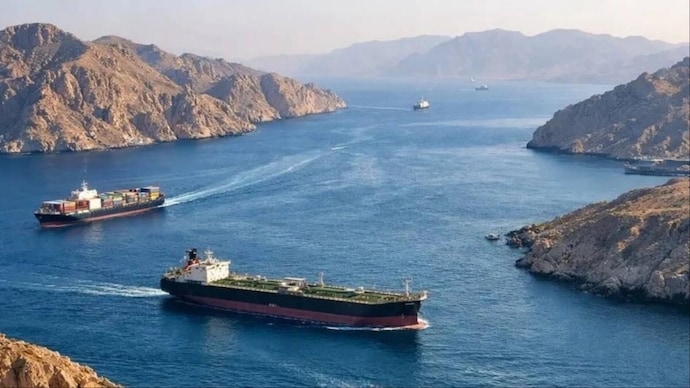
An Indian oil tanker has reportedly been turned back from the Omani corridor in the Strait of Hormuz, according to Iran's semi-official Fars News Agency, which claimed the vessel was directed to use a shipping lane designated by Tehran instead.
The report said the tanker attempted to transit through the temporary maritime corridor established along the Omani coast but was instructed to turn back. According to Fars, Iran's Islamic Revolutionary Guard Corps (IRGC) has been issuing radio warnings to vessels intending to use the Omani corridor, directing them to instead navigate through the corridor approved by Iran.
Fars further claimed that ship-tracking data showed all vessels that passed through the Strait of Hormuz on Wednesday morning used the route designated by Iran, rather than the Omani corridor.
The temporary corridor was announced on June 24 by Oman and the United Nations' International Maritime Organization (IMO) to facilitate the movement and evacuation of vessels stranded in the Gulf amid heightened regional tensions. The route, which runs along the Omani coast, was to be overseen by the United States.
The Strait of Hormuz remains one of the world's most critical maritime chokepoints, handling a significant share of global oil shipments. Navigation through the waterway has come under increased scrutiny following recent military tensions in the region.
There was no immediate confirmation from Indian authorities, Oman, the IMO or the United States regarding the reported incident. The claims made by Fars News Agency could not be independently verified.
TANKER ATTACKS ESCALATE TENSIONS IN STRAIT OF HORMUZ
The reported turning back of the Indian oil tanker comes amid a sharp escalation in attacks on commercial shipping in the Strait of Hormuz. Within 24 hours, three commercial tankers were targeted, including a Qatari LNG carrier, a Saudi-flagged crude oil tanker and a third vessel that suffered structural damage after being hit by an unidentified projectile, according to the UK Maritime Trade Operations (UKMTO).
The attacks have renewed concerns over the security of one of the world's busiest energy corridors and the safety of commercial shipping.
The incidents triggered a strong response from Washington. The US launched strikes on more than 80 Iranian military targets, including air defence systems, coastal radar sites, command and control networks and over 60 Islamic Revolutionary Guard Corps (IRGC) small boats in and around the Strait of Hormuz.
The US said the operation was aimed at degrading Iran's ability to attack international commercial shipping. Washington also revoked a licence that had allowed Iran to sell oil on international markets under an interim peace agreement, saying Tehran's actions in the Strait warranted consequences. Iran condemned both the strikes and the oil permit cancellation, calling them a breach of the interim deal and vowing to protect its national interests.
An Indian oil tanker has reportedly been turned back from the Omani corridor in the Strait of Hormuz, according to Iran's semi-official Fars News Agency, which claimed the vessel was directed to use a shipping lane designated by Tehran instead.
The report said the tanker attempted to transit through the temporary maritime corridor established along the Omani coast but was instructed to turn back. According to Fars, Iran's Islamic Revolutionary Guard Corps (IRGC) has been issuing radio warnings to vessels intending to use the Omani corridor, directing them to instead navigate through the corridor approved by Iran.
Fars further claimed that ship-tracking data showed all vessels that passed through the Strait of Hormuz on Wednesday morning used the route designated by Iran, rather than the Omani corridor.
The temporary corridor was announced on June 24 by Oman and the United Nations' International Maritime Organization (IMO) to facilitate the movement and evacuation of vessels stranded in the Gulf amid heightened regional tensions. The route, which runs along the Omani coast, was to be overseen by the United States.
The Strait of Hormuz remains one of the world's most critical maritime chokepoints, handling a significant share of global oil shipments. Navigation through the waterway has come under increased scrutiny following recent military tensions in the region.
There was no immediate confirmation from Indian authorities, Oman, the IMO or the United States regarding the reported incident. The claims made by Fars News Agency could not be independently verified.
TANKER ATTACKS ESCALATE TENSIONS IN STRAIT OF HORMUZ
The reported turning back of the Indian oil tanker comes amid a sharp escalation in attacks on commercial shipping in the Strait of Hormuz. Within 24 hours, three commercial tankers were targeted, including a Qatari LNG carrier, a Saudi-flagged crude oil tanker and a third vessel that suffered structural damage after being hit by an unidentified projectile, according to the UK Maritime Trade Operations (UKMTO).
The attacks have renewed concerns over the security of one of the world's busiest energy corridors and the safety of commercial shipping.
The incidents triggered a strong response from Washington. The US launched strikes on more than 80 Iranian military targets, including air defence systems, coastal radar sites, command and control networks and over 60 Islamic Revolutionary Guard Corps (IRGC) small boats in and around the Strait of Hormuz.
The US said the operation was aimed at degrading Iran's ability to attack international commercial shipping. Washington also revoked a licence that had allowed Iran to sell oil on international markets under an interim peace agreement, saying Tehran's actions in the Strait warranted consequences. Iran condemned both the strikes and the oil permit cancellation, calling them a breach of the interim deal and vowing to protect its national interests.

