US launches fresh strikes on Iran hours after Trump declared peace deal over
The United States launched fresh strikes on Iran, with CENTCOM saying the operation aims to weaken Tehran's ability to threaten shipping in the Strait of Hormuz after recent attacks on commercial vessels.
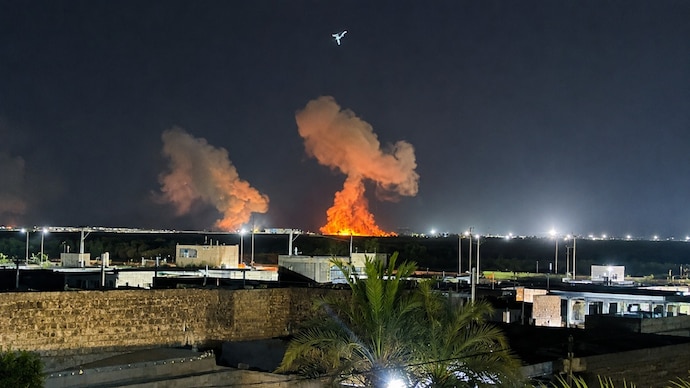
The United States launched a fresh wave of military strikes on Iran on Wednesday, targeting locations linked to Tehran's ability to threaten shipping through the Strait of Hormuz, hours after President Donald Trump declared that an interim agreement to end the war was "over."
The US military said the latest operation aimed to keep the strategically vital Strait of Hormuz open to international shipping after Tuesday's assault on three cargo ships transiting the waterway.
"US Central Command forces have started conducting additional strikes against Iran to further degrade their ability to threaten freedom of navigation in the Strait of Hormuz," US Central Command (CENTCOM) said in a post on X.
"The United States is holding Iran accountable for recent unjustified aggression against commercial shipping and civilian crews freely navigating a vital international waterway," the statement added.
A US official told Reuters on condition of anonymity that Wednesday's strikes would be greater in number than those carried out on Tuesday.
The Bahrain Ministry of Interior said sirens had been activated across several parts of the country and urged citizens and residents to remain calm and move to the nearest safe place.
"The siren has been sounded. Citizens and residents are urged to remain calm and head to the nearest safe place," the ministry said in a post on X.
Meanwhile, Kuwait's Defence Ministry said the country's air defence systems were confronting rocket and drone attacks.
WE WILL HIT THEM HARD: TRUMP
The attack comes hours after President Donald Trump warned that Washington will launch more strikes on Wednesday night.
Speaking to reporters at the NATO summit in Turkey before meeting Ukrainian President Volodymyr Zelenskyy, Trump signalled further military action.
"I'll give a little warning: We're going to hit them hard tonight," Trump said.
TRUMP SAYS DEAL IS 'OVER'
After leaving a NATO summit in Ankara, Turkey, Trump posted several videos on his Truth Social platform that he said showed explosions in Iran and warned Tehran against any further attacks on commercial shipping.
"This is in retribution for yesterday's bombing of ships by Iran. If it happens again, it will get much worse!" Trump wrote.
Earlier in the day, Trump said the latest military exchanges would not lead to prolonged fighting.
"Anything that happens is going to happen very fast," Trump said, while also suggesting that the US military might "just finish the job."
Speaking before the NATO summit, Trump said the memorandum of understanding signed on June 17 had effectively collapsed.
"It's a very interesting question. To me, I think it's over. I don't want to deal with them," he said when asked whether the interim agreement remained in force.
"If we make a deal with Iran, I'm not sure that will stick," Trump later said. "I found them to be very dishonourable people."
Despite his remarks, Trump said he did not expect the conflict to return to full-scale war and that it remained unclear whether negotiations toward a permanent agreement would continue.
At a press conference later on Wednesday, Trump said, "Anything that happens is going to be over very quickly ... and will only make it safer, including for oil."
MULTIPLE CITIES TARGETED
Iran's state news agency reported explosions in several cities along the country's southern coast, stretching from the Strait of Hormuz to the Gulf of Oman.
Among the locations hit was Bandar Abbas, home to Iran's largest port and key facilities operated by the Iranian Navy and the Revolutionary Guards. Around eight explosions were heard in Bandar Abbas as air defence systems were activated.
The US also struck a railway bridge near Aqqala in northern Iran, Press TV reported, marking the first reported strike in the region since the ceasefire.
Iran's state news agency IRNA reported that a fireman was killed following an attack on Iranshahr Airport in southeastern Iran.
Around 10 explosions were reported in Chabahar and Konarak. Iranian media also reported power outages and damage to a maritime traffic control tower in both locations. According to Press TV, US strikes caused damage to Shahid Beheshti Port, Kalantari Port and the maritime traffic control tower in Chabahar.
Press TV also reported that fragments from US strikes in Chabahar hit a hospital in the city.
Explosions were also reported in Iranshahr, while three explosions were heard in Sirik in southern Iran. Two explosions were heard on Abu Musa Island, two US projectiles struck Bushehr, and multiple explosions were reported in Jask, according to Press TV.
IRAN THREATENS RETALIATION
Ebrahim Rezaei, spokesperson for the Foreign Policy and National Security Committee of the Iranian Parliament, reacted to the U.S. strikes in a post on X.
"Martyr Khamenei taught us not to fear America and showed that 'falsehood will perish.' Await the hard slap from the Iranians," Rezaei wrote.
Nournews, which is affiliated with Iran's top security body, quoted an Iranian military source as saying that Tehran was preparing to launch a "massive attack" on US Army bases in the region in retaliation.
Before the latest US strikes, Iranian Foreign Ministry spokesperson Esmaeil Baghaei accused Washington of violating the June 17 memorandum by challenging a clause that, according to Tehran, "emphasises the Islamic Republic of Iran's responsibility in determining arrangements for the safe passage of ships through the Strait of Hormuz."
STRAIT OF HORMUZ TENSIONS
The latest escalation followed Iran's reported attack on three cargo ships in the Strait of Hormuz on Tuesday. Control of the strait, through which about one-fifth of global oil supplies passed before the war began with US-Israeli airstrikes on Iran on February 28, has given Tehran significant leverage. Although Iran has not claimed responsibility for the attacks on the ships, analysts say Tehran uses such actions to gain leverage in negotiations.
Iran said on Wednesday that it had attacked US military sites in Bahrain and Kuwait in response to earlier US strikes on infrastructure, which Washington said were carried out in retaliation for the attacks on commercial shipping.
OIL PRICES CLIMB
The renewed US strikes also affected global energy markets. Brent crude futures rose by more than $1 a barrel in post-settlement trading on Wednesday to $79.28 per barrel, although prices remained well below the late-April peak of more than $120 per barrel.
The United States launched a fresh wave of military strikes on Iran on Wednesday, targeting locations linked to Tehran's ability to threaten shipping through the Strait of Hormuz, hours after President Donald Trump declared that an interim agreement to end the war was "over."
The US military said the latest operation aimed to keep the strategically vital Strait of Hormuz open to international shipping after Tuesday's assault on three cargo ships transiting the waterway.
"US Central Command forces have started conducting additional strikes against Iran to further degrade their ability to threaten freedom of navigation in the Strait of Hormuz," US Central Command (CENTCOM) said in a post on X.
"The United States is holding Iran accountable for recent unjustified aggression against commercial shipping and civilian crews freely navigating a vital international waterway," the statement added.
A US official told Reuters on condition of anonymity that Wednesday's strikes would be greater in number than those carried out on Tuesday.
The Bahrain Ministry of Interior said sirens had been activated across several parts of the country and urged citizens and residents to remain calm and move to the nearest safe place.
"The siren has been sounded. Citizens and residents are urged to remain calm and head to the nearest safe place," the ministry said in a post on X.
Meanwhile, Kuwait's Defence Ministry said the country's air defence systems were confronting rocket and drone attacks.
WE WILL HIT THEM HARD: TRUMP
The attack comes hours after President Donald Trump warned that Washington will launch more strikes on Wednesday night.
Speaking to reporters at the NATO summit in Turkey before meeting Ukrainian President Volodymyr Zelenskyy, Trump signalled further military action.
"I'll give a little warning: We're going to hit them hard tonight," Trump said.
TRUMP SAYS DEAL IS 'OVER'
After leaving a NATO summit in Ankara, Turkey, Trump posted several videos on his Truth Social platform that he said showed explosions in Iran and warned Tehran against any further attacks on commercial shipping.
"This is in retribution for yesterday's bombing of ships by Iran. If it happens again, it will get much worse!" Trump wrote.
Earlier in the day, Trump said the latest military exchanges would not lead to prolonged fighting.
"Anything that happens is going to happen very fast," Trump said, while also suggesting that the US military might "just finish the job."
Speaking before the NATO summit, Trump said the memorandum of understanding signed on June 17 had effectively collapsed.
"It's a very interesting question. To me, I think it's over. I don't want to deal with them," he said when asked whether the interim agreement remained in force.
"If we make a deal with Iran, I'm not sure that will stick," Trump later said. "I found them to be very dishonourable people."
Despite his remarks, Trump said he did not expect the conflict to return to full-scale war and that it remained unclear whether negotiations toward a permanent agreement would continue.
At a press conference later on Wednesday, Trump said, "Anything that happens is going to be over very quickly ... and will only make it safer, including for oil."
MULTIPLE CITIES TARGETED
Iran's state news agency reported explosions in several cities along the country's southern coast, stretching from the Strait of Hormuz to the Gulf of Oman.
Among the locations hit was Bandar Abbas, home to Iran's largest port and key facilities operated by the Iranian Navy and the Revolutionary Guards. Around eight explosions were heard in Bandar Abbas as air defence systems were activated.
The US also struck a railway bridge near Aqqala in northern Iran, Press TV reported, marking the first reported strike in the region since the ceasefire.
Iran's state news agency IRNA reported that a fireman was killed following an attack on Iranshahr Airport in southeastern Iran.
Around 10 explosions were reported in Chabahar and Konarak. Iranian media also reported power outages and damage to a maritime traffic control tower in both locations. According to Press TV, US strikes caused damage to Shahid Beheshti Port, Kalantari Port and the maritime traffic control tower in Chabahar.
Press TV also reported that fragments from US strikes in Chabahar hit a hospital in the city.
Explosions were also reported in Iranshahr, while three explosions were heard in Sirik in southern Iran. Two explosions were heard on Abu Musa Island, two US projectiles struck Bushehr, and multiple explosions were reported in Jask, according to Press TV.
IRAN THREATENS RETALIATION
Ebrahim Rezaei, spokesperson for the Foreign Policy and National Security Committee of the Iranian Parliament, reacted to the U.S. strikes in a post on X.
"Martyr Khamenei taught us not to fear America and showed that 'falsehood will perish.' Await the hard slap from the Iranians," Rezaei wrote.
Nournews, which is affiliated with Iran's top security body, quoted an Iranian military source as saying that Tehran was preparing to launch a "massive attack" on US Army bases in the region in retaliation.
Before the latest US strikes, Iranian Foreign Ministry spokesperson Esmaeil Baghaei accused Washington of violating the June 17 memorandum by challenging a clause that, according to Tehran, "emphasises the Islamic Republic of Iran's responsibility in determining arrangements for the safe passage of ships through the Strait of Hormuz."
STRAIT OF HORMUZ TENSIONS
The latest escalation followed Iran's reported attack on three cargo ships in the Strait of Hormuz on Tuesday. Control of the strait, through which about one-fifth of global oil supplies passed before the war began with US-Israeli airstrikes on Iran on February 28, has given Tehran significant leverage. Although Iran has not claimed responsibility for the attacks on the ships, analysts say Tehran uses such actions to gain leverage in negotiations.
Iran said on Wednesday that it had attacked US military sites in Bahrain and Kuwait in response to earlier US strikes on infrastructure, which Washington said were carried out in retaliation for the attacks on commercial shipping.
OIL PRICES CLIMB
The renewed US strikes also affected global energy markets. Brent crude futures rose by more than $1 a barrel in post-settlement trading on Wednesday to $79.28 per barrel, although prices remained well below the late-April peak of more than $120 per barrel.

