$500 million in value wiped out in a day: Turkey's Celebi on India ouster amid Op Sindoor
More than a year after being forced out of Indian airports in the wake of Turkey's support to Pakistan during Operation Sindoor, Turkish aviation services firm Celebi Aviation says India's revocation of the security clearance granted to its Indian arm wiped out up to $500 million in value overnight.
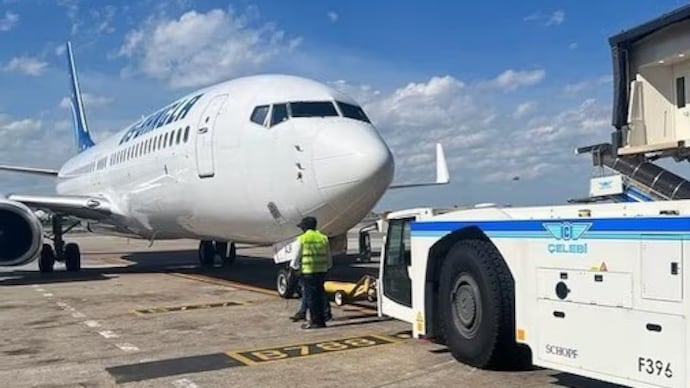
More than a year after being forced out of Indian airports in the wake of Turkey's military support to Pakistan during Operation Sindoor, the chairperson of Turkish aviation services company, Celebi Aviaton, has said that the abrupt revocation of its security clearance, and the resulting seizure of equipment, transfer of employees and termination of contracts, wiped out an estimated $500 million in value overnight.
In an interview with Bloomberg, company chairperson Canan Celebioglu stated that the Indian government's decision effectively erased a market presence "meticulously crafted, stitch by stitch" since 2000. The ouster of Celebi Aviaton followed Operation Sindoor, a four-day armed confrontation between India and Pakistan, where Ankara had openly backed Islamabad with weapons and personnel deployment. More than 350 Turkey-manufactured Bayraktar TB2 and Asisguard Songar drones were sent to Pakistan.
Before the crackdown by the Indian government in May 2025 (a week after Operation Sindoor), Celebi was a dominant force, managing ground-handling operations at nine major hubs, including New Delhi, Mumbai, and Bengaluru.
However, on May 15, 2025, just a week after Indian airstrikes hammered Pakistani terror camps and airbases, India's Ministry of Civil Aviation revoked the firm's security clearance with immediate effect after an uproar over the reported Turkish military help to Pakistan during the armed conflict with India. The Centre cited "security concerns" while revoking the licence of Celebi Aviaton, adding that the move was taken, "recognising the seriousness of the issue and the call to protect national interests".
The Centre's decision to revoke the operating licence of the Indian arm of Celebi Aviaton, was in July upheld by the Delhi High Court.
CELEBI BECAME INDIA'S LARGEST GROUND HANDLING FIRM, LOST IT ALL IN ONE DAY
Before its security clearance was revoked by India, Celebi Airport Services India had grown into the country's largest ground-handling operator, managing critical airport infrastructure at nine major aviation hubs, including New Delhi, Mumbai and Bengaluru. The company handled around 58,000 flights and 5,40,00 tonnes of cargo annually across major airports in India.
The company's chairperson, Canan Celebioglu, told Bloomberg that the firm's two-decade presence in India was effectively dismantled overnight. According to her, the Indian government halted all operations of Celebi Airport Services India, seized company equipment and transferred its 10,000 employees to another operator, wiping out an estimated $400 million to $500 million in value.
"In a single day, the government transferred 10,000 of our employees to another company, and they reduced the value we created—perhaps 400–500 million dollars—to zero in a single day," Celebioglu told Bloomberg.
She said the loss was particularly painful because, according to her, the company had spent decades.
"Leave aside its monetary value... it really was a place that was meticulously crafted, stitch by stitch. We, the employees, have put in a lot of time and effort to get the government to change certain policies to get that sector back on its feet," she said.
Celebioglu, who described herself as being "a big fan of India", added it was her "second country".
"So this situation really shocked us. That really upset me," she said.
At the same time, she acknowledged the challenges of operating in a large and complex market like India, noting that doing business there inevitably came with difficulties.
"Because, after all, India is a different country. Even though we have some things in common, there are, of course, a lot of problems, difficulties," she told Bloomberg.
WHY DID INDIA REVOKE CELEBI'S SECURITY CLEARANCE?
India's revocation of Celebi's security clearance came on the heels of Operation Sindoor. The four-day armed confrontation between India and Pakistan was sparked by New Delhi launching precise strikes on terror camps inside Pakistan and Pakistan Occupied Kashmir on May 6, in retaliation for the April 22 Pahalgam terror attack. In Jammu and Kashmir's Pahalgam, Pakistani terrorists gunned down 26 civilians.
During the confrontation, Ankara openly backed Islamabad. More than 350 Turkish-manufactured Bayraktar TB2 and Asisguard Songar drones were sent to Pakistan and were used to undertake strikes on Indian military and civilian installations.
Following the Pahalgam attack, and weeks before Indian forces had launched Operation Sindoor, a Turkish Air Force C-130 aircraft and a warship had reached Pakistan.
In fact, two Turkish military operatives were killed as part of Operation Sindoor, which revealed that Turkey not only helped Pakistan in its war against India with over 350 drones, but also with operators.
In its May 2025 order terminating Celebi's security clearance, the Ministry of Civil Aviation cited security concerns as the main reason.
India's minister of state for civil aviation, Murlidhar Mohol said, "Recognising the seriousness of the issue and the call to protect national interests, we have taken cognisance of these requests and the Ministry of Civil Aviation has revoked [the] security clearance of the said company."
Many of the key responsibilities of Celebi India were ground handling, cargo services, cargo security checks, passenger document checks and logistics coordination in Indian airports. Many in India voiced concerns as these services were deemed high-security risk due to the sensitive and tightly regulated nature of airport zones.
Celebi had approached the Delhi High Court to appeal against the revocation. The court, however, dismissed the petition, noting that it was "better to be safe than sorry" when it came to matters of national security.
Despite Celebi maintaining that it had no meaningful ties to the Turkish state — including dismissing allegations that Turkish President Recep Tayyip Erdogan's daughter, Sumeyye Erdogan, held a stake in the company — the writing was on the wall. With Ankara backing Islamabad during the India-Pakistan standoff, there was little prospect of a Turkish firm being allowed to continue operating in critical infrastructure zones, which are seen as key to national security.
More than a year after being forced out of Indian airports in the wake of Turkey's military support to Pakistan during Operation Sindoor, the chairperson of Turkish aviation services company, Celebi Aviaton, has said that the abrupt revocation of its security clearance, and the resulting seizure of equipment, transfer of employees and termination of contracts, wiped out an estimated $500 million in value overnight.
In an interview with Bloomberg, company chairperson Canan Celebioglu stated that the Indian government's decision effectively erased a market presence "meticulously crafted, stitch by stitch" since 2000. The ouster of Celebi Aviaton followed Operation Sindoor, a four-day armed confrontation between India and Pakistan, where Ankara had openly backed Islamabad with weapons and personnel deployment. More than 350 Turkey-manufactured Bayraktar TB2 and Asisguard Songar drones were sent to Pakistan.
Before the crackdown by the Indian government in May 2025 (a week after Operation Sindoor), Celebi was a dominant force, managing ground-handling operations at nine major hubs, including New Delhi, Mumbai, and Bengaluru.
However, on May 15, 2025, just a week after Indian airstrikes hammered Pakistani terror camps and airbases, India's Ministry of Civil Aviation revoked the firm's security clearance with immediate effect after an uproar over the reported Turkish military help to Pakistan during the armed conflict with India. The Centre cited "security concerns" while revoking the licence of Celebi Aviaton, adding that the move was taken, "recognising the seriousness of the issue and the call to protect national interests".
The Centre's decision to revoke the operating licence of the Indian arm of Celebi Aviaton, was in July upheld by the Delhi High Court.
CELEBI BECAME INDIA'S LARGEST GROUND HANDLING FIRM, LOST IT ALL IN ONE DAY
Before its security clearance was revoked by India, Celebi Airport Services India had grown into the country's largest ground-handling operator, managing critical airport infrastructure at nine major aviation hubs, including New Delhi, Mumbai and Bengaluru. The company handled around 58,000 flights and 5,40,00 tonnes of cargo annually across major airports in India.
The company's chairperson, Canan Celebioglu, told Bloomberg that the firm's two-decade presence in India was effectively dismantled overnight. According to her, the Indian government halted all operations of Celebi Airport Services India, seized company equipment and transferred its 10,000 employees to another operator, wiping out an estimated $400 million to $500 million in value.
"In a single day, the government transferred 10,000 of our employees to another company, and they reduced the value we created—perhaps 400–500 million dollars—to zero in a single day," Celebioglu told Bloomberg.
She said the loss was particularly painful because, according to her, the company had spent decades.
"Leave aside its monetary value... it really was a place that was meticulously crafted, stitch by stitch. We, the employees, have put in a lot of time and effort to get the government to change certain policies to get that sector back on its feet," she said.
Celebioglu, who described herself as being "a big fan of India", added it was her "second country".
"So this situation really shocked us. That really upset me," she said.
At the same time, she acknowledged the challenges of operating in a large and complex market like India, noting that doing business there inevitably came with difficulties.
"Because, after all, India is a different country. Even though we have some things in common, there are, of course, a lot of problems, difficulties," she told Bloomberg.
WHY DID INDIA REVOKE CELEBI'S SECURITY CLEARANCE?
India's revocation of Celebi's security clearance came on the heels of Operation Sindoor. The four-day armed confrontation between India and Pakistan was sparked by New Delhi launching precise strikes on terror camps inside Pakistan and Pakistan Occupied Kashmir on May 6, in retaliation for the April 22 Pahalgam terror attack. In Jammu and Kashmir's Pahalgam, Pakistani terrorists gunned down 26 civilians.
During the confrontation, Ankara openly backed Islamabad. More than 350 Turkish-manufactured Bayraktar TB2 and Asisguard Songar drones were sent to Pakistan and were used to undertake strikes on Indian military and civilian installations.
Following the Pahalgam attack, and weeks before Indian forces had launched Operation Sindoor, a Turkish Air Force C-130 aircraft and a warship had reached Pakistan.
In fact, two Turkish military operatives were killed as part of Operation Sindoor, which revealed that Turkey not only helped Pakistan in its war against India with over 350 drones, but also with operators.
In its May 2025 order terminating Celebi's security clearance, the Ministry of Civil Aviation cited security concerns as the main reason.
India's minister of state for civil aviation, Murlidhar Mohol said, "Recognising the seriousness of the issue and the call to protect national interests, we have taken cognisance of these requests and the Ministry of Civil Aviation has revoked [the] security clearance of the said company."
Many of the key responsibilities of Celebi India were ground handling, cargo services, cargo security checks, passenger document checks and logistics coordination in Indian airports. Many in India voiced concerns as these services were deemed high-security risk due to the sensitive and tightly regulated nature of airport zones.
Celebi had approached the Delhi High Court to appeal against the revocation. The court, however, dismissed the petition, noting that it was "better to be safe than sorry" when it came to matters of national security.
Despite Celebi maintaining that it had no meaningful ties to the Turkish state — including dismissing allegations that Turkish President Recep Tayyip Erdogan's daughter, Sumeyye Erdogan, held a stake in the company — the writing was on the wall. With Ankara backing Islamabad during the India-Pakistan standoff, there was little prospect of a Turkish firm being allowed to continue operating in critical infrastructure zones, which are seen as key to national security.

