Indian-crewed ships: Trump counters Centcom's Hellfire missiles with Iran drones
Centcom has acknowledged striking and disabling three Indian-crewed ships near the Gulf of Oman this week. The US forces shared a video of Hellfire missiles hitting one of the ships. President Trump, however, insists the attacks were carried out by Iranian drones.
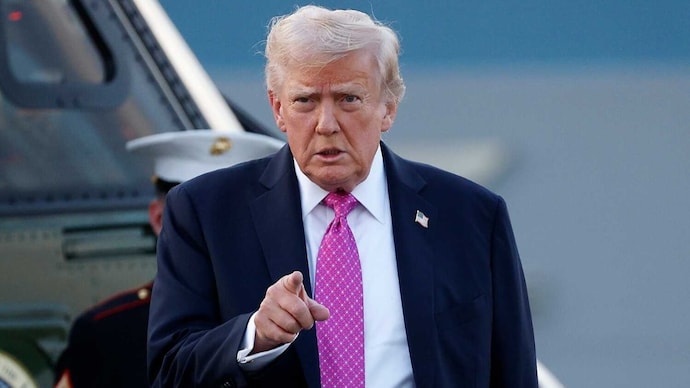
There is a curious contradiction at play. On the one hand, the US Armed Forces' Central Command (Centcom), responsible for prosecuting the war against Iran, has more or less given iron-clad proof that it struck three commercial tankers operated entirely by Indian crews, killing at least three Indian sailors. At the same time, President Donald Trump, also the Commander-in-Chief of the US Armed Forces, is saying something entirely different. Trump has blamed an Iranian "drone attack" for the strikes on the vessels that endangered the lives of Indian seafarers, despite Centcom's own account pointing to direct US military action.
On Thursday, Centcom made a public statement admitting that it had used Hellfire missiles to strike and disable at least three vessels in the Gulf of Oman that were being operated entirely by Indian crews.
The M/T Jalveer, M/T Settebello, and M/T Marivex, were all struck over a period of four days, resulting in at least three Indian seafarers on the Settebello losing their lives, while 65 others from the three vessels were rescued and brought to shore.
In its statement, Centcom attested that the struck vessels were violating the US blockade of Iran's oil trade. Centcom also shared a video of them launching two hellfires at the M/T Jalveer, while stating the blockade would continue to be "enforced impartially against vessels of all nations."
But on Friday, President Donald Trump directly contradicted Centcom's statement. In a post on the social media platform, Truth Social, Trump, while lambasting Iran for allegedly leaking the terms of a potential peace deal to the "Fake News", decided to assign the blame for the strikes on the Indian crewed vessels, on Iran.
"Their totally rebuffed drone attack last night against Indian ships leaving the Hormuz Strait is TOTALLY UNACCEPTABLE," Trump wrote on his favorite social media platform.
TRUMP'S IRAN-DRONE THEORY COMES AFTER INDIA'S PROTESTS
Trump blaming the attacks on Indian-crewed ships comes after India lodged a strong diplomatic protest with the US.
India on Friday once again summoned US Charge d'Affaires Jason Meeks after another commercial vessel with 20 Indian crew members onboard was attacked near Oman's coast. The American envoy was called by the Ministry of External Affairs' Additional Secretary (Americas), as India intensified diplomatic engagement amid mounting threats to merchant shipping routes in the region.
Trump's claims, for all intents and purposes, completely contradict what the US forces are stating. Centcom's own statement explicitly described the use of Hellfire missiles against vessels it accused of violating the blockade. The command even released combat footage showing the engagement.
The President's version, however, effectively shifts responsibility for the attacks away from the US and onto Iranian drones, raising questions about whether the White House and the military are publicly describing the same incident.
It must be noted that the current US blockade of Iranian shipping, under which the three Indian-crewed vessels were struck, was authorised by none other than Trump himself on April 13. The stated objective was to pressure Tehran into accepting a peace agreement. While that deal remains elusive, the blockade continues to be enforced. As Commander-in-Chief, Trump ultimately bears responsibility for all actions carried out by US forces in support of that policy. After all, the blockade exists because of an order issued under his authority.
India, of course, has good reason to be worried. According to official estimates, 622 Indian seafarers aboard 13 India-flagged vessels are currently operating in waters to the west and east of the Strait of Hormuz.
Nearly 18,000 Indian nationals are employed on hundreds of foreign-flagged merchant ships across the wider Gulf region, making India one of the countries most exposed to the deteriorating maritime security situation. The Directorate General of Shipping (DGS) on Friday issued a fresh maritime security advisory for these mariners following the US attacks.
The immediate danger for Indian mariners is not merely the war itself, but the uncertainty surrounding it. While Centcom openly acknowledges striking commercial vessels as part of its blockade operations, the US President insists the attacks were carried out by Iran. For the hundreds of Indian sailors still navigating Gulf waters, what is true is that the entire ocean near Iran has turned into a battlefield.
There is a curious contradiction at play. On the one hand, the US Armed Forces' Central Command (Centcom), responsible for prosecuting the war against Iran, has more or less given iron-clad proof that it struck three commercial tankers operated entirely by Indian crews, killing at least three Indian sailors. At the same time, President Donald Trump, also the Commander-in-Chief of the US Armed Forces, is saying something entirely different. Trump has blamed an Iranian "drone attack" for the strikes on the vessels that endangered the lives of Indian seafarers, despite Centcom's own account pointing to direct US military action.
On Thursday, Centcom made a public statement admitting that it had used Hellfire missiles to strike and disable at least three vessels in the Gulf of Oman that were being operated entirely by Indian crews.
The M/T Jalveer, M/T Settebello, and M/T Marivex, were all struck over a period of four days, resulting in at least three Indian seafarers on the Settebello losing their lives, while 65 others from the three vessels were rescued and brought to shore.
In its statement, Centcom attested that the struck vessels were violating the US blockade of Iran's oil trade. Centcom also shared a video of them launching two hellfires at the M/T Jalveer, while stating the blockade would continue to be "enforced impartially against vessels of all nations."
But on Friday, President Donald Trump directly contradicted Centcom's statement. In a post on the social media platform, Truth Social, Trump, while lambasting Iran for allegedly leaking the terms of a potential peace deal to the "Fake News", decided to assign the blame for the strikes on the Indian crewed vessels, on Iran.
"Their totally rebuffed drone attack last night against Indian ships leaving the Hormuz Strait is TOTALLY UNACCEPTABLE," Trump wrote on his favorite social media platform.
TRUMP'S IRAN-DRONE THEORY COMES AFTER INDIA'S PROTESTS
Trump blaming the attacks on Indian-crewed ships comes after India lodged a strong diplomatic protest with the US.
India on Friday once again summoned US Charge d'Affaires Jason Meeks after another commercial vessel with 20 Indian crew members onboard was attacked near Oman's coast. The American envoy was called by the Ministry of External Affairs' Additional Secretary (Americas), as India intensified diplomatic engagement amid mounting threats to merchant shipping routes in the region.
Trump's claims, for all intents and purposes, completely contradict what the US forces are stating. Centcom's own statement explicitly described the use of Hellfire missiles against vessels it accused of violating the blockade. The command even released combat footage showing the engagement.
The President's version, however, effectively shifts responsibility for the attacks away from the US and onto Iranian drones, raising questions about whether the White House and the military are publicly describing the same incident.
It must be noted that the current US blockade of Iranian shipping, under which the three Indian-crewed vessels were struck, was authorised by none other than Trump himself on April 13. The stated objective was to pressure Tehran into accepting a peace agreement. While that deal remains elusive, the blockade continues to be enforced. As Commander-in-Chief, Trump ultimately bears responsibility for all actions carried out by US forces in support of that policy. After all, the blockade exists because of an order issued under his authority.
India, of course, has good reason to be worried. According to official estimates, 622 Indian seafarers aboard 13 India-flagged vessels are currently operating in waters to the west and east of the Strait of Hormuz.
Nearly 18,000 Indian nationals are employed on hundreds of foreign-flagged merchant ships across the wider Gulf region, making India one of the countries most exposed to the deteriorating maritime security situation. The Directorate General of Shipping (DGS) on Friday issued a fresh maritime security advisory for these mariners following the US attacks.
The immediate danger for Indian mariners is not merely the war itself, but the uncertainty surrounding it. While Centcom openly acknowledges striking commercial vessels as part of its blockade operations, the US President insists the attacks were carried out by Iran. For the hundreds of Indian sailors still navigating Gulf waters, what is true is that the entire ocean near Iran has turned into a battlefield.

