Blockade impartial: US rains Hellfire missiles on Jalveer, 20 Indians rescued
American forces on Thursday hit oil tanker M/T Jalveer, which was being crewed by 20 Indian sailors, with two Hellfire missiles. All 20 have been rescued. This was the third attack in four days on a ship being crewed by Indians in the Gulf of Oman. The US said it was enforcing the blockade on Iran impartially.
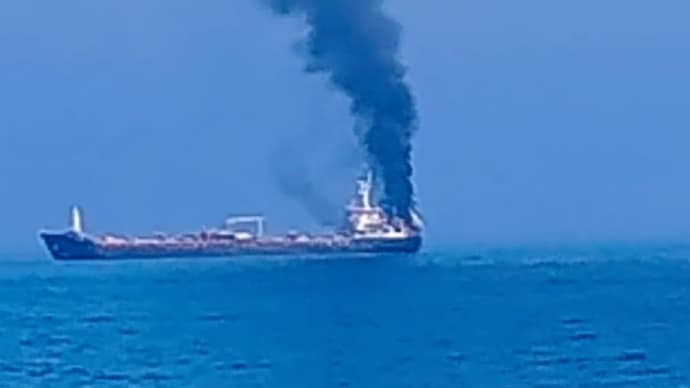
In the third attack on Indian-crewed ships in four days around the Gulf of Oman, American forces hit M/T Jalveer on Thursday with two Hellfire missiles. Twenty Indian sailors on the ship had to be rescued after the attack, which the US said was a result of the blockade being "enforced impartially against vessels of all nations".
The Hellfire missiles were fired into the oil tanker's engine room from an American aircraft, the US Central Command (Centcom) said in a statement issued from Florida on Wednesday (US time).
"US Central Command (CENTCOM) acted against Guinea-Bissau flagged M/T Jalveer as it attempted to transport oil from Iran through the Gulf of Oman. A US aircraft fired two Hellfire missiles into the ship's engine room after the crew repeatedly failed to comply with directions from US forces," it said.
For context, the Hellfire missile is an American air-to-ground, precision-guided missile primarily used for anti-armor strikes and neutralizing high-value targets. It can fired from a variety of platforms including Apache helicopters, Predator drones, as well ships and ground vehicles.
"The blockade is being enforced impartially against vessels of all nations entering or departing Iranian ports and coastal areas, including all Iranian ports in the Arabian Gulf and Gulf of Oman," the CENTCOM said in the statement.
The attack on M/T Jalveer is the third in four days that a ship being crewed by Indians had come under attack by US forces near Oman. The US is trying to enforce a strict blockade around the Gulf of Oman so that tankers with Iranian oil cannot leave any port in Iran.
| DATE | NAME OF THE VESSEL | STATUS OF THE CREW |
|---|---|---|
| June 8 | M/T Marivex | All 24 Indian crew members rescued |
| June 9 | M/T Settebello | 3 Indians killed, 21 rescued |
| June 11 | M/T Jalveer | All 20 Indian crew members rescued |
The US forces targeted M/T Marivax on Monday and M/T Settebello on Tuesday. Both the oil tankers were Palau-flagged and had Indian sailors. Three of the 24 Indian sailors on M/T Setebello are believed to have been killed in the attack.
India denounced the attack on Settebello, which was struck with precision munitions while it was transiting the Gulf of Oman, and summoned the US charge d'affaires Jason Meeks on Wednesday. He was issued a demarche over the attack, the strongest diplomatic stand that India took during the second term of President Donald Trump.
Unlike Marivax, Settebello was not blacklisted by the US Office of Foreign Assets Control, according to reports.
There were 20 Indian sailors on Jalveer, which was hit with the Hellfire missiles on Thursday, and all of them have been rescued and taken to Oman's Shinas port, according to the government.
India's Ministry of External Affairs (MEA) on Wednesday condemned the attack on Settebello, saying, "The continuing incidents of attacks on shipping in the region are deeply worrisome".
"The targeting of commercial shipping and civilian infrastructure in the region must end, and free and unimpeded navigation and commerce through the international waterways in the region in keeping with international law must be restored at the earliest," the MEA said.
WHY DID US FORCES ATTACK THE M/T JALVEER?
The attack on M/T Jalveer, along with similar strikes on two other Indian-crewed vessels in recent days, was carried out as part of the US-led blockade aimed at preventing the export of Iranian oil and petrochemicals through ports connected to the Strait of Hormuz.
The US imposed a naval blockade on Iranian ports and shipping on April 13 following the collapse of the Islamabad peace talks aimed at ending the wider Iran conflict. Announced by President Donald Trump and enforced by US Central Command (CENTCOM), the blockade is intended to cut off Iran's oil export revenues and increase pressure on Tehran amid tensions in and around the Strait of Hormuz.
The blockade applies to all vessels, regardless of nationality, entering or leaving Iranian ports and coastal areas along the Persian Gulf and Gulf of Oman. While ships travelling to non-Iranian destinations through the Strait of Hormuz are generally allowed to pass, vessels suspected of carrying Iranian oil can be warned, diverted, boarded, seized, or, in cases of repeated non-compliance, disabled through precision strikes targeting engine rooms rather than sinking the ships.
In the roughly eight weeks since the blockade began, US forces have intercepted or turned back dozens of vessels and disabled several ships accused of violating the restrictions. The recent attacks on M/T Jalveer, M/T Settebello and M/T Marivax are part of this enforcement campaign. While the blockade has reportedly reduced Iranian oil exports, it has also heightened risks for commercial shipping in the region, pushed up insurance and energy costs, and increased diplomatic tensions involving countries whose citizens crew affected vessels.
In the third attack on Indian-crewed ships in four days around the Gulf of Oman, American forces hit M/T Jalveer on Thursday with two Hellfire missiles. Twenty Indian sailors on the ship had to be rescued after the attack, which the US said was a result of the blockade being "enforced impartially against vessels of all nations".
The Hellfire missiles were fired into the oil tanker's engine room from an American aircraft, the US Central Command (Centcom) said in a statement issued from Florida on Wednesday (US time).
"US Central Command (CENTCOM) acted against Guinea-Bissau flagged M/T Jalveer as it attempted to transport oil from Iran through the Gulf of Oman. A US aircraft fired two Hellfire missiles into the ship's engine room after the crew repeatedly failed to comply with directions from US forces," it said.
For context, the Hellfire missile is an American air-to-ground, precision-guided missile primarily used for anti-armor strikes and neutralizing high-value targets. It can fired from a variety of platforms including Apache helicopters, Predator drones, as well ships and ground vehicles.
"The blockade is being enforced impartially against vessels of all nations entering or departing Iranian ports and coastal areas, including all Iranian ports in the Arabian Gulf and Gulf of Oman," the CENTCOM said in the statement.
The attack on M/T Jalveer is the third in four days that a ship being crewed by Indians had come under attack by US forces near Oman. The US is trying to enforce a strict blockade around the Gulf of Oman so that tankers with Iranian oil cannot leave any port in Iran.
| DATE | NAME OF THE VESSEL | STATUS OF THE CREW |
|---|---|---|
| June 8 | M/T Marivex | All 24 Indian crew members rescued |
| June 9 | M/T Settebello | 3 Indians killed, 21 rescued |
| June 11 | M/T Jalveer | All 20 Indian crew members rescued |
The US forces targeted M/T Marivax on Monday and M/T Settebello on Tuesday. Both the oil tankers were Palau-flagged and had Indian sailors. Three of the 24 Indian sailors on M/T Setebello are believed to have been killed in the attack.
India denounced the attack on Settebello, which was struck with precision munitions while it was transiting the Gulf of Oman, and summoned the US charge d'affaires Jason Meeks on Wednesday. He was issued a demarche over the attack, the strongest diplomatic stand that India took during the second term of President Donald Trump.
Unlike Marivax, Settebello was not blacklisted by the US Office of Foreign Assets Control, according to reports.
There were 20 Indian sailors on Jalveer, which was hit with the Hellfire missiles on Thursday, and all of them have been rescued and taken to Oman's Shinas port, according to the government.
India's Ministry of External Affairs (MEA) on Wednesday condemned the attack on Settebello, saying, "The continuing incidents of attacks on shipping in the region are deeply worrisome".
"The targeting of commercial shipping and civilian infrastructure in the region must end, and free and unimpeded navigation and commerce through the international waterways in the region in keeping with international law must be restored at the earliest," the MEA said.
WHY DID US FORCES ATTACK THE M/T JALVEER?
The attack on M/T Jalveer, along with similar strikes on two other Indian-crewed vessels in recent days, was carried out as part of the US-led blockade aimed at preventing the export of Iranian oil and petrochemicals through ports connected to the Strait of Hormuz.
The US imposed a naval blockade on Iranian ports and shipping on April 13 following the collapse of the Islamabad peace talks aimed at ending the wider Iran conflict. Announced by President Donald Trump and enforced by US Central Command (CENTCOM), the blockade is intended to cut off Iran's oil export revenues and increase pressure on Tehran amid tensions in and around the Strait of Hormuz.
The blockade applies to all vessels, regardless of nationality, entering or leaving Iranian ports and coastal areas along the Persian Gulf and Gulf of Oman. While ships travelling to non-Iranian destinations through the Strait of Hormuz are generally allowed to pass, vessels suspected of carrying Iranian oil can be warned, diverted, boarded, seized, or, in cases of repeated non-compliance, disabled through precision strikes targeting engine rooms rather than sinking the ships.
In the roughly eight weeks since the blockade began, US forces have intercepted or turned back dozens of vessels and disabled several ships accused of violating the restrictions. The recent attacks on M/T Jalveer, M/T Settebello and M/T Marivax are part of this enforcement campaign. While the blockade has reportedly reduced Iranian oil exports, it has also heightened risks for commercial shipping in the region, pushed up insurance and energy costs, and increased diplomatic tensions involving countries whose citizens crew affected vessels.

