US launches third consecutive night of strikes against Iran
Earlier in the day, Trump signalled that further military action could be on the way. In an interview with radio host Hugh Hewitt, the US president warned that Iran would be "hit hard Monday and Tuesday," indicating that Washington intends to maintain pressure on Tehran in the coming days.
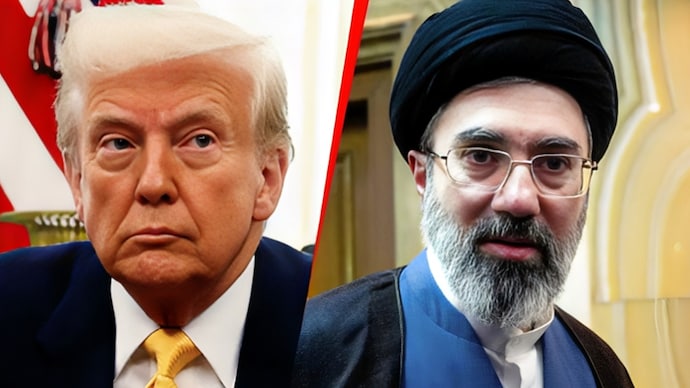
The United States on Monday carried out a third consecutive night of strikes against Iran, targeting the country's coastal surveillance systems, drone infrastructure and missile capabilities.
In a post on X, US Central Command (CENTCOM) said the latest operation was launched at the direction of President Donald Trump and was aimed at degrading Iran's ability to threaten civilian vessels and commercial shipping in the Strait of Hormuz.
"At 4:45 p.m. ET today, U.S. Central Command began launching the third consecutive night of strikes against Iran, at the Commander in Chief's direction," CENTCOM said. "These strikes will continue imposing a heavy cost on Iranian forces and degrade their ability to attack innocent civilians and commercial shipping in the Strait of Hormuz."
The latest strikes come amid escalating tensions between Washington and Tehran following military exchanges over the weekend.
Iranian media reported a series of explosions in southern Iran on Tuesday, shortly after U.S. Central Command (CENTCOM) announced a new wave of strikes against the country.
Initial reports cited blasts in the port city of Bandar Abbas and on Kish Island. Later, Iran's Fars news agency said several explosions were also heard in Jam, a city in Bushehr province, as well as on Qeshm Island.
TRUMP THREATENS TO TAKE OUT PICKAXE MOUNTAIN
Earlier, Trump signalled that further military action could be on the way. In an interview with radio host Hugh Hewitt, the US president warned that Iran would be "hit hard Monday and Tuesday," indicating that Washington intends to maintain pressure on Tehran in the coming days.
The US President said military operations against Iran could continue for another two to three weeks, signaling a prolonged campaign against Tehran.
Speaking with conservative radio host Hugh Hewitt, Trump also threatened to strike Iran's Kuh-e Kolang Gaz La, commonly known as “Pickaxe Mountain,” describing it as “a possible target for a nice, big, fat shot right in the front door.”
Pickaxe Mountain is a heavily fortified nuclear facility built deep within the Zagros mountain range in central Iran.
“We’re going to take out Pickaxe Mountain. Tell the Iranians to be ready. There’s nothing they can do about it,” Trump said during the interview.
US REINSTATES BLOCKADE ON IRAN IN HORMUZ
The United States and Iran on Monday both asserted authority over the Strait of Hormuz, escalating tensions after a weekend of attacks across the Middle East and raising fresh doubts about prospects for diplomacy.
The latest flare-up came after Iran attacked a container ship in the strait off the coast of Oman on Sunday, bringing the strategically vital waterway back to the centre of the conflict. The incident was followed by a fresh round of US strikes on Iranian targets.
Trump said the United States would act as the “Guardian of the Hormuz Strait,” announcing a renewed blockade on Iran and a 20% fee on eligible cargo transiting the strategic waterway. He said Iranian vessels would no longer be permitted to pass through the strait, while other ships would be charged for safe passage.
"We are reinstating the THE IRANIAN BLOCKADE, so named because it is only stopping Iran's ships or customers from entering or leaving," Trump wrote on social media. He added that all other countries would continue to enjoy unrestricted access to the strait and said the toll would help cover the costs of maintaining security in the region.
The Strait of Hormuz, located at the entrance to the Persian Gulf, remains one of the world's most important energy chokepoints, historically carrying around one-fifth of globally traded crude oil and natural gas.
US AND IRAN TRADE CLAIMS OVER WATERWAY
The latest confrontation comes despite a 60-day interim arrangement aimed at paving the way for negotiations on a permanent end to hostilities. Instead, the agreement has been overshadowed by a series of military exchanges centred on the future of the strait.
On Monday, US Central Command (CENTCOM) said American forces carried out strikes on dozens of targets inside Iran, including air defence systems, radar installations, missile and drone capabilities, and small naval vessels.
"The Strait of Hormuz is a vital maritime corridor for global trade. Iran does not control it," CENTCOM said in a statement.
Iran swiftly rejected the claim. The Islamic Revolutionary Guard Corps (IRGC) said the waterway falls within Iran's territory and accused Washington of unlawful interference.
"The Strait of Hormuz is our territory, and we will not allow a rogue and child-killing army from the other side of the world to continue its illegal interference in it," the IRGC said.
The competing claims have heightened concerns about maritime security and global energy supplies, while international efforts to prevent a broader conflict appear increasingly strained.
Warning of the risks posed by further escalation, United Nations Secretary-General Antƒónio Guterres said a return to full-scale hostilities would have "catastrophic consequences."
The United States on Monday carried out a third consecutive night of strikes against Iran, targeting the country's coastal surveillance systems, drone infrastructure and missile capabilities.
In a post on X, US Central Command (CENTCOM) said the latest operation was launched at the direction of President Donald Trump and was aimed at degrading Iran's ability to threaten civilian vessels and commercial shipping in the Strait of Hormuz.
"At 4:45 p.m. ET today, U.S. Central Command began launching the third consecutive night of strikes against Iran, at the Commander in Chief's direction," CENTCOM said. "These strikes will continue imposing a heavy cost on Iranian forces and degrade their ability to attack innocent civilians and commercial shipping in the Strait of Hormuz."
The latest strikes come amid escalating tensions between Washington and Tehran following military exchanges over the weekend.
Iranian media reported a series of explosions in southern Iran on Tuesday, shortly after U.S. Central Command (CENTCOM) announced a new wave of strikes against the country.
Initial reports cited blasts in the port city of Bandar Abbas and on Kish Island. Later, Iran's Fars news agency said several explosions were also heard in Jam, a city in Bushehr province, as well as on Qeshm Island.
TRUMP THREATENS TO TAKE OUT PICKAXE MOUNTAIN
Earlier, Trump signalled that further military action could be on the way. In an interview with radio host Hugh Hewitt, the US president warned that Iran would be "hit hard Monday and Tuesday," indicating that Washington intends to maintain pressure on Tehran in the coming days.
The US President said military operations against Iran could continue for another two to three weeks, signaling a prolonged campaign against Tehran.
Speaking with conservative radio host Hugh Hewitt, Trump also threatened to strike Iran's Kuh-e Kolang Gaz La, commonly known as “Pickaxe Mountain,” describing it as “a possible target for a nice, big, fat shot right in the front door.”
Pickaxe Mountain is a heavily fortified nuclear facility built deep within the Zagros mountain range in central Iran.
“We’re going to take out Pickaxe Mountain. Tell the Iranians to be ready. There’s nothing they can do about it,” Trump said during the interview.
US REINSTATES BLOCKADE ON IRAN IN HORMUZ
The United States and Iran on Monday both asserted authority over the Strait of Hormuz, escalating tensions after a weekend of attacks across the Middle East and raising fresh doubts about prospects for diplomacy.
The latest flare-up came after Iran attacked a container ship in the strait off the coast of Oman on Sunday, bringing the strategically vital waterway back to the centre of the conflict. The incident was followed by a fresh round of US strikes on Iranian targets.
Trump said the United States would act as the “Guardian of the Hormuz Strait,” announcing a renewed blockade on Iran and a 20% fee on eligible cargo transiting the strategic waterway. He said Iranian vessels would no longer be permitted to pass through the strait, while other ships would be charged for safe passage.
"We are reinstating the THE IRANIAN BLOCKADE, so named because it is only stopping Iran's ships or customers from entering or leaving," Trump wrote on social media. He added that all other countries would continue to enjoy unrestricted access to the strait and said the toll would help cover the costs of maintaining security in the region.
The Strait of Hormuz, located at the entrance to the Persian Gulf, remains one of the world's most important energy chokepoints, historically carrying around one-fifth of globally traded crude oil and natural gas.
US AND IRAN TRADE CLAIMS OVER WATERWAY
The latest confrontation comes despite a 60-day interim arrangement aimed at paving the way for negotiations on a permanent end to hostilities. Instead, the agreement has been overshadowed by a series of military exchanges centred on the future of the strait.
On Monday, US Central Command (CENTCOM) said American forces carried out strikes on dozens of targets inside Iran, including air defence systems, radar installations, missile and drone capabilities, and small naval vessels.
"The Strait of Hormuz is a vital maritime corridor for global trade. Iran does not control it," CENTCOM said in a statement.
Iran swiftly rejected the claim. The Islamic Revolutionary Guard Corps (IRGC) said the waterway falls within Iran's territory and accused Washington of unlawful interference.
"The Strait of Hormuz is our territory, and we will not allow a rogue and child-killing army from the other side of the world to continue its illegal interference in it," the IRGC said.
The competing claims have heightened concerns about maritime security and global energy supplies, while international efforts to prevent a broader conflict appear increasingly strained.
Warning of the risks posed by further escalation, United Nations Secretary-General Antƒónio Guterres said a return to full-scale hostilities would have "catastrophic consequences."

