Will keep Hormuz open, keep all ships ready for blockade if needed: Trump
Trump said talks with Iran were progressing positively and that the likelihood of the United States reimposing a blockade on the Strait of Hormuz was 'highly unlikely' at this stage.
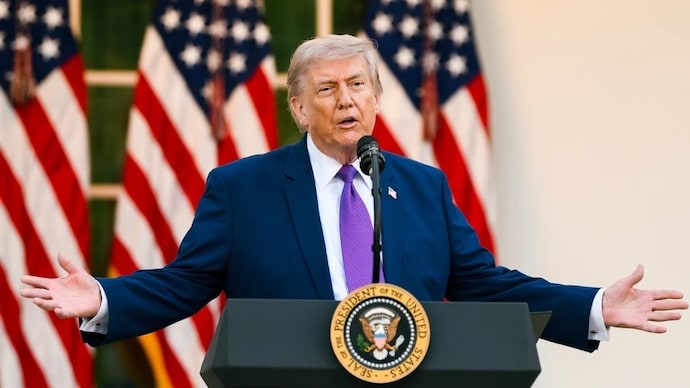
US President Donald Trump on Tuesday said the United States would allow the strategically important Strait of Hormuz to remain open and would not impose a naval blockade for now, while warning Iran that American naval forces would remain deployed in the region and could quickly reinstate the blockade if required.
In a statement on his social media platform, Trump said he had agreed to keep the Strait of Hormuz open as negotiations with Iran were progressing positively.
"I have agreed to allow the Hormuz Strait to remain OPEN, with no further Naval Blockade. However, all ships are remaining in place should it be necessary to reinstitute the Blockade, which seems, at this point, highly unlikely," the US President posted on Truth Social.
Trump further claimed that Iran has "fully and completely agreed" to the highest level of nuclear inspections "long into the future," a move he said would ensure "nuclear honesty." According to him, Tehran's acceptance of the inspections was a key condition for continuing negotiations, adding that there would have been "no further negotiations" if Iran had rejected the demand.
"Iran has fully and completely agreed to highest level Nuclear inspections long into the future (Infinity!!!). This will insure “Nuclear Honesty.” If they did not agree to this, there would be no further negotiations!" he added.
Trump also outlined the contours of a sanctions relief mechanism for Iran, saying that money released by the US Treasury would be placed in an escrow account controlled by his administration rather than transferred directly to Iran. He said the funds would be used exclusively to purchase food and medical supplies from American producers, including corn, wheat and soybeans, describing the arrangement as a humanitarian measure.
Calling the situation in Iran a humanitarian crisis, Trump said the assistance was necessary "before it is too late" and asserted that talks between Washington and Tehran were "going well." He also accused sections of the media of attempting to minimise what he described as a US diplomatic victory.
In a separate social media post, the US President said 19 million barrels of oil passed through the Strait of Hormuz on Monday alone, calling it an all-time record.
"19 Millions Barrels of Oil flowed out of the Hormuz Strait yesterday, an all time RECORD. Oil prices are tumbling down, and the World is a much safer place!!! President DONALD J. TRUMP," he wrote.
OMAN, IRAN ASSERT SOVEREIGN RIGHTS OVER HORMUZ
Meanwhile, Oman and Iran, in a joint statement, reaffirmed their commitment to keeping the Strait open for international shipping, while asserting their sovereign rights over the crucial waterway and announcing plans to develop a new framework for its future management.
The two countries said they had renewed their commitment to maintaining the Strait of Hormuz as a "safe and open waterway for international navigation", signalling an effort to reassure global markets after weeks of heightened tensions in the Gulf. At the same time, they said that "all arrangements relating to the Strait of Hormuz must fully respect their sovereignty and sovereign rights."
The statement indicated that any future governance mechanism would have to recognise the authority of the littoral states. As part of the initiative, Oman and Iran said they would establish a joint team to negotiate an agreement on the "future management of navigation" through the Strait of Hormuz. The proposed framework is expected to address operational, legal and administrative aspects of maritime traffic in one of the world's busiest energy chokepoints.
The Strait of Hormuz links the Persian Gulf with the Gulf of Oman and the Arabian Sea, serving as the primary export route for crude oil and liquefied natural gas (LNG) from major Gulf producers. Maritime traffic through the strategic waterway was severely disrupted after Iran effectively restricted navigation following the outbreak of the Middle East conflict in late February, while the United States also imposed a blockade on Iranian ports and shipping linked to the strait. The peace agreement signed by Washington and Tehran has primarily focused on reopening the waterway, leading to a gradual resumption of commercial shipping, although vessel traffic remains below pre-war levels.
US President Donald Trump on Tuesday said the United States would allow the strategically important Strait of Hormuz to remain open and would not impose a naval blockade for now, while warning Iran that American naval forces would remain deployed in the region and could quickly reinstate the blockade if required.
In a statement on his social media platform, Trump said he had agreed to keep the Strait of Hormuz open as negotiations with Iran were progressing positively.
"I have agreed to allow the Hormuz Strait to remain OPEN, with no further Naval Blockade. However, all ships are remaining in place should it be necessary to reinstitute the Blockade, which seems, at this point, highly unlikely," the US President posted on Truth Social.
Trump further claimed that Iran has "fully and completely agreed" to the highest level of nuclear inspections "long into the future," a move he said would ensure "nuclear honesty." According to him, Tehran's acceptance of the inspections was a key condition for continuing negotiations, adding that there would have been "no further negotiations" if Iran had rejected the demand.
"Iran has fully and completely agreed to highest level Nuclear inspections long into the future (Infinity!!!). This will insure “Nuclear Honesty.” If they did not agree to this, there would be no further negotiations!" he added.
Trump also outlined the contours of a sanctions relief mechanism for Iran, saying that money released by the US Treasury would be placed in an escrow account controlled by his administration rather than transferred directly to Iran. He said the funds would be used exclusively to purchase food and medical supplies from American producers, including corn, wheat and soybeans, describing the arrangement as a humanitarian measure.
Calling the situation in Iran a humanitarian crisis, Trump said the assistance was necessary "before it is too late" and asserted that talks between Washington and Tehran were "going well." He also accused sections of the media of attempting to minimise what he described as a US diplomatic victory.
In a separate social media post, the US President said 19 million barrels of oil passed through the Strait of Hormuz on Monday alone, calling it an all-time record.
"19 Millions Barrels of Oil flowed out of the Hormuz Strait yesterday, an all time RECORD. Oil prices are tumbling down, and the World is a much safer place!!! President DONALD J. TRUMP," he wrote.
OMAN, IRAN ASSERT SOVEREIGN RIGHTS OVER HORMUZ
Meanwhile, Oman and Iran, in a joint statement, reaffirmed their commitment to keeping the Strait open for international shipping, while asserting their sovereign rights over the crucial waterway and announcing plans to develop a new framework for its future management.
The two countries said they had renewed their commitment to maintaining the Strait of Hormuz as a "safe and open waterway for international navigation", signalling an effort to reassure global markets after weeks of heightened tensions in the Gulf. At the same time, they said that "all arrangements relating to the Strait of Hormuz must fully respect their sovereignty and sovereign rights."
The statement indicated that any future governance mechanism would have to recognise the authority of the littoral states. As part of the initiative, Oman and Iran said they would establish a joint team to negotiate an agreement on the "future management of navigation" through the Strait of Hormuz. The proposed framework is expected to address operational, legal and administrative aspects of maritime traffic in one of the world's busiest energy chokepoints.
The Strait of Hormuz links the Persian Gulf with the Gulf of Oman and the Arabian Sea, serving as the primary export route for crude oil and liquefied natural gas (LNG) from major Gulf producers. Maritime traffic through the strategic waterway was severely disrupted after Iran effectively restricted navigation following the outbreak of the Middle East conflict in late February, while the United States also imposed a blockade on Iranian ports and shipping linked to the strait. The peace agreement signed by Washington and Tehran has primarily focused on reopening the waterway, leading to a gradual resumption of commercial shipping, although vessel traffic remains below pre-war levels.

