
2026 BMW i7 facelift review – Moving beyond luxury

With the 7 Series getting its first update since its launch, the luxury barge is even more attractive, tech-laden and boasts better battery and motor tech.
2026 BMW i7 facelift
Delhi,Oct 1, 2026 17:40 IST Last UpdatedOct 1, 2026 17:40 IST
  Published by
Last UpdatedOct 1, 2026 17:40 IST Published byAnagh Bhaskar
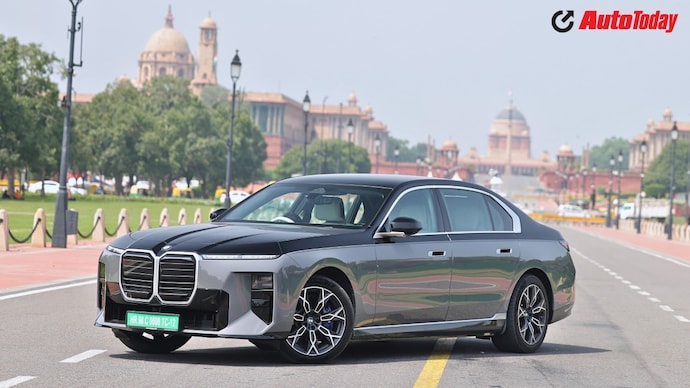
Oct 1, 2026 17:40 ISTNobody would’ve thought the challenge that the G70 7 Series would’ve brought to the S-Class, especially in India, where the S has ruled unchallenged for years. The combination of better tech, and a unique approach to the luxury quotient, along with the fact that BMW brought an absolutely incredible electric counterpart in the form of the i7, has ensured that the 7 and the S are even pegging. And with the launch of the latest S-Class here, BMW has lost no time in bringing in the updated 7 Series, and we experienced the i7 50 in the streets of Delhi that this car will frequent.
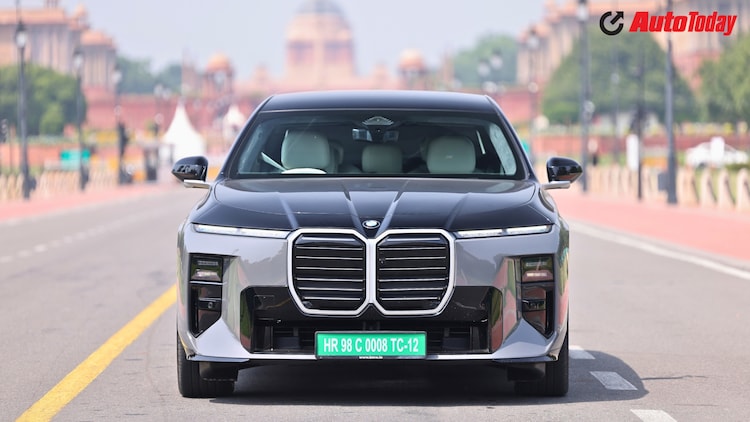
The BMW i7 has undergone plenty of changes visually, but changes to nearly everything mean that the 7 feels radical, much more sedate. The DRLs with its intricate crystalline theme are sleeker and longer, while the grille is still large, but gels much better into the face and gets illumination. The headlamps are now smaller, and tucked into the corners.
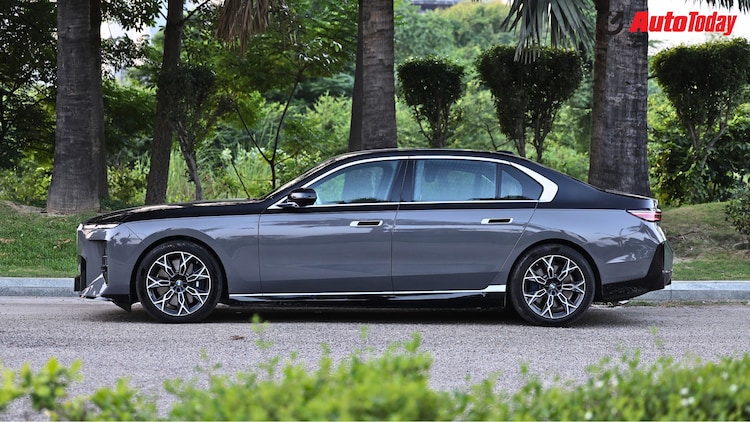
Over to the sides, not much has changed, but BMW has used its sharpening of the elements to give the i7 a dual-tone paint job, and it actually gives the sedan a stately appearance despite the otherwise radical look. New 20-inch alloys are quite sporty, and while they do miss out on the size, the comfort benefits are enormous.
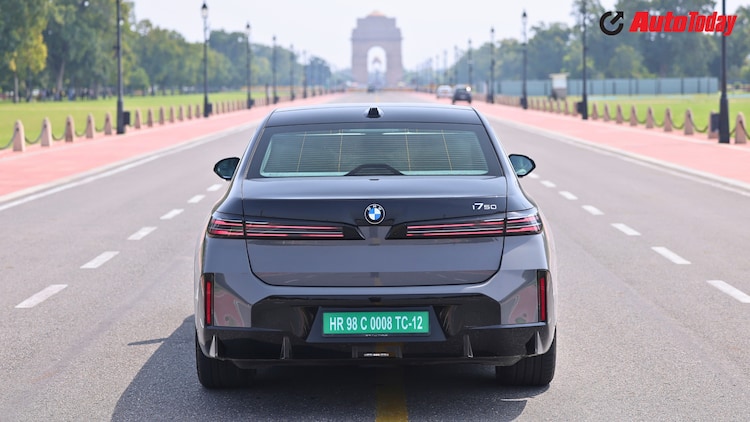
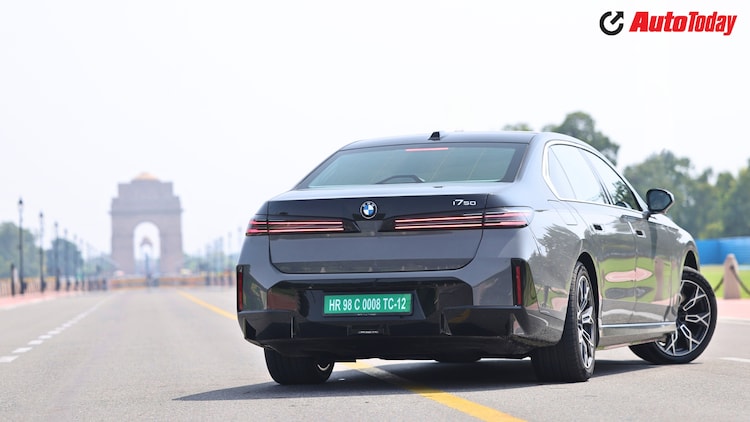
The taillamps are wider, and look like aircraft propeller blades coming off the BMW roundel, might be the designers pointing to BMW’s aircraft engine origins. The diffuser is new as well, and the bumper is reprofiled too. The i7 is just so much more palatable than before, every single element, line and detail mean that it looks so much more normal, but this may also be due to the fact that since the launch of the G70 7 Series, many more radical designs have shown up in the market.
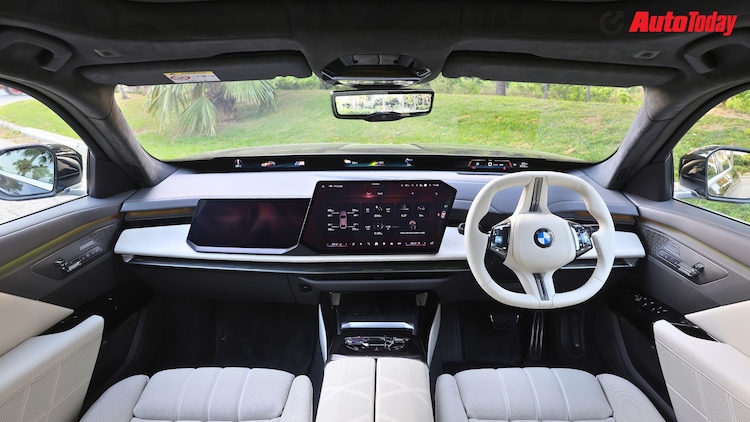
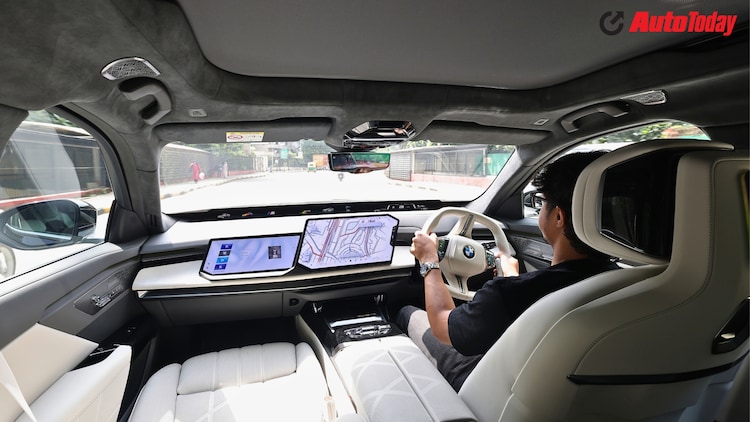
The interiors are what feel like a generational change, nearly every single bit has been revised. BMW has been a pioneer of displays, and the i7 is its latest magnum opus, the central display is an irregular hexagon, flanked by a passenger display. But it is the edge-to-edge BMW Panoramic Vision display that grabs all the attention, and this means that there is no driver’s display.
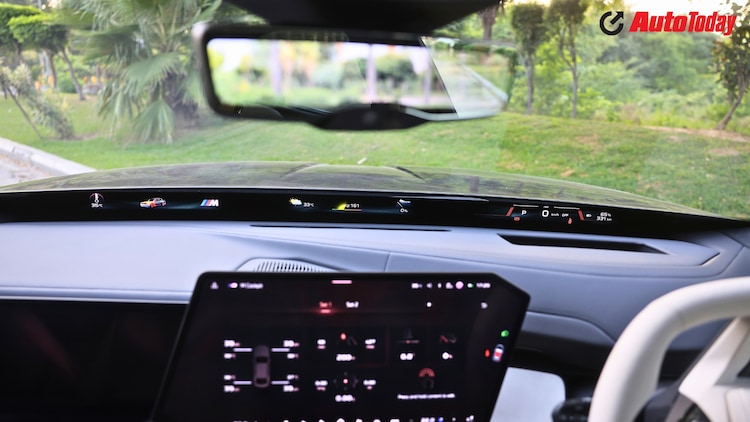
It has driving data ahead of the driver, but on its central and the left side, it is fully configurable. One can customise it to display throttle input, battery state, temperature, weather, as well as really cool elements like the M Badge, and iconic BMW models from the past. This is so well integrated into the base of the windshield that one starts to wonder why this wasn’t done before. There is, of course, a very advanced HUD, but the Panoramic Vision does make it feel a bit redundant, considering it’s right in the line-of-vision – just like the HUD.
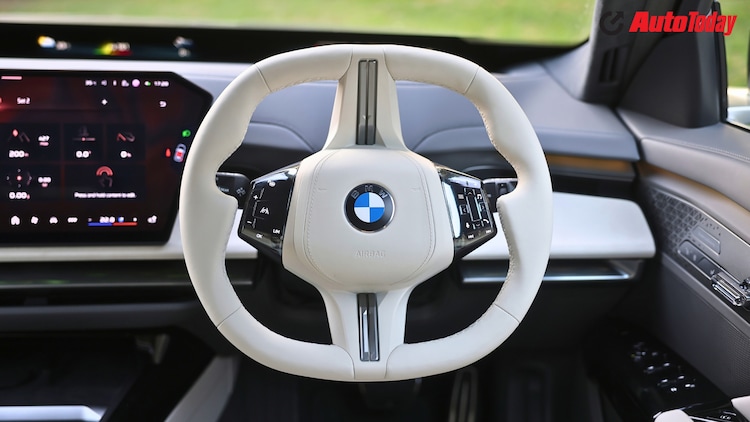
The internet wasn’t really kind to the new steering wheel, names were called, jokes were made, and all of that goes out of the window the moment one drives this. The octagonal shape with vertically aligned spokes is very unique, and yet to hold, in whichever manner one wants is just uncannily perfect, BMW has truly stepped into a new level of human-machine integration – and the steering is one of the highlights of this. It has illuminated and haptic controls, and some of these vanish when they cannot be operated, such as the parking assist at higher speeds. The 17.9-inch central display serves as the control hub for everything and with each successive update, BMW’s fully screen based system has gotten better and better.
As before, the interiors are supremely well crafted, everything is top-notch, and the ambient lighting setup is one of the best in business, and is even more intense than before with two strips on the dash. While it all looks and feels brilliant, BMW easily surpasses its rivals when it comes to tech, the i7 gets Bowers & Wilkins Diamond surround audio, heated and ventilated seats, four-zone climate control, massage seats, a passenger display and so much more.
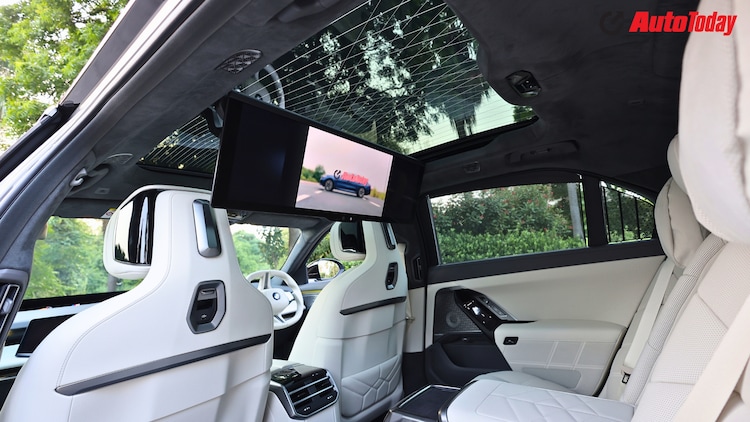
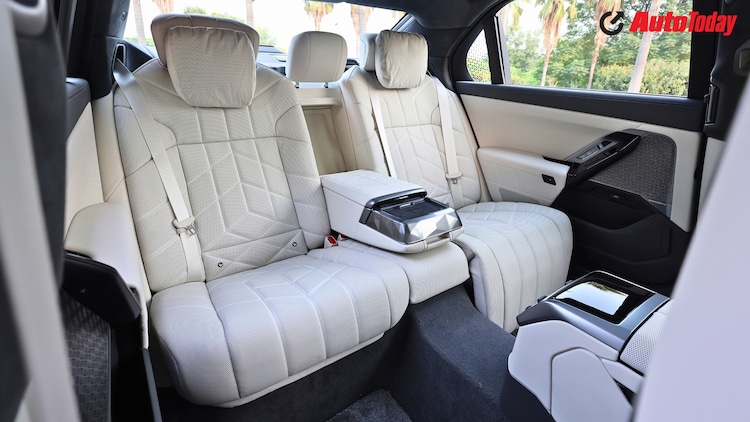
The rear is of course the party piece, with powered seats that come with ventilation, heating and massage functions while the left seat can recline fully by pushing the front seat ahead. The 8K 31.3-inch theatre display is as before an absolute occasion, and this time around, very easy to mirror streaming apps from one’s smartphone. One thing that makes the i7 stand a bit apart are the powered doors, making it a sense of occasion every time one enters or exits.
The i7 is now available in two variants, the 50 and the M70, and we had the former on test. It gets a dual-motor setup with 455bhp and 660Nm of torque with xDrive AWD. And this is one of the nicest calibrations of any EV in the market, the i7 is easy to drive in traffic, to make quick overtakes or getting to triple digit speeds on the highway, it doesn’t feel intimidating at all. It can launch from 0 to 100kmph in just 5.5 seconds. What's even better is the regen braking, with the Adaptive setting making life so easy. It adjusts the braking, or lets the car coast depending upon the traffic and road conditions.
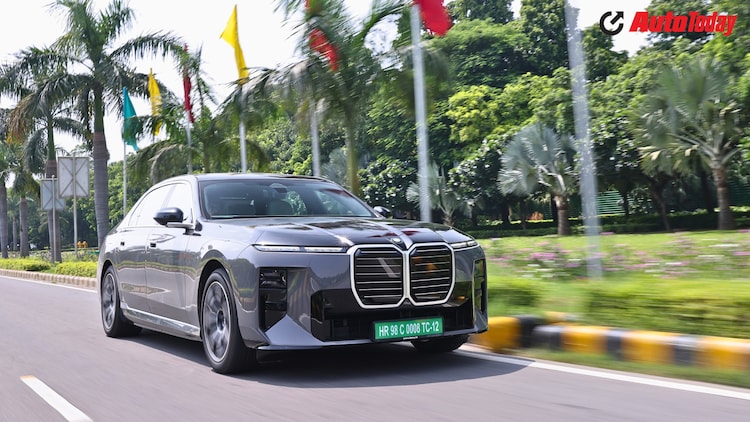
Despite its size, the i7 is extremely easy to maneuver, aided by the rear-axle steering. The ride quality is truly impressive, like a pillow, the air suspension absorbs everything, even bad patches without complaint, body control is brilliant and even deeper undulations don’t unsettle the body. In Sport mode, the i7 becomes quite the fun machine, it has composure on corners and the power to get out very easily – it feels safe almost all of the time. But the i7 is best enjoyed in comfort mode, it drives just as a flagship sedan should. With the new 112kWh battery pack, the i7 now boasts a range of 728km according to the WLTP cycle. So expect a real world range touching 600km on a single charge, which is at par with the segment.
VERDICT
Priced at Rs 1.95 crore (ex-showroom), the i7 costs exactly the same as the petrol 7 Series, but there’s a catch. In some states that do not tax EVs or hybrids, the i7 can save anywhere between Rs 15-20 lakh in purchasing cost alone, not to mention the savings coming from the running costs. As an update, the i7 has everything going for it, and it proudly represents the best of BMW, the tech, the driving experience, the visual updates all are great. The i7, though, feels like it's much more human than before, every single bit, whether its comfort, or the driving experience just feels more biologically tuned than mechanically.
Subscribe to Auto Today Magazine
- Ends
Cannot decide whether I am a gamer at heart, or a driver, irrespective, I do love spending hours and hours in the seat, behind the wheel of a car or a gaming setup. And while our country, and the world sadly loves only SUVs, I think, the lower the centre of gravity, the better, and purer. Totally up for thousand (or few thousand) kilometre cross-country drives, any month of the year.
READ MORE