
NSE, Jio IPOs have retail investors excited. But are big listings worth the hype?
NSE and Jio are already generating plenty of excitement. But before investors join the rush, recent IPO history offers an important lesson about hype, valuations and long-term returns. Read on to find out why big listings don't always translate into big gains.
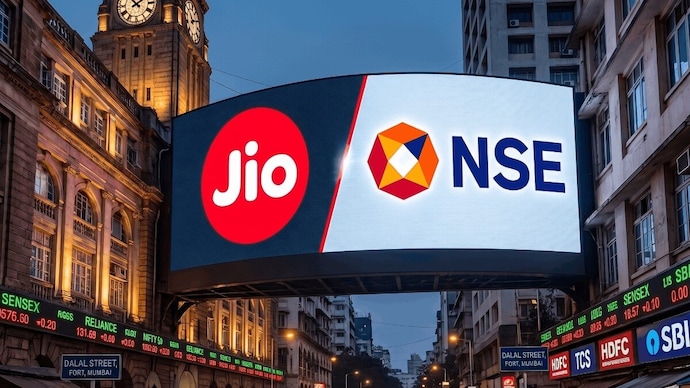

If you've been following the stock market recently, you've probably come across two names over and over again: NSE and Jio.
One runs India's largest stock exchange. The other transformed how India consumes mobile data.
Neither company has listed yet, and investors may have to wait some time before they get a chance to buy the shares. Both the National Stock Exchange (NSE) and Jio Platforms have only recently filed their Draft Red Herring Prospectuses (DRHPs) with the Securities and Exchange Board of India (Sebi), marking the first major step in the IPO process.
The filing of a DRHP does not mean the IPO is around the corner. Sebi will now review the draft documents, seek clarifications if required and issue its observations before the companies can proceed with their public offerings. Only after that process is completed will issue dates be announced and the road to listing begin.
Yet investor excitement is already building.
Valuation estimates are flying around, discussions on social media are intensifying and retail investors are beginning to calculate potential listing gains — the profits they could make if the shares open above their IPO price on debut day.
It's not difficult to see why.
WHY INVESTORS ARE WAITING FOR NSE, JIO IPOs
After years of regulatory hurdles and delays, NSE has finally moved a step closer to the public markets. The exchange's listing plans have remained stuck for nearly a decade, making this one of the most anticipated IPOs in recent memory.
The proposed issue is expected to be a pure Offer for Sale (OFS). In simple terms, existing shareholders will sell part of their stake and receive the proceeds. NSE itself will not receive fresh capital from the IPO.
Based on prevailing valuations in the unlisted market, the issue could be worth around Rs 28,000 crore to Rs 30,000 crore, making it one of India's biggest-ever public offerings.
Jio Platforms is no less significant.
The company, which sits at the centre of Reliance Industries' digital ambitions, has also filed its DRHP with Sebi. Unlike NSE, Jio's proposed offering is expected to be largely a fresh issue, meaning most of the money raised will go to the company itself. Such capital can then be used for expansion, investments and strengthening the business.
Market estimates suggest the issue could raise between Rs 35,000 crore and Rs 40,000 crore, potentially making it India's largest-ever IPO.
Both companies come with formidable credentials.
NSE reported a net profit of over Rs 10,000 crore in FY26 and continues to dominate India's equity derivatives market. Jio Platforms, meanwhile, generated revenue of nearly Rs 1.5 lakh crore and profit of more than Rs 30,000 crore during the same period.
Few would dispute that these are among the strongest businesses preparing to enter the public markets.
But that is precisely what makes the upcoming listings interesting.
The bigger question is not whether NSE and Jio are good businesses. Most investors would agree they are.
The real question is whether buying into a big IPO automatically translates into long-term wealth creation.
A LESSON FROM INDIA'S IPO BOOM
Recent history suggests the answer is not always straightforward.
India witnessed an IPO boom in 2025. Companies raised a record Rs 1.83 lakh crore through 108 mainboard IPOs, making it the biggest fundraising year in the country's history. Investor demand remained robust and many issues were subscribed multiple times over.
Yet the outcomes told a more nuanced story.
The median listing gain for IPOs fell to just 3.8%. More importantly, a majority of those IPOs eventually slipped below their listing prices despite delivering gains on debut.
In other words, many investors who celebrated on listing day found themselves looking at a very different picture a few months later.
HYPE VS ACTUAL RETURN
According to Ratiraj Tibrewal, CEO of Choice Capital, that gap between listing-day excitement and long-term performance is not accidental.
"Grey market buzz, oversubscription headlines and listing-day excitement create the illusion that quick gains are automatic," he said.
For many retail investors, the IPO journey often begins not with studying a company's business but by checking subscription numbers, grey market premiums and social media discussions.
Grey market premium, or GMP, refers to the unofficial premium at which IPO shares trade before listing. It is often viewed as an indicator of expected listing gains, although there is no guarantee that those expectations will eventually be met.
Tibrewal believes investors often mistake IPO allotment for a near-certain profit opportunity.
"The gap between listing-day euphoria and long-term performance is structural, not coincidental," he said.
According to him, IPOs often serve a purpose beyond simply raising money.
"Promoters and private equity investors use the IPO primarily as an exit, offloading shares at peak valuations to a public that has far less information about the company's true financial health," Tibrewal said.
Put simply, some of the earliest investors in a company use the IPO as an opportunity to cash out a portion of their holdings after years of growth. Retail investors, meanwhile, typically enter much later, often when public attention is at its highest.
NSE VS JIO IPO
That distinction becomes particularly relevant in the case of NSE and Jio.
At first glance, the two offerings appear similar. Both are household names. Both are expected to attract massive retail participation. Both could rank among the largest listings in Indian history.
But beneath the surface, they are very different transactions.
"NSE is a pure offer for sale, where proceeds go to exiting shareholders, while Jio is largely a fresh issue funding growth. These are different propositions that demand different scrutiny," Tibrewal said.
In simple terms, the money raised through the two offerings is headed to different places. In NSE's case, existing shareholders are monetising part of their investments. In Jio's case, most of the capital raised is expected to go back into the company.
That does not make one better than the other.
NSE offers investors exposure to one of India's most profitable financial market institutions. It is a mature business with dominant market share, strong cash generation and a near-central role in India's capital markets.
Jio offers a different proposition. Investors are effectively buying into Reliance's broader digital ecosystem, which spans telecom services, digital platforms, enterprise solutions and future technology ambitions.
In simple terms, one is largely a play on India's growing financial markets. The other is a bet on India's expanding digital economy.
LOTTERY-TICKET MINDSET
The challenge for investors is not deciding whether these are quality businesses. It is determining how much future growth is already reflected in the price at which they will eventually be offered.
That is where IPO investing often becomes complicated.
"The biggest mistake retail investors make with mega IPOs like NSE and Jio is treating allotment as a lottery ticket instead of a buying decision," Tibrewal said.
According to him, many investors spend more time discussing GMPs and listing gains than understanding valuations — a measure of what the market believes a company is worth.
Investors also tend to obsess over subscription numbers and allotment chances while paying less attention to earnings growth, competition and long-term business prospects.
For long-term investors, valuation may matter far more than allotment.
A great company can still become a poor investment if bought at an excessive price. Likewise, a company does not need spectacular listing gains to generate strong returns over time.
LISTING DAY GAINS NOT THE FINAL VERDICT
That is why Tibrewal cautions investors against treating listing day as the final verdict.
"Price discovery doesn't end on listing day—it barely begins," he said.
Price discovery is the process through which the market gradually determines what a company is truly worth. According to Tibrewal, that process can take anywhere between 12 and 18 months as companies pass through multiple earnings cycles and investors begin focusing on business performance rather than market excitement.
"The opening price reflects scarcity and excitement. True value emerges over the following quarters through earnings, institutional flows and valuations," he said.
That may be the most important lesson for investors preparing for the arrival of NSE and Jio.
The excitement surrounding both companies is understandable. They are profitable, dominant in their respective sectors and likely to attract enormous interest whenever they eventually hit the market.
But if India's recent IPO boom has taught investors anything, it is that listing gains and long-term returns are rarely the same thing.
Getting an allotment may be the easy part. Figuring out whether the stock is worth owning years later is where the real challenge begins.