
Centre weighs phased E25 petrol rollout by 2029 amid E20 fuel debate
With E20 petrol now available nationwide, the Centre is evaluating E21 by 2027 and E25 by 2029. Officials say any move to higher ethanol blends will be phased to address industry readiness and consumer concerns.
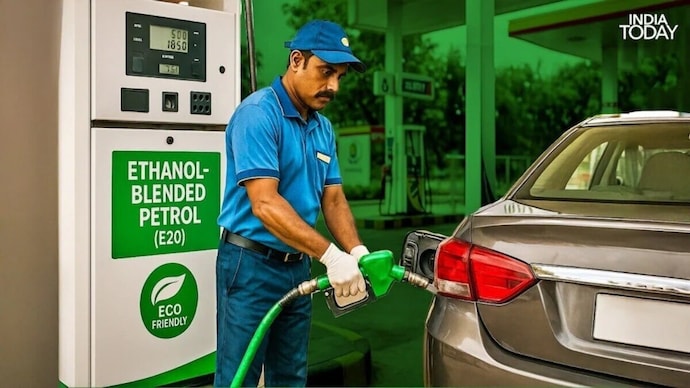

The Centre is evaluating the next phase of India's ethanol blending programme, with a roadmap that could see E21 petrol introduced by 2027 and E25 by 2029. The move comes even as the nationwide rollout of E20 petrol continues to fuel debate over mileage, vehicle compatibility and higher running costs, particularly among owners of older vehicles.
According to sources, the government is examining a phased transition rather than moving directly to higher ethanol blends. Under the proposal being evaluated, E21 blended petrol could be rolled out by 2027, while E25 could follow by 2029.
Sources had earlier told Business Today that the Centre is also considering capping ethanol blending in petrol at 25%, making E25 the highest blend under the current policy framework.
"The transition towards higher ethanol blending will happen in a calibrated and phased manner so that the automobile industry gets adequate time to prepare engines, supply chains and infrastructure accordingly," a source aware of the discussions told Business Today.
The gradual approach is aimed at giving vehicle manufacturers, component makers and fuel suppliers enough time to adapt to higher ethanol blends before they are introduced nationwide.
Another source said the government is aware of the concerns being raised over vehicle compatibility and fuel efficiency as E20 petrol becomes widely available.
"The idea is not to disrupt the ecosystem suddenly. The transition will be gradual and aligned with industry readiness," the source told Business Today.
The ethanol blending programme has become a key part of India's strategy to cut its dependence on imported crude oil while creating additional demand for domestically produced ethanol.
The Centre had already achieved nationwide availability of E20 petrol five years ahead of its original 2030 target, marking one of the fastest transitions under the country's ethanol blending programme.
According to official estimates, achieving 20% ethanol blending has helped India save nearly 4.5 crore barrels of crude oil every year while reducing foreign exchange outflow by around Rs 1.5 lakh crore.
However, the rollout has also led to questions from consumers over mileage, vehicle performance and compatibility, making the proposed roadmap for E21 and E25 an important next step in India's long-term fuel strategy.