
UPI payments above Rs 2,000: 76% users may move to cash, cards if MDR is passed on

UPI payments above Rs 2,000 will attract a 0.4% MDR from October 15. Surveys show many users and merchants could resist the change, raising the risk of a shift to cash and cards.
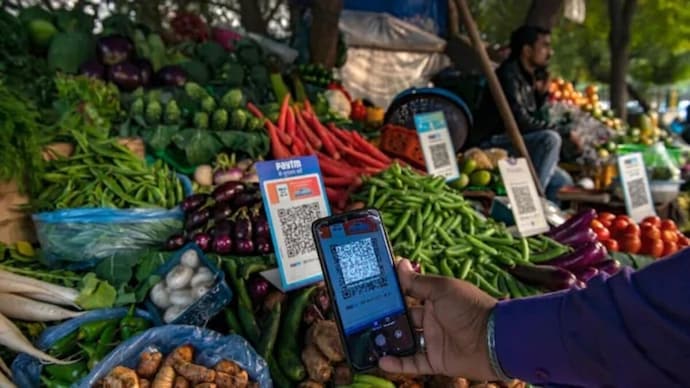


UPI's six-year run as a largely free payment option for merchants is set to face a test from October 15, with a 0.4% merchant discount rate (MDR) coming into effect for person-to-merchant payments above Rs 2,000.
A new LocalCircles survey suggests the change could push a large number of consumers towards cash, credit cards, debit cards and bank transfers if merchants pass the cost on to them.
Only 14% of UPI users surveyed said they would continue paying through UPI and bear the additional cost if a merchant charges them for payments above Rs 2,000. The remaining respondents said they would look for another payment option or avoid or delay the purchase.
The survey, conducted by LocalCircles, received more than 67,000 responses from UPI users across 291 districts. For the specific question on what consumers would do if a merchant charged an additional fee, there were 31,206 responses.
The findings come just two weeks before the new MDR framework is scheduled to take effect.
WHAT IS MDR AND WHY DOES IT MATTER?
MDR, or merchant discount rate, is the fee charged on a digital payment transaction and shared among banks, payment service providers and UPI apps involved in running the payment network.
Until now, UPI transactions have operated under a zero-MDR structure for merchants. From October 15, a 0.4% MDR will apply to person-to-merchant UPI payments above Rs 2,000.
The government has made it clear that this is not supposed to become a charge for consumers.
The Finance Ministry has said MDR is “neither a tax nor a charge collected by Government or NPCI”. Banks have also been directed to ensure that merchants do not pass the cost on to customers, while UPI apps cannot impose platform fees or hidden charges.
But whether merchants absorb the cost or try to recover it from customers is now the key question.
IF MERCHANTS PASS ON THE COST, CASH COULD MAKE A COMEBACK
LocalCircles asked UPI users what they would do if a merchant asked them to pay an additional fee for making a UPI payment above Rs 2,000.
The largest group, 27%, said they would pay in cash.
Another 26% said they would switch to a credit card, while 14% said they would use a debit card.
Another 4% would use bank transfers, NEFT or IMPS, while 9% would ask the merchant for another payment option without an additional charge.
Only 14% said they would continue using UPI and bear the additional amount. Another 2% said they would avoid or delay the purchase and 4% could not say.
In other words, only about one in seven surveyed users said they would simply absorb the additional cost and continue with UPI.
The biggest shift could be towards cash, with more than one in four respondents saying they would return to it for such payments.
76% COULD MOVE LARGE PAYMENTS AWAY FROM UPI
The survey also asked users about their longer-term payment behaviour if UPI transactions above Rs 2,000 resulted in an additional cost.
Among 37,654 responses, 26% said they would use credit cards most often and another 26% said they would use cash.
Debit cards accounted for 13%, while 11% said they would use bank transfers, NEFT or IMPS.
Only 20% said UPI would remain their most-used payment mode for purchases above Rs 2,000 if it carried an additional cost. Four% could not say.
That means 76% of surveyed UPI users expect to move larger payments away from UPI if using it costs extra.
Cards together account for 39% of the expected alternative payments, while cash accounts for 26%.
The new MDR does not apply to every UPI payment.
UPI payments of up to Rs 2,000 remain protected from charges. Person-to-person transfers also remain free.
The framework also provides exemptions for small merchants receiving up to Rs 1 lakh a month through UPI QR codes. The government has said around 96% of merchant transactions will not be affected.
The issue is therefore concentrated in larger merchant payments.
And that is where UPI has become an important payment option for consumers — from electronics and household purchases to restaurants, travel, shopping and other higher-value transactions.
The scale of these payments is significant.
UPI processed a record 24.51 billion transactions worth Rs 29.82 lakh crore in August 2026, according to the survey release.
Of these, 15.51 billion were merchant payments worth Rs 8.95 lakh crore. Payments above Rs 2,000 accounted for 67% of the value of those merchant payments.
So while the MDR will affect only a portion of UPI transactions by number, it covers a much larger share of the money moving through merchant payments.
WHY ARE MERCHANTS WORRIED?
Consumers are not the only ones reluctant to absorb the new cost.
A separate LocalCircles survey of more than 32,000 businesses across 242 districts found that only 17% of merchants were willing to bear a 0.4% MDR on UPI payments above Rs 2,000.
Forty-one% said they would not bear any MDR, while another 9% said they did not accept UPI at all.
The most common MDR ceiling among merchants was 0.04%, chosen by 15% of respondents.
This creates the central risk around the October 15 rollout.
The government says merchants should not pass the MDR on to consumers. But merchants themselves have indicated that many are unwilling to absorb the cost.
A Rs 20 FEE ON A Rs 5,000 PAYMENT
The actual amount may look small on an individual transaction, but it can become noticeable for larger purchases.
At 0.4%, the MDR on a Rs 5,000 purchase would be Rs 20.
On a Rs 50,000 purchase, it would be Rs 200.
An 18% GST is also levied on the MDR, although merchants can claim input tax credit, according to the survey release.
For consumers, however, the bigger issue may not be the size of the charge but the principle of paying for a payment method that has so far been free.
An earlier LocalCircles survey in August, involving more than 45,000 UPI users across 322 districts, found that 53% said they would move away from UPI for larger payments if the MDR was recovered from them.
In a March 2025 survey, 73% of UPI users had said there should be no charge on UPI transactions at all.
WHAT HAPPENS FROM OCTOBER 15?
The government has said consumers should not have to pay the MDR.
Finance Minister Nirmala Sitharaman said on September 22 that “the responsibility does not lie with the customer” and that the MDR would not be transferred to consumers, according to the LocalCircles release.
The Finance Ministry is working with the Indian Banks' Association on a mechanism to monitor merchants and ensure the charge is not passed on. An awareness campaign in regional languages is also planned to tell consumers that they are not required to pay an extra charge on UPI.
However, the framework does not yet specify penalties or a clear refund mechanism for consumers who are wrongly charged, according to LocalCircles.
That leaves the October 15 rollout with an important question: what happens when a consumer is told at the counter that a UPI payment will cost extra?
For now, the government's position is clear, consumers should not bear the MDR.
But if the survey results are any indication, even the perception of an additional UPI charge could push a sizeable share of users towards cards, cash and bank transfers for larger purchases.
And if that happens, the impact may go beyond a single payment method. The shift could also test how much of India's move away from cash over the past few years depends on UPI remaining free at the point of use.