
Delhi has 9,000 charging points, targets 32,000 by 2028: Rekha Gupta on EV policy
Delhi Chief Minister Rekha Gupta said Delhi's EV charging network will expand from 9,000 to 32,000 points by 2028, assuring residents of hassle-free charging under the new EV Policy.
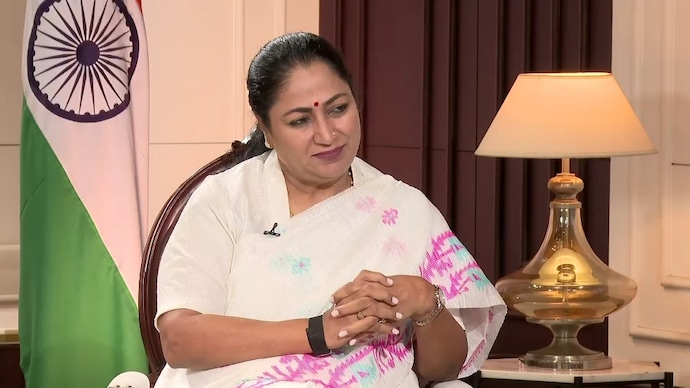

Delhi Chief Minister Rekha Gupta on Thursday assured residents that the capital's charging infrastructure would be ready to support the rollout of the new Electric Vehicle (EV) Policy, saying the government plans to expand Delhi's charging network from 9,000 to 32,000 points by 2030.
"We are ready for that," Gupta said in an exclusive interview with India Today TV, adding that the government had worked with original equipment manufacturers (OEMs) and other stakeholders to ensure adequate charging infrastructure. "I want to assure Delhi citizens that they will not face any hurdles in charging EVs."
Gupta said the government has already identified land required for the proposed charging stations despite Delhi's complex land ownership involving multiple agencies. She said the policy had been in the works for nearly a year, with consultations involving OEMs, power distribution companies, housing societies, government departments and other stakeholders.
To speed up deployment, the government has introduced a single-window clearance system for entities setting up charging stations. Delhi Transco Limited (DTL) has been designated as the nodal agency to oversee the expansion, while power distribution companies and housing societies will also be responsible for creating charging infrastructure.
"The success of this EV policy depends largely on charging infrastructure, and we are fully prepared for it," Gupta said.
She said the policy covers every aspect of the EV ecosystem, including charging infrastructure, battery recycling, e-waste management and long-term power requirements.
"Our policy is oriented towards common people first. A big segment is for two-wheelers and three-wheelers," Gupta said, adding that the government has combined incentives with mandatory measures to accelerate the shift to electric mobility.
The Chief Minister said the government is strengthening Delhi's electricity grid and substations to meet the rising power demand as EV adoption increases, adding that the long-term plan also includes creating infrastructure for battery disposal and e-waste management.
Gupta said financial benefits would not be limited to purchasing electric vehicles. The policy provides incentives for scrapping old vehicles, with subsidies to be transferred directly to beneficiaries through Direct Benefit Transfer (DBT).
Vehicle owners will be able to apply for incentives within 30 days of obtaining registration certificates, while the government aims to transfer subsidies within 60 days through DBT.
She said the policy includes around Rs 7,000 crore in incentives and waivers as part of a broader ecosystem support package estimated at nearly Rs 15,000 crore. Electric two-wheeler buyers will receive subsidies of up to Rs 30,000, while owners scrapping old vehicles will receive an additional incentive of up to Rs 10,000. Buyers will also benefit from exemption from road tax and registration fees.
The Delhi Cabinet has approved the new EV Policy, which exempts electric cars priced up to Rs 30 lakh from road tax and registration fees. It also offers purchase incentives for electric two-wheelers and three-wheelers.
The policy mandates that only electric autorickshaws will be registered from January 1, 2027, while registration of new petrol and CNG-powered two-wheelers will be phased out from April 1, 2028.
Addressing concerns over pollution from commercial vehicles, Gupta said the policy also includes incentives for heavy electric trucks. The first 1,000 N2-category trucks switching to electric power between July and September will receive permission for 24-hour entry into Delhi, a move aimed at encouraging fleet operators to adopt cleaner vehicles.
She also said the transition would extend to the government's own fleet. New vehicles purchased or leased by Delhi government departments, including mechanical road-sweeping machines, water sprinklers and other municipal vehicles, will increasingly be electric.
Gupta said the policy was prepared after studying successful EV models from countries such as Norway and consultations with experts and stakeholders. She added that Delhi is working closely with the Centre, the Commission for Air Quality Management (CAQM) and neighbouring NCR states to ensure a coordinated approach to tackling pollution.
"Pollution is not Delhi's problem alone. It is an NCR-wide issue, and we are receiving full support from the Centre and neighbouring states," she said.
The policy will now be sent to Lieutenant Governor Taranjit Singh Sandhu for approval. It is scheduled to come into effect from July 1 and remain in force until March 31, 2030.