
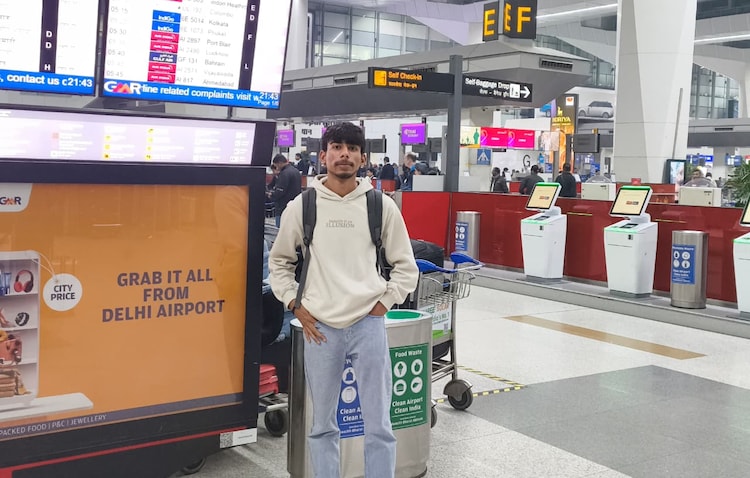
2 years, 600 days of coding: How I landed a Google internship at 20

A 20-year-old engineering student from Haryana, Karan Chhillar secured a Google internship within two years of joining college. From struggling with programming fundamentals to maintaining a 600-day coding streak, he shares how consistent practice, competitive programming and communication skills helped him get there.
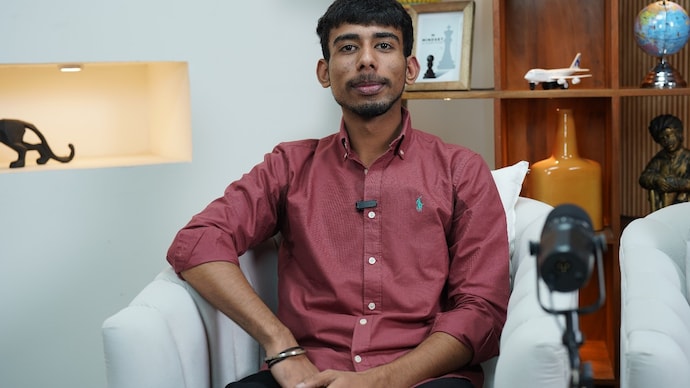
A 20-year-old engineering student from Haryana, Karan Chhillar secured a Google internship within two years of joining college.
New Delhi,Nov 28, 2026 08:53 IST Last UpdatedNov 28, 2026 08:53 IST
 Published by
Last UpdatedNov 28, 2026 08:53 IST Published byPrincy Shukla
Nov 28, 2026 07:45 ISTBy Karan Chhillar
I was sitting in a programming contest with my teachers when I got the news that I had landed an internship at Google. I stepped out to take the call, returned to the room and told them, "Sir, Google ho gaya (Sir, I cracked Google)."
It was a moment I had been working towards for two years. But what surprised me more was how excited my friends were. In fact, they were probably more excited than I was. I had gone through the entire recruitment process and had a fair idea of what to expect. For them, the news came as a complete surprise.
I am Karan Chhillar, a 20-year-old engineering student from Bahadurgarh, Haryana, currently in my third year at Newton School of Technology, Rishihood University. I will be joining Google as a Site Reliability Engineering (SRE) intern. But getting here was not something that happened overnight.
IT STARTED WITH AN OLD COMPUTER AND A LOT OF CURIOSITY
My interest in computers began when I was a child. We had an old Windows 7 desktop at home, but there was no internet connection. I would spend time exploring the computer, trying different things, discovering keyboard shortcuts and figuring out how its different features worked.
I did not know then that this curiosity would eventually lead me towards a career in technology.
My journey through school and JEE preparation was not particularly easy. When I joined Newton School of Technology, I realised that many of my classmates already knew programming. Some had been coding for years, while I was still trying to understand the basics.
That initial gap was difficult to deal with. I knew I had to put in extra effort if I wanted to catch up.
So, I started working on my fundamentals, particularly data structures and algorithms (DSA). I made solving coding problems a part of my everyday routine. Slowly, it became a habit. I eventually maintained a coding practice streak of more than 600 days.
TWO YEARS OF PRACTICE, ONE GOOGLE OPPORTUNITY
Competitive programming became my main area of focus. I enjoyed the challenge of looking at a problem, finding different ways to approach it and figuring out the most efficient solution.
The opportunity to interview with Google came through its Big Code competition, which I participated in around March.
For me, it was just another programming contest. I qualified for the second round, secured a good rank and added the achievement to my resume. I thought that was the end of it.
However, around June, before Google opened applications for its summer internship programme, I received an email from the Big Code team. Based on my performance in the competition, I had been shortlisted directly for the interview process. I did not even have to apply separately.
The selection process involved two technical interview rounds focusing on data structures and algorithms, followed by a 15-minute evaluation involving AI-assisted problem-solving and technical reasoning.
Interestingly, I was not particularly nervous during the final stages. I was almost 90 per cent sure I would crack it.
I had barely prepared during the week before my interviews. I believed whatever I had learnt and practised over the previous two years would matter much more than anything I could study in those last few days.
As I told myself, "The only thing that will work out is what I learnt in the last two years."
GOOGLE WAS NOT JUST ABOUT WRITING CODE
One thing I realised during the interviews was that knowing how to solve a problem was not enough. I also had to explain how I was approaching it.
The interviewers would give me a question, and I had to explain my approach before getting the opportunity to write the code. That made communication an important part of the process.
If I had to divide the skills required, I would say around 70 per cent was technical knowledge and 30 per cent was communication and explaining my thought process.
I also used artificial intelligence tools while preparing. They helped me understand Google's interview process, look at previous interview experiences and get an idea of what interviewers expected from candidates.
I will be joining as a Site Reliability Engineering intern. As I understand it, while software engineers build applications and make them live, SRE teams work on keeping those systems reliable, managing traffic and ensuring that websites do not crash when large numbers of people access them.
I DID NOT EVEN TELL MY PARENTS UNTIL I GOT THROUGH
I had decided not to tell my parents about the interview process until I actually secured the opportunity. I did not want to get their hopes up if things did not work out.
When the result came, my mother was extremely excited. She could hardly believe it. My father's reaction was more measured. He congratulated me and told me to keep studying.
My father works as a driver with the Delhi Transport Corporation, while my mother is a homemaker. My elder sister is pursuing an MSc in Forensic Science. Making my parents happy has always been one of my biggest motivations.
Of course, the journey has also involved setbacks. I had applied to companies such as Microsoft and Stripe, but my resume did not get shortlisted. For students applying off-campus, getting that first interview call can be harder than clearing the interview itself. Having a strong resume and building professional connections can make a real difference.
FIND YOUR NICHE, BUT LEARN TO EXPLAIN YOURSELF
If I had to give one piece of advice to students hoping to get into companies like Google, it would be to find their niche early.
Computer science has several areas, and you cannot master everything at once. Spend your first year exploring different fields, identify what you enjoy and then give it your best.
For me, that area was competitive programming and DSA. I would also recommend building connections with friends who are doing well in their fields and teachers who can guide you towards opportunities.
Most importantly, work on your communication skills.
"You can code the solution, but if you aren't able to explain it to the interviewer, it doesn't give you much success in the interview round," I believe.
Outside academics, I enjoy playing basketball. I am also someone who does not like spending too much time in my room. Whenever I am free, I head downstairs, find a friend and spend time with them.
For now, I want to work with good companies, keep learning and do well in life. And, most importantly, make my parents proud.
- Ends