
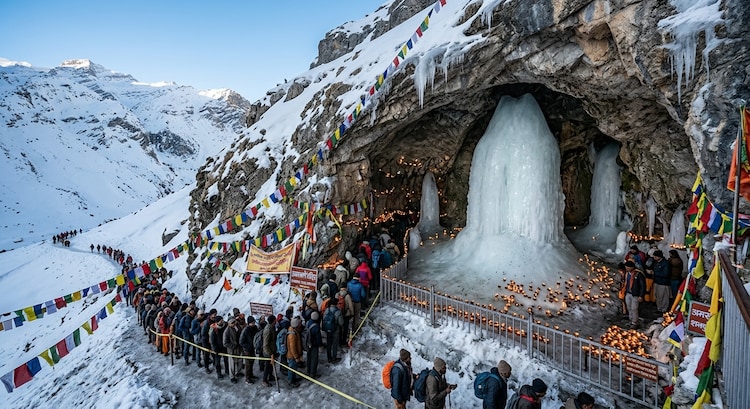
Why does the Amarnath ice Shivling form every year? Scientists explain mystery
The naturally forming ice Shivling at the Amarnath Cave is revered by millions of devotees every year. While its spiritual significance remains unchanged, scientists say its annual appearance can also be explained through geology.
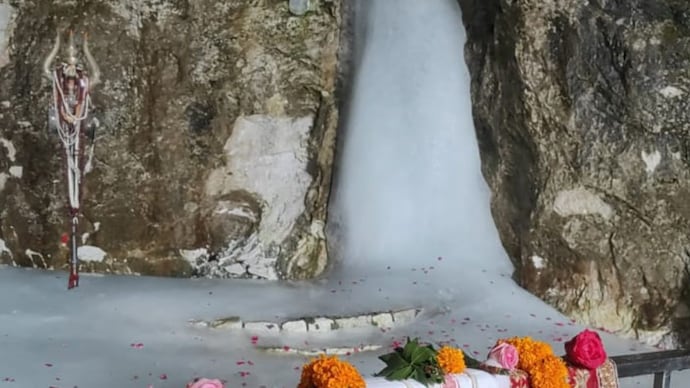
For millions, the ice Shivling is Lord Shiva’s form. Scientists say geology also explains the phenomenon (File photo)

New Delhi,UPDATED: Jul 2, 2026 11:20 IST
Every year, as the Amarnath Yatra begins, one question resurfaces alongside the pilgrimage: How does the ice Shivling form naturally inside the Amarnath Cave?
For millions of devotees, the naturally formed ice Shivling is a sacred manifestation of Lord Shiva. But scientists say the phenomenon also has a fascinating geological explanation.
A study by IIT Bombay earth scientist D Chandrasekharam, published by the Geological Society of London, explains that the Shivling is essentially a naturally occurring ice stalagmite formed by freezing meltwater inside the cave. The research highlights how India's ancient myths and sacred sites often have roots in remarkable geological processes without taking away from their religious importance.
HOW DOES THE AMARNATH ICE SHIVLING FORM?
According to the study, the Amarnath Cave is situated around 145 km northeast of Srinagar at an altitude of nearly 4,000 metres in the Himalayas.
Snow and glacier meltwater slowly seeps through cracks and joints in the limestone and gypsum rocks above the cave. As the water drips onto the cave floor, the sub-zero temperatures cause it to freeze layer by layer. Over time, these frozen layers build upward into a vertical pillar of ice known in geology as a stalagmite, which resembles the Shiva Lingam worshipped by devotees.
Unlike man-made ice structures, the Shivling forms naturally every year as long as weather conditions remain favourable.
WHY DOES THE ICE SHIVLING GROW AND THEN SHRINK?
The study notes that the ice formation has traditionally been observed to increase in size during the first half of the lunar month, reaching its maximum around the full moon before gradually shrinking towards the new moon. While this cycle has long been associated with religious belief, scientists say temperature plays a crucial role.
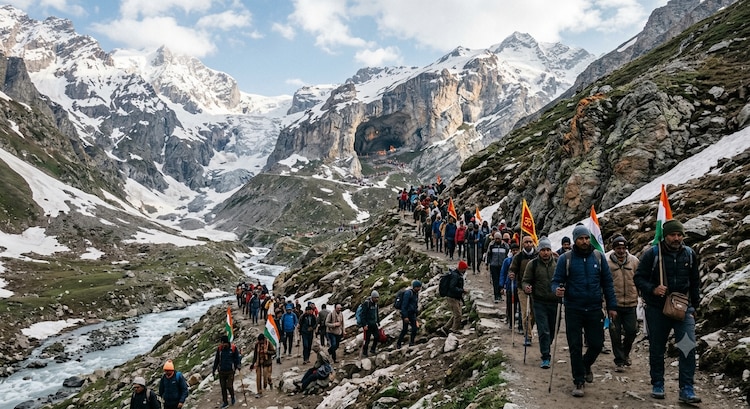
As thousands of pilgrims visit the cave during the yatra season, the heat generated inside the enclosed space contributes to faster melting of the ice stalagmite, causing it to reduce in size. Natural variations in snowfall, meltwater supply and ambient temperatures can also influence how large the Shivling becomes in a particular year.
DOES SCIENCE CHALLENGE THE RELIGIOUS BELIEF?
Not necessarily.
The study emphasises that many geological phenomena became part of Indian mythology because ancient civilisations interpreted extraordinary natural events through faith. Rather than contradicting religious traditions, geology helps explain how these natural formations occur, while faith continues to define what they mean to devotees.
According to Hindu tradition, Lord Shiva revealed the secret of creation and immortality to Goddess Parvati inside the Amarnath Cave, making it one of Hinduism's holiest pilgrimage sites. The naturally occurring ice Shivling remains the focal point of the annual Amarnath Yatra.
"Science explains the process of formation, not the faith associated with it. The two need not be seen as contradictory," says Dr Ravi P Agrahari, PhD and ex-scientist IIT Delhi and author of Mc Graw Hill UPSC.
WHY THIS SCIENTIFIC EXPLANATION MATTERS
Scientists say understanding the natural processes behind the Amarnath ice Shivling can also help explain why its size varies from year to year. Factors such as snowfall, glacier melt, cave temperature and human presence all influence the formation of the ice stalagmite.
The research also presents the Amarnath Cave as one of several examples where Indian mythology intersects with geology, arguing that many sacred sites across the country are associated with naturally occurring geological processes that inspired ancient legends.
- Ends