
A rare Shiva idol at Prambanan temple and the missing Linga: Know the Story
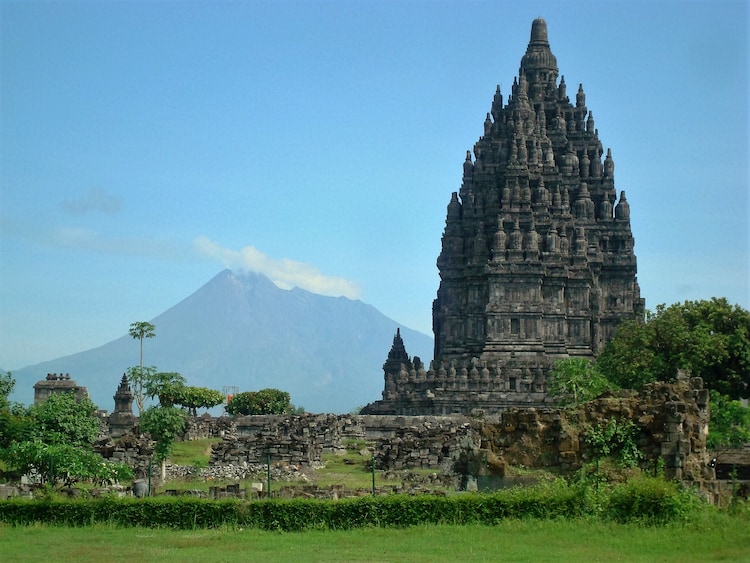
Indonesia's 1,200-year-old Prambanan complex centres on a Shiva shrine with an idol instead of a linga. The uncommon icon, along with Ramayana reliefs and Trimurti temples, marks its distinct place in the Hindu history of the region.
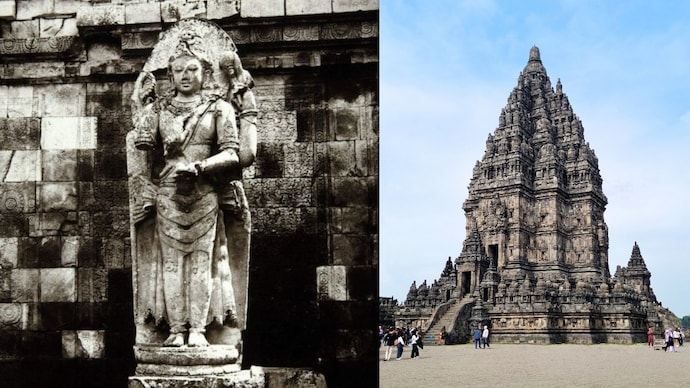
The main shrine houses a large Shiva idol. Some archaeologists believe the statue may also represent King Balitung after his death, but this remains a theory.(Image: Wikimedia Commons)

New Delhi,UPDATED: Jul 9, 2026 10:33 IST
Unlike many Shiva temples in India, a 1,200-year-old temple in Indonesia's Yogyakarta region houses an idol of Lord Shiva instead of a Shiva linga, making it both sacred and mysterious. The temple, now part of a UNESCO World Heritage Site, was rediscovered in 1733 by Dutch East India Company employee Cornelis Antonie Lons after lying abandoned for centuries, having been deserted just 80 years after its construction.
The Prambanan temple compound is the largest in Indonesia and the second-largest Hindu temple complex after Angkor Wat.
An inscription from 856 CE issued by King Lokapala which is known as the Shivagrha, is believed to chronicle the Prambanan temple complex as a centre of Shaivite worship.
Shaivite Hinduism flourished in Indonesia between the 8th and 10th centuries, and so did the craftsmanship behind it.
The temples, carved in Yogyakarta Province, are uniquely built, with the inclusion of the Brahma and Vishnu temples, along with shrines dedicated to Durga, Saraswati, Lakshmi, Ganesha, and Nandi.
The 240 temple structures display the grandeur of ancient Javanese art.
One of the earliest temple sites found on Indonesian soil, Prambanan is a prominent example of what is considered Hindu-Buddhist architecture.
Hinduism and Buddhism flourished on the island for centuries and influenced the region to a great extent, from trade to food and lifestyle.
The golden age of Southern India saw many expeditions to the far lands of the East. The Cholas, Pallavas, and many Hindu and Buddhist monks were among the many hands behind many masterworks in the east.
The Sanjaya dynasty of Indonesia ruled over the Mataram Kingdom and is considered the force responsible for laying the foundation of this great structure of the early medieval period.
The Canggal Inscription tells us about the origin of the Sanjaya dynasty, which was founded by King Sanjaya of Mataram in 732 CE. The inscription, written in the Pallava script, records the installation of a Shiva linga on a hill in Java, then known as Yawadwipa, an island described as rich in rice and gold.
The early bricks of the temple were laid by King Rakai Pikatan of the Sanjaya dynasty around 850 CE, and it was inaugurated by his successor, King Lokapala, as historians suggest.
An inscription from 856 CE identifies the temple as Shivagrha, or the House of Shiva, confirming that it was dedicated to Lord Shiva. During construction, the course of the Opak River was diverted to protect the temple and create space for new shrines.
The Opak River was long considered the tears of the land, causing destruction across the region.
Prambanan became the royal temple of the Mataram Kingdom. At its peak, the complex had 240 temples.
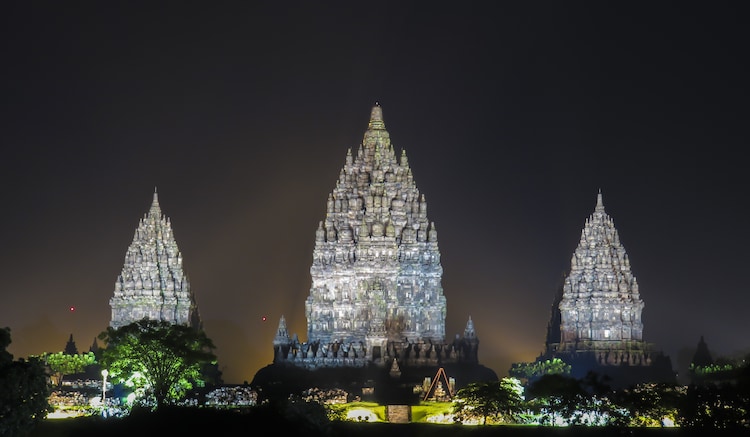
The temple was abandoned in the 10th century after the Mataram court moved to East Java. Historians link the move to political changes or volcanic activity from Mount Merapi.
Over time, earthquakes damaged the complex, and local legends replaced its forgotten history.
The ruins were first recorded by Dutch officials in the 18th century. Archaeological surveys began in the early 19th century, followed by restoration work that continues today.
At the heart of Prambanan stands its biggest surprise. The main shrine of Shiva does not house a Shiva linga, the symbol found in most Shaiva temples. Instead, it enshrines a three-metre-tall idol of Shiva Mahadeva.
At Kashi Vishwanath in Varanasi, Mahakal Temple in Ujjain, Somnath in Gujarat, and Kedarnath in Uttarakhand, the linga is the most sacred form in which Lord Shiva is worshipped. But the Prambanan Shiva Temple, however, presents a unique exception with a tall statue.
The Temple compound is also home to statues of Durga, Ganesha, and the sage Agastya, completing the Shaivite pantheon.
Over the decades, as tourists and researchers have visited the place, often a sign of high vibration has been recorded inside, making it more relevant to the worshippers.
The Shiva temple is the largest structure in the complex, rising 47 metres above the surrounding shrines.
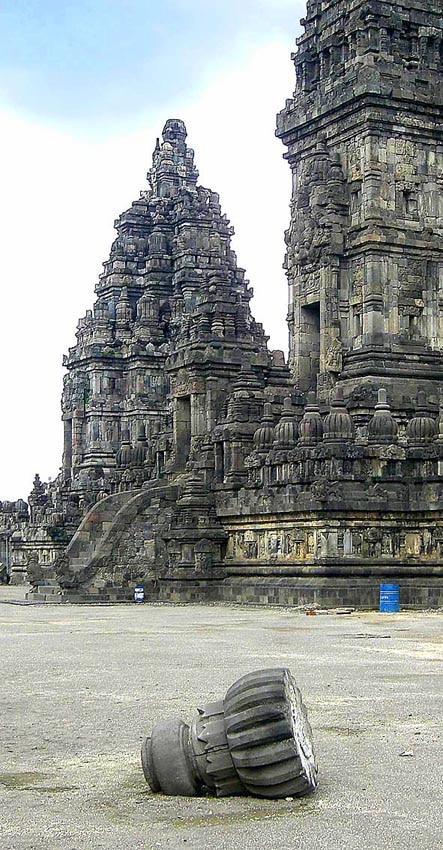
Visitors enter from the east and walk clockwise through galleries carved with scenes from the Ramayana before reaching the inner sanctum.
There, the statue of Shiva stands on a yoni pedestal, holding a trident, prayer beads, and a fly-whisk, with the crescent moon and a third eye marking his identity.
Historians who worked closely to understand the temples of Indonesia and their linkages with Hinduism believe the statue may also represent King Balitung after his death, reflecting the Javanese tradition of associating kings with Hindu deities.
The idea remains a subject of debate, but it offers one explanation for why a statue, rather than a linga, became the centre of worship.
"The central chamber was designed to house the monumental Shiva image from the beginning," says R Soekmono, who is considered as the father of Indonesian archaeology.
The neighbouring temples that were built in the dedication to Vishnu and Brahma, each housed a statue of its presiding deity.
Together, the three temples form the Trimurti, the centrepiece of the Prambanan complex.
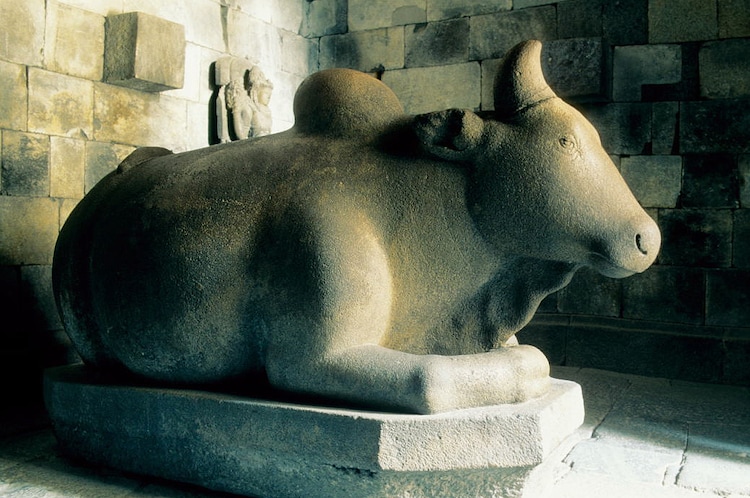
The Shiva temple is not the only shrine in the complex. Facing the three main temples are shrines dedicated to their divine vehicles. Nandi, the sacred bull, stands before Shiva.
Brahma's shrine is paired with Hamsa, the swan, while Vishnu's shrine faces Garuda.
The Nandi temple dedicated to the vehicle of Lord Shiva, Calfs, also houses statues of Surya, the Sun god, and Chandra, the Moon god, each shown riding their celestial chariots.
On either side of the central courtyard stand two smaller Apit temples.
The Apit temples are believed to be dedicated to the goddesses Saraswati and Lakshmi, based on surviving carvings and the layout of the temple complex, but the confirmation linked with the inscriptions is missing.
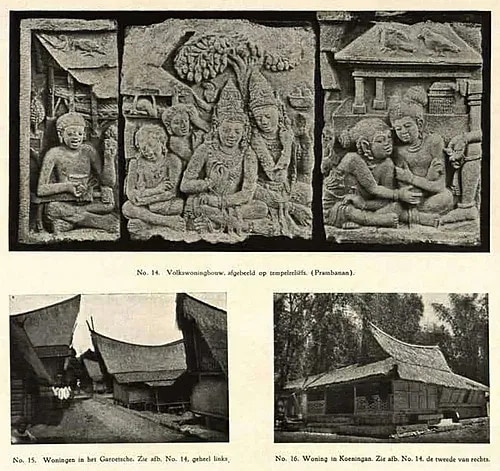
The temple is also known for its stone reliefs, which depict scenes from the Ramayana along the galleries that visitors walk through.
The story continues from the Shiva temple to the Brahma temple, turning the act of circumambulation into a journey through one of Hinduism's greatest epics.
The temple compound, the largest on Indonesian soil, is home to Brahma (the Creator), Vishnu (the Preserver), and Shiva (the Destroyer), showing the deep belief that emerged over time among the local people after Hinduism reached the land.
The Prambanan temple is unique and mysterious, with the presence of a rare Shiva idol from the early medieval period. Long after the kingdoms that built it disappeared, the Prambanan temple complex continues to tell its unique saga. A story told through its towering spires, intricate carvings and also echoes of the Ramayana.
It’s true history often survives in stone!
- Ends