
She went from IIT Madras to IISc, now she studies to keep India's data private

Arpita Patra researches cryptographic methods for sharing data securely without exposing private inputs. Her work at IISc addresses the growing need for privacy across digital systems.
 Last UpdatedNov 29, 2026 15:09 IST
 Published by
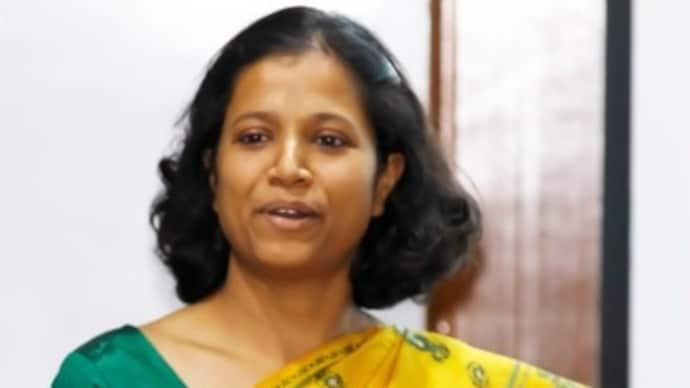
Arpita Patra is a professor at the Indian Institute of Science (IISc), Bengaluru, where she has spent over a decade researching cryptography and information security. An alumna of IIT Madras, she earned her doctorate in Cryptography in 2010 and has since focused on a question of growing importance in an increasingly connected world: how can information be shared without compromising its privacy?
Professor Arpita Patra, a cryptographer and member of the Information Security Lab at IISc who served as a visiting faculty at Google, works upon the methods by which data may be protected, even when it must be shared among parties who cannot be assumed to trust one another.
In an age when information travels across borders with little regard for distance, its protection has become a matter of public as well as scientific concern.
Governments, institutions and individuals depend upon the safe handling of their records, while those who seek to obtain such information without permission continually test the limits of existing safeguards.
It is within this contest that Patra's research finds its purpose.
FROM A SMALL VILLAGE IN BENGAL TO IIT MADRAS
Patra's work in secure multiparty computation concerns the possibility of several parties jointly performing computations upon their private information without disclosing the information itself.
It is a field in which mathematics and computer science meet the practical demands of privacy.
Patra's journey, as per her LinkedIn account, began in a remote village of West Bengal. Her early education took place at Kumarpur Hateswar High School and Gobardhanpur Pramathanath Vidyayatan, before she proceeded to Haldia Institute of Technology, where she studied Computer Science and Engineering.
She subsequently joined the Indian Institute of Technology, Madras, for higher studies. She completed her Master's degree in 2006 and went on to earn her doctorate in Cryptography in 2010. These years laid the foundation for the research that would occupy much of her professional life.
The years following her doctoral studies took her beyond India. She undertook postdoctoral research in Europe, including appointments at ETH Zrich, from September 2011 to August 2012, and the University of Bristol, from September 2012 to December 2013. Her wider academic journey also included research in Denmark. These experiences brought her into contact with research institutions and scholarly communities beyond the country.
THE WORK OF KEEPING INFORMATION PRIVATE
In 2014, Patra joined the Indian Institute of Science, Bengaluru, as a faculty member. Her research came to centre upon secure multiparty computation, a branch of cryptography concerned with enabling several participants to calculate a result together without revealing their individual inputs to one another.
The importance of such work is not difficult to understand. Consider institutions that must collaborate upon information while remaining bound by the privacy of the records in their possession.
At IISc, Patra became associated with the Information Security Lab, where research in cryptography and information security forms an important part of its work.
She also works in connection with the Robert Bosch Centre for Cyber-Physical Systems, an area of research concerned with the relationship between computation and the physical world.
Her LinkedIn account says the academic engagements of Patra have not been confined to Bengaluru.
Between August 2022 and July 2023, she served as Visiting Faculty at Google in Bengaluru. The appointment gave her an opportunity to engage with research and teaching in an industrial setting.
In 2024, she also served as a part-time Visiting Professor at Silence Laboratories for three months.
RECOGNITION ALONG THE WAY
Patra's research has received recognition from scientific and research institutions in India and abroad.
In 2018, she received the National Academy of Sciences, India (NASI) Young Scientist Award. Two years later, she was awarded the Google Research Award. In 2023, she received the Outstanding Woman Researcher Award from IISc and Google's Privacy Research Faculty Award.
Her standing in the scientific community was further recognised through her election as a Fellow of two Indian science and engineering academies.
There is another aspect of Patra's life that sits somewhat apart from the formal course of her academic work. She has completed summits at volcanic peaks across four continents, an undertaking that calls for preparation, endurance and an understanding of difficult terrain.
From the schools of rural West Bengal to the lecture rooms and research laboratories of IISc, her course has passed through several institutions and countries.
And therein lies the substance of Professor Arpita Patra's work. In a world that has learnt to place increasing quantities of its affairs upon digital networks, she continues to examine the means by which the privacy of that information may be preserved.