
Can getting your first period early lead to early menopause? Here's what experts say
An early first period may be linked to earlier menopause, but experts say it doesn't guarantee it. Here's what current research reveals about the connection, the real risk factors and when women should seek medical advice for their reproductive health.
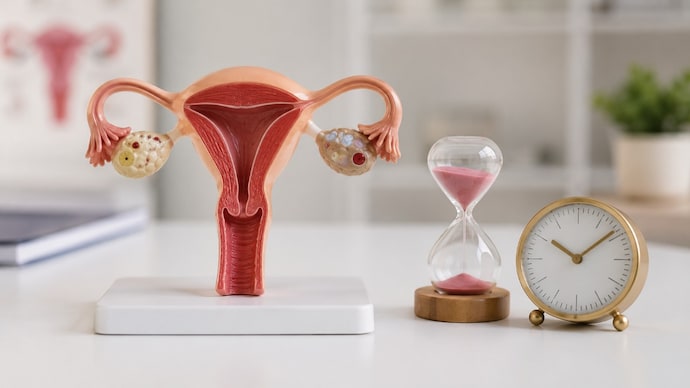

Girls today are reaching puberty earlier than previous generations, raising questions about whether an early first period could also mean an earlier menopause. While some studies have found a link, experts say the answer is more nuanced than many people think.
A LINK EXISTS, BUT IT'S NOT A DIRECT CAUSE
"There is an association between early menarche and early menopause, but it is not a proven cause and effect relationship," says Dr Muskaan Chhabra, Fertility Specialist at Birla Fertility & IVF, Lajpat Nagar.
Research suggests that women who get their first period at a younger age may be slightly more likely to experience menopause earlier. However, having your first period at 10 or 11 does not mean you are destined to go through menopause sooner.
DOES AN EARLY PERIOD MEAN YOU 'RUN OUT OF EGGS' FASTER?
Many believe that starting periods early means a woman uses up her eggs more quickly. According to Dr Chhabra, that isn't how the body works.
Women are born with all the eggs they will ever have, and this reserve naturally declines with age. Starting menstruation earlier doesn't, by itself, speed up this process. Instead, genetics plays the biggest role, while lifestyle, environmental factors and certain health conditions also influence how the ovarian reserve changes over time.
If there are concerns about fertility, tests such as Anti-Mullerian Hormone (AMH) levels and antral follicle count provide a better assessment than the age at which periods began.
WHAT ACTUALLY DETERMINES MENOPAUSE TIMING?
According to the expert, the strongest predictor is genetics. In many cases, a woman's mother's age at menopause offers an important clue.
Other factors that may influence menopause timing include:
- Smoking
- Thyroid disorders
- Endometriosis
- PCOS
- Chemotherapy or radiotherapy
- Obesity
WHEN SHOULD EARLY MENSTRUATION BE A CONCERN?
Dr Chhabra says an early first period alone is not a reason to panic.
However, women should seek medical advice if an early first period is accompanied by:
- Very irregular periods
- Heavy or painful bleeding
- Severe acne or excessive hair growth
- Unexplained weight changes
- A strong family history of early menopause
These signs could point to an underlying hormonal or reproductive health condition that needs evaluation.
SHOULD WOMEN PLAN DIFFERENTLY IF THEY GOT THEIR PERIODS EARLY?
For most women, the answer is no. Early menstruation by itself does not mean intensive monitoring is needed.
However, women with a family history of early menopause may benefit from discussing their fertility plans with a gynaecologist. In some cases, ovarian reserve tests such as AMH may be useful in the late twenties or early thirties to better understand reproductive health.
Regardless of when periods began, experts recommend maintaining a healthy weight, avoiding smoking, managing chronic health conditions and getting regular gynaecological check-ups to support long-term reproductive health.