
Does oil spill at flagship Alang yard dismantle 'green shipbreaking' claim?
The accident at one of India's first certified yards has drawn competing accounts from the company and campaigners, and fresh calls to ban the beaching method

 On the afternoon of June 13, an LNG (liquefied natural gas) carrier, ‘SOHAR’, was sitting on the mudflats at Priya Blue’s plot V1/V2 in Alang-Sosiya, the sprawling Gujarat shipbreaking belt that dismantles a large share of the world’s dead ships. It had been beached just days ago, but what followed was a nightmare the struggling domestic shipbreaking industry could have done without—an oil spill, allegedly uncontrolled.
According to a statement by Priya Blue, during a spring high tide, exceptionally strong tidal currents caused the vessel to experience excessive surge and yaw movement. “This led the forward starboard section of the vessel to come into contact with a nearby barge crane structure, resulting in localised damage to a fuel oil tank and the release of hydrocarbons into the surrounding intertidal area,” the company’s statement read.
The statement further said its on-site team spotted the release immediately, activated emergency response and oil-spill contingency plans, halted nearby work, and deployed containment booms, absorbent pads and pontoons beneath the damaged hull even as recovery pumps drew off the escaping oil. “Trained personnel wearing full PPE (personal protective equipment) were mobilised. The incident did not lead to injuries, fatalities, fire or explosion,” the statement said.
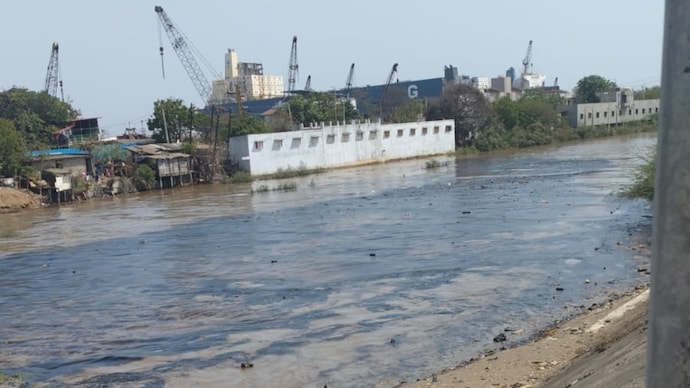
However, Shipbreaking Platform, a Brussels-based NGO that closely monitors environment and human rights challenges posed by the shipbreaking industry globally, released video footage and satellite imagery contesting the company’s claims. The NGO said oil was reported washing ashore along a large stretch of the coastline, including the fishing village of Mithi Virdi, around 10 km from Priya Blue, contradicting any suggestion that the spill remained contained close to the facility.
Priya Blue, however, claimed “approximately 63 tonnes of fuel oil were affected, of which about 32 tonnes were directly recovered through containment and transfer operations, and the remaining contamination was addressed through dispersant application, shoreline clean-up and continued monitoring”.
Shipbreaking Platform and local sources expressed scepticism about this claim, saying an independent inquiry by government authorities, such as the Gujarat Pollution Control Board (GPCB) and Gujarat Maritime Board, should reveal the extent of spillage and contamination as well as damage to the environment.
The GPCB took samples of the spill on June 16.
“Workers sent to clean up the oil spill were without protective clothing, equipment and standing barefoot in oil. Satellite imagery from June 14 shows the oil having spread far beyond Priya Blue’s plot, clearly indicating it was impossible to contain the spill within the yard area due to the tidal flows that characterise the beaching method,” a statement by the NGO read, adding that the company’s report “appeared to downplay the scale and spread of pollution”.
“Priya Blue omitted reporting on grave occupational and safety breaches and instead claimed that trained personnel wearing full PPE had been mobilised. This raises serious questions about the accuracy and transparency of the company’s account of the incident,” said Ingvild Jenssen, executive director and founder of Shipbreaking Platform. Local media reports corroborated that the spill was not confined to the Priya Blue facility.
SOHAR had been sold for scrapping in Alang by Japan’s Mitsui OSK Lines (MOL) and Oman’s Asyad Shipping, joint owners of the vessel.
Ironically, Priya Blue is promoted as one of India’s most-advanced shipbreaking yards. It has operated for 40 years, and its yard in Alang-Sosiya is one of the first to have obtained a certificate from Indian authorities as being compliant with the International Maritime Organization’s Hong Kong Convention. The company is vocal at international maritime conferences and highlighted by shipping stakeholders as evidence that beaching yards can meet global standards.
“This incident and subsequent management now cast serious doubts on those claims,” Shipbreaking Platform stated, reiterating a longstanding call for a ban on the beaching method.
“Ship recycling must take place in facilities capable of controlling spills, protecting workers, and preventing toxic releases from reaching coastal communities and the sea. When vessels are dismantled on tidal flats, no infrastructure can contain spills of toxic substances,” Jenssen said.
Priya Blue’s statement said an unidentified independent third-party marine surveyor was engaged—who they did not name—to investigate the incident, who identified the root cause as extreme lateral vessel movement generated by a rare monsoon spring-tide event. “The investigation focused on strengthening operational controls to reduce the likelihood of recurrence,” it said.
Alang-Sosiya is the world’s largest ship recycling cluster, with 131 yards. When all yards are functional, it can provide 20,000-25,000 direct jobs and around 200,000 indirect employment through ancillary industries, such as rolling mills, furnaces, transportation and gas suppliers. The industry has been facing a particularly rough period over the past few years, operating at only a fourth of its installed capacity.
India’s shipbreaking industry competes with Bangladesh and Pakistan, which follow beaching methods to anchor ships to the shore. “The Alang shipbreaking industry won’t exist without the beaching method. It (shipbreaking) is possible because of its unique geography of a natural tidal variation of about 33 feet immediately from the shore. The cost-benefit ratio does not add up with dry mooring methods. Moreover, the Hong Kong Convention does not prohibit beaching,” says an industry veteran.
However, a worldwide movement has been ongoing for the beaching method to be banned. “Not a single yard in Alang-Sosiya would be allowed to clone its activities on a beach in the European Union (EU). That’s why the beaching method must never be rubberstamped by the EU. The method is already banned in all large ship-owning countries,” said Jenssen. “It’s high time the shipping industry stops defending a method they would never allow on their own shores.”
Subscribe to India Today Magazine