
Swapan Dasgupta exclusive: Bengal's BJP govt ardently pro-investment, says FM
The finance minister outlines how to revive industry, attract investors and overhaul land and welfare policies to underscore the 'permanent change' in Bengal
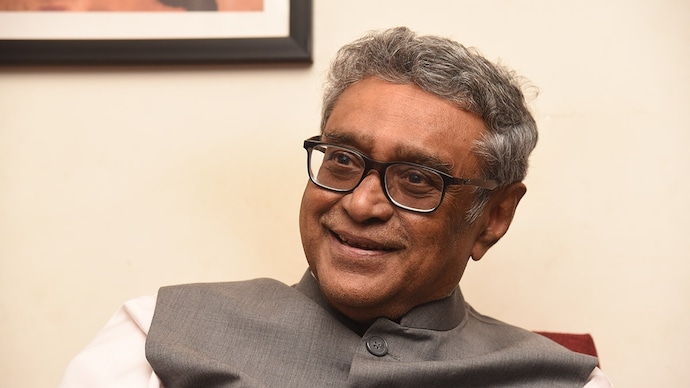

 Barely weeks into office, West Bengal finance minister Swapan Dasgupta is attempting to recast the state’s economic narrative. His maiden Budget promised massive investments in roads, airports and industrial infrastructure while signalling a decisive shift towards market-friendly policies.
In an exclusive conversation with INDIA TODAY, Dasgupta outlined the BJP government’s roadmap for reviving industry, attracting investment, overhauling land policy, rationalising welfare schemes and rebuilding health and education. He argued that Bengal’s biggest challenge was not merely fiscal but one of confidence, and said the government’s success would depend on convincing investors that the state had finally turned the page on decades of economic stagnation.
Q. Your first Budget appears to be a goal-setting one, with strong emphasis on roads, railways and infrastructure. One criticism of the erstwhile Left Front government’s industrialisation drive was that it tried to attract investors before creating the necessary infrastructure. Is the BJP regime consciously reversing that sequence?
A. That wasn’t the only problem with the earlier approach. It was a top-down model wherein investors were approached first and infrastructure was expected to follow. Politically too, there wasn’t wholehearted support within the government. We don’t suffer from that drawback. We have the complete backing of our party, both at the state and central levels.
One reason the Budget was lengthy was because we wanted to introduce people in West Bengal to the vast number of central government projects that had not been fully utilised. Many of these are welfare schemes, but a substantial number are about capacity building and infrastructure.
In the next year or two, our priority is to build that infrastructure. Any investment that comes would be welcome, but investors look at two things: whether the infrastructure exists and whether the overall environment is conducive to business. We also have to convince them that the change in Bengal is permanent.
West Bengal has acquired a reputation over decades as a difficult place to do business. That perception predates Singur by many years, although Singur became symbolic of it. Afterwards, issues such as syndicate culture and corruption further damaged the investment climate. Our challenge is to demonstrate that Bengal is competitive with neighbouring states like Odisha and Assam, while also assuring investors that the political environment has fundamentally changed.
We also enjoy certain advantages. West Bengal has a long industrial legacy. Many industrial families, particularly the Marwari business community, have deep roots here. There is still goodwill towards the state. Similarly, the Bengali diaspora consists of talented people who often feel emotionally connected to Bengal and want to contribute in some way. We intend to tap that goodwill.
Q. One of your most significant announcements was abolishing land ceiling. Previous governments, despite repeated recommendations, never attempted such a move. Why did your government decide to do it?
A. Both the Left Front and the Trinamool Congress approached economics from a left-of-centre perspective. We don’t share that outlook. We are emphatically pro-investment. That is why we’re willing to take decisions that earlier governments avoided. We’ve also announced that investments above Rs 100 crore won’t have to navigate multiple local clearances that often become sources of delay and corruption.
Land is one of our biggest challenges. There is a large amount of land locked up in unproductive assets—old factories and company townships that are no longer functional. We need to bring those lands back into productive use, whether through legislation or executive action. That alone can address a significant part of our land shortage.
Q. Beyond land reforms, what are the other major challenges?
A. Skills. West Bengal has witnessed an exodus of talent over many decades. Skill development has suffered badly during the past 15 years. Education is another area that needs urgent attention. The system is in complete disarray. Education is not just about recruitment; it’s central to Bengal’s overall regeneration.
Q. Does that mean recruitment of teachers would resume?
A. Certainly. But before recruitment, we have to rationalise the existing system. There are multiple categories of teachers recruited under different arrangements, and in many cases, we don’t even have reliable data about who was recruited, under what category, and through what process. Some colleges have excess faculty while others are dysfunctional. We need to gather the data first and rationalise the entire structure before moving forward.
Q. The Budget reflects significant support from the Centre. Is this what a ‘double-engine’ government looks like financially?
A. We’ve received substantial support from the central government. There is a clear understanding that eastern India cannot realise its full economic potential unless Bengal succeeds. At the same time, we have inherited debt of nearly Rs 8 lakh crore, which makes fiscal management extremely challenging. We also inherited a state filled with grievances. We had to restore confidence within the administration before expecting better performance from it.
Q. The debt-to-GSDP (Gross State Domestic Product) ratio has come down only marginally. Have you set yourself a timeline for reducing debt?
A. No. We haven’t fixed a timeline. Naturally, we want to bring it down, but given the situation we inherited, it won’t happen immediately. For now, much of our work remains a work in progress.
Q. If debt reduction would take time, what would be your immediate priority over the next two years?
A. Aggressively attracting investment. Many companies want a stronger presence in eastern India. Bengal offers cultural familiarity, an existing industrial base and significant potential. We intend to build on those advantages.
Q. You have spoken about increasing tax buoyancy. Since the state relies heavily on fuel and liquor revenues, how do you diversify revenue sources?
A. We are banking on growth, increased economic activity and entrepreneurship. Measures such as allowing shops and establishments to operate round the clock are intended to generate more economic activity. At the same time, we are conscious of social concerns, so this isn’t about encouraging liquor consumption. Our approach is that lower, rational taxation can actually generate higher revenues over time.
Q. Will the government review the excise policy?
A. Certainly. We will re-examine the entire excise and liquor policy. The objective is to maximise the state’s revenue while eliminating corruption and ensuring prices remain reasonable enough to discourage smuggling. We don’t intend to increase liquor prices immediately. We’d rather allow the system to stabilise first.
Q. You’ve also indicated that professional tax could eventually be abolished.
A. Yes, I hope we can scrap professional tax by the end of the year. I would have preferred to do it immediately, but we are taking a more cautious approach.
Q. Many welfare schemes launched by the previous government continue. Will they remain universal?
A. We are gradually moving from universal schemes to means-tested schemes so that benefits reach those who genuinely need them. Existing schemes won’t disappear overnight. They will evolve, perhaps under different names or with modified eligibility criteria. But our commitment remains that beneficiaries would continue receiving support.
Q. Health infrastructure has expanded physically over the years, but many hospitals continue to face staff shortages. How do you address that?
A. The problem today is largely one of management. Many hospital buildings exist, but they aren’t functioning to their potential because of shortages in skilled personnel. The skills deficit is enormous, and addressing it would be one of the government’s major policy priorities.
Subscribe to India Today Magazine