How food aid, Cold War and China shaped India-US relations under Nehru
In 1949, Jawaharlal Nehru signalled India's willingness to work with the US while refusing to join either Cold War bloc, laying the foundation for non-alignment. Washington's skepticism towards the policy shaped often-strained India-US ties during the Cold War.
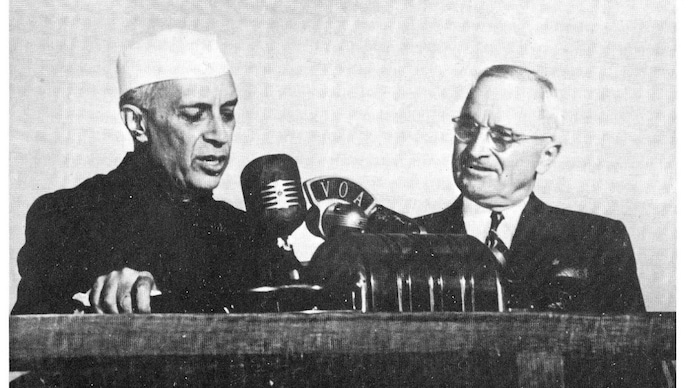
India's first PM, Jawaharlal Nehru visited the US in late 1949. Notably, Nehru also held the external affairs portfolio until his death in 1964.

UPDATED: Jun 21, 2026 09:00 IST
Note: In Part 1 of this series tracing India-US relations, we looked at how the American Revolutionary War laid the foundation of the relationship and how both countries influenced each other before formal ties were established in 1947. Read Part 1 of the article here.
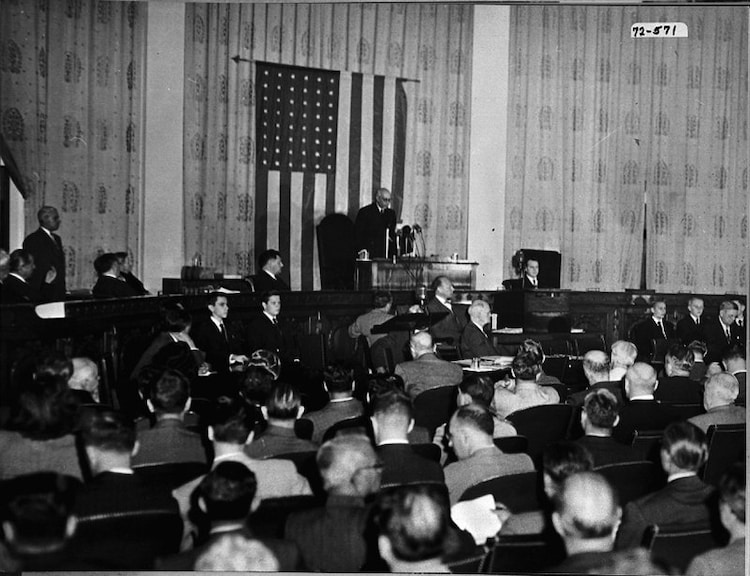
During his first visit to the United States in October 1949, India's first Prime Minister, Jawaharlal Nehru, addressed the National Press Club in Washington, DC. The speech offered an early glimpse into the foreign policy doctrine that would shape India's engagement with the world for decades.
"If there are means of cooperation between India and the USA, I would like to explore them. Such cooperation would be to our mutual advantage. But India does not intend to become involved in the Anglo-American Cold War with Russia if it can possibly avoid it. We try to view world affairs in their broader context. It is important not to be tied up too closely with immediate problems," he said.
Nehru made clear that while India was open to cooperation with the United States, it would not align itself with either the Western or Soviet bloc. The remarks foreshadowed India's leading role in the Non-Aligned Movement that emerged in the 1950s.
Washington viewed non-alignment with considerable skepticism. Then US Secretary of State John Foster Dulles famously described the policy as "immoral", a perception that contributed to the on-again, off-again character of India-US ties for much of the Cold War.
INDIA-US 'AID' RELATIONS
For all practical purposes, India ranked low on Washington's priorities, given New Delhi's refusal to join its strategy of containing the Soviet Union. That, however, did not prevent the two countries from building a substantial economic relationship around aid, food security and development assistance.
Despite political disagreements, the United States emerged as one of India's largest development partners during the 1950s and 1960s. Faced with recurring food shortages, foreign exchange constraints and the enormous challenge of nation-building, India increasingly relied on American economic assistance.
A key pillar of this relationship was the Public Law 480 programme, also known as "Food for Peace". Introduced in 1954, it allowed India to import American wheat and other food grains while paying in Indian rupees rather than scarce foreign currency.
Over time, India's dependence on American grain became so significant that officials described the situation as a "ship-to-mouth" existence, where imported wheat was consumed almost as soon as it arrived at Indian ports.
Between the early 1950s and the late 1960s, India received billions of dollars in American assistance, including food aid and development loans. The US also played a direct role in shaping one of India's premier educational institutions. Under the Kanpur Indo-American Program, nine American universities collaborated to mentor IIT Kanpur, helping it become a globally recognised institution.
The relationship was not without its tensions. Nehru was often uncomfortable with the scale of India's dependence on foreign food assistance, even as economic realities forced New Delhi to accept it.
"Substantial aid might well create certain upsets in our internal economy. What was more serious, to my mind, was that our people should not develop the habit of dependence on external aid," Nehru wrote to Ministry of External Affairs officials in 1954.
Yet, despite ideological differences and periodic diplomatic friction, aid created a durable foundation in India-US ties at a time when the two democracies frequently disagreed on global politics.
THE PAKISTAN AND CHINA FACTOR
If aid brought India and the United States together, Pakistan and China frequently drove them apart.
One of the biggest irritants during the Nehru years was Washington's decision to make Pakistan a frontline ally in its Cold War strategy. Beginning in the 1950s, Pakistan joined US-backed military alliances such as SEATO and CENTO and received substantial American military assistance.
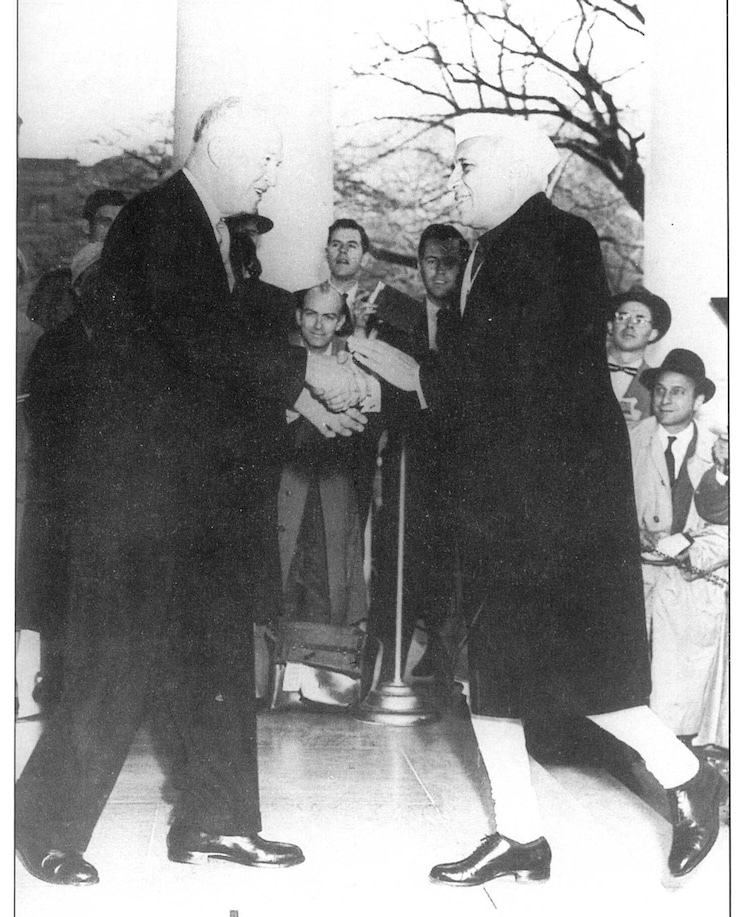
From New Delhi's perspective, the partnership was deeply troubling. Indian leaders argued repeatedly that weapons supplied to Pakistan in the name of containing communism could eventually be turned against India. President Eisenhower assured Nehru this would not happen, framing the alliance as a tool to contest Soviet influence in the Middle East, but the trust deficit persisted throughout much of the Nehru era.
India's own foreign policy choices often frustrated Washington in equal measure. Nehru's non-alignment, his criticism of military blocs, and his willingness to engage with both the Soviet Union and Communist China created an impression among many American policymakers that India was unwilling to support the broader Western effort against communism.
China remained an enigma for Nehru. He initially sought to build cordial relations with Beijing, driven by the idealism of Asian solidarity. The Panchsheel Agreement of 1954 marked the high point of the "Hindi-Chini bhai-bhai" bonhomie.
However, according to strategic affairs expert K Subrahmanyam, Nehru gradually revised his assessment of China by the mid-1950s as Beijing's territorial ambitions in India's Northeast and Ladakh became increasingly evident. Paradoxically, this did not push India closer to Washington. Instead, New Delhi grew closer to Moscow, which had its own tensions with Beijing at the time.
A BRIEF RESURGENCE UNDER KENNEDY
No American president of the Cold War era arguably invested more political capital in India than John F Kennedy. Even before he became president, he had spoken favourably about the country.
Supporting greater aid for India, he positioned it as a democratic bulwark against China: "Unless India is able to demonstrate an ability at least equal to that of China to make the transition from economic stagnation to growth, so that it can get ahead of its exploding population, the entire Free World will suffer a serious reverse."
Unlike many of his predecessors, Kennedy viewed India not merely as an aid recipient but as a critical democratic partner in Asia.His administration believed that India's success as a democracy carried significant geopolitical weight at a time when newly independent nations across Asia and Africa were choosing between competing political and economic models.
The personal chemistry between Nehru and Kennedy was warmer than India had enjoyed with several previous American administrations. Influential figures such as US Ambassador John Kenneth Galbraith also helped improve communication between the two governments.
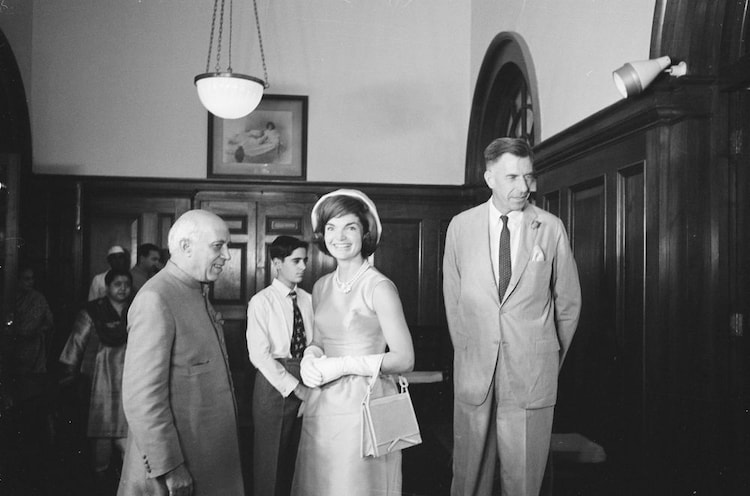
The 1962 war with China accelerated the rapprochement. Kennedy responded swiftly to India's requests for help, authorising emergency military support and airlift operations. Nehru acknowledged the gesture directly.
"I would like to say that we are extremely grateful to you and the Government and the people of the USA for the practical support given to us. We particularly appreciate the speed with which the urgently needed small arms and ammunition were rushed to India," he wrote to Kennedy on November 19, 1962, near the end of the conflict.
For a brief period, a genuine strategic partnership seemed within reach. The moment did not last. Kennedy's assassination in November 1963 removed one of the strongest advocates of closer India-US ties within the American establishment.
NEHRU'S DEATH AND AFTERMATH
Nehru died in May 1964, widely believed to have been broken by China's aggression. Lal Bahadur Shastri succeeded him and led the country through the 1965 war with Pakistan.
The United States, while not directly backing Pakistan, imposed an arms embargo on both countries. After Shastri's sudden death in Tashkent, Indira Gandhi came to power, and India-US ties entered a new and more turbulent phase.
- Ends