
Over 60 warships coming, India moves closer to major stealth frigate deal

The Indian Navy plans more than 60 inductions as Project 17B reaches final bidding. The expansion underscores its focus on combat strength, indigenous shipbuilding and maritime security.
 Last UpdatedNov 25, 2026 01:10 IST
 Published by
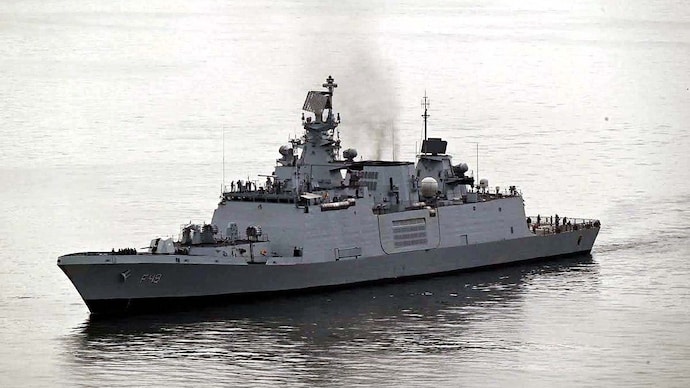
India's naval modernisation drive is set to gain momentum, with the Indian Navy preparing to induct more than 60 new warships and submarines in the coming years, while its USD 7.54 billion Project 17B stealth frigate programme has entered the final bidding stage.
Project 17B involves the construction of seven next-generation guided-missile stealth frigates for the Indian Navy. The programme will follow a competitive two-yard construction model, under which two Indian shipyards will share the responsibility of building the seven warships.
According to the planned timeline, the lowest bidder (L1) is expected to be selected by March 2027, while the final contract is targeted to be signed by March 2028.
The Project 17B frigates are expected to be among the most advanced surface combatants in India's naval fleet, featuring enhanced stealth capabilities, advanced sensors and sophisticated missile systems for anti-air, anti-surface and anti-submarine warfare.
In an exclusive interview with India Today, Navy Chief Admiral Krishna Swaminathan said the Indian Navy was on a clear path of expansion, modernisation and self-reliance, with a strong focus on indigenous warship construction.
"The Indian Navy is a forward-moving Navy. Our Navy is an Atmanirbhar Navy. All our warships are being built in the country itself," Admiral Swaminathan said.
"We make our plans keeping our challenges in view. Being the largest country in this region, we have a big responsibility," he added.
The Navy Chief said several warships and submarines would join the force in the coming years, taking the total number of new warships to more than 60. The expansion is aimed at strengthening India's maritime presence in the Indian Ocean Region amid growing strategic competition and evolving security challenges.
The Navy's modernisation strategy is focused not only on expanding its fleet but also on strengthening indigenous capabilities. The emphasis is on designing, building and maintaining warships within the country, reducing dependence on foreign suppliers and developing India's domestic shipbuilding ecosystem.
Admiral Swaminathan also highlighted the Navy's commitment to Prime Minister Narendra Modi's SAGAR-Mahasagar vision, which focuses on security and growth for all in the region, while promoting cooperation, connectivity and stability across the oceans.
He underlined India's responsibility as the largest country in the region to contribute to maritime security, humanitarian assistance and freedom of navigation.
With Project 17B progressing towards the contract stage and more than 60 warships planned for induction, the Indian Navy is looking to strengthen its combat capabilities and establish itself as a modern, self-reliant maritime force in the coming decades.

Born in Pauri district of Uttarakhand, Manjeet Negi did his early schooling from his village school near Rishikesh and then moved to the town for secondary education. Later, he did his graduation from Hemavati Nandan Bahuguna University. In the year 2000, he did his journalism diploma from Kurukshetra University and started his career with Doordarshan News and started reporting on defence forces from the 2001 Bhuj earthquake. In his career as a defence correspondent, Negi has had the opportunity to report exclusives from world's highest battlefield Siachen Glacier in the north to the Andamans in the South and from the Rann of Kutch in the west to the Arunachal Pradesh border with China in the East.
A regular news-breaker on matters of national security and military affairs, Negi considers the coverage of he Kedarnath tragedy of 2013 as the highest point of his career. During the grave disaster at Kedarnath in June 2013, Manjeet Negi was the first and only TV reporter who walked for 55 Kms on the hilly track to reach the Kedarnath shrine. Spending his first night in the complex amidst several hundred dead bodies around him, Negi says he saw Lord Kedar in his dream. After the Kedarnath disaster, the writer got another opportunity to cover another disaster in the Nepal earthquake in 2015 for the Aaj Tak channel. During the reporting of that disaster for about 10 days, the writer got an opportunity to witness and report the large scale relief and rescue operations undertaken by the Indian Army and the Indian Air Force.
Besides reporting, he is also a skilled mountaineer. With Nehru Institute of Mountaineering and Garhwal Regiment, he has undertaken mountaineering expedition to Satopanth via Gomukh. Accompanying the Mount Manaslu mountaineering expedition of a Garhwal Regiment unit, he also reported about the expedition. He has also scaled the Dronagiri mountain near Joshimath in Uttarakhand. Manjeet Negi has also been honoured with a special award by the Union Home Minister, Shri Rajnath Singh for his reporting of Kedarnath disaster. He was awarded the best reporter award for his coverage of Nepal earthquake by India Today Group. At present, the writer has been working as Editor with Aajtak Channel of India Today Group.
READ MORE