India links emerge in Iran's latest 45-vessel blacklist

A vessel-by-vessel review by India Today found 14 of Tehran's 45 blacklisted vessels with India links.
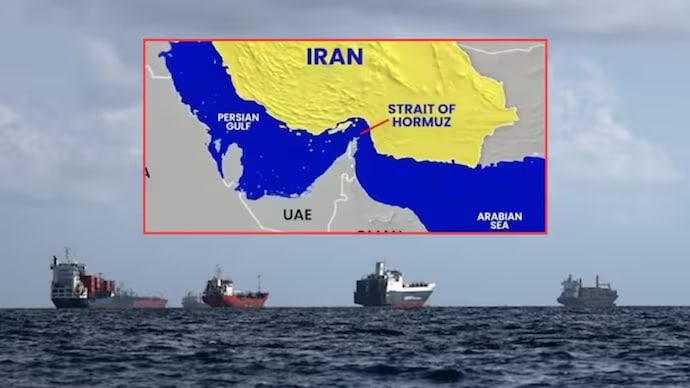

Nearly six months after the Iran conflict sent oil prices surging and revived fears of inflation across major economies, Tehran is intensifying pressure on commercial shipping, warning shipowners that vessels accused of violating its transit rules could face heavy fines, seizure or confiscation.
On Sunday, the Persian Gulf Strait Authority blacklisted 45 tankers that had broken its rules for crossing the Strait of Hormuz. The post did not spell out what it meant by Iran's rules, but Tehran has in the past said ship-owners should get its clearance to transit the strait and said ships should pay for security and other services.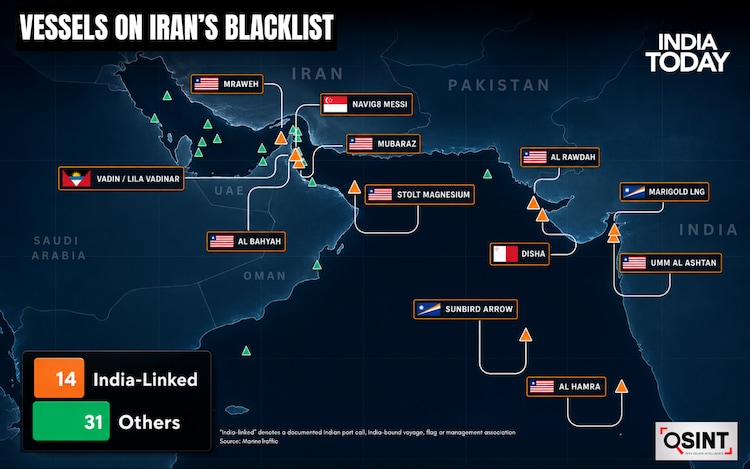
The named vessels could be fined, detained and have their cargoes confiscated, according to the new body set up by Iran to manage the strait. To assess how far Iran’s maritime threats reach into India’s energy supply chain, India Today reviewed each of the 45 blacklisted vessels. The audit found that at least 14 had identifiable connections to India, including nine associated with Indian energy ports or operations. For this analysis, an “India link” means a documented Indian port call, or India-bound voyage, or an association through flag or management.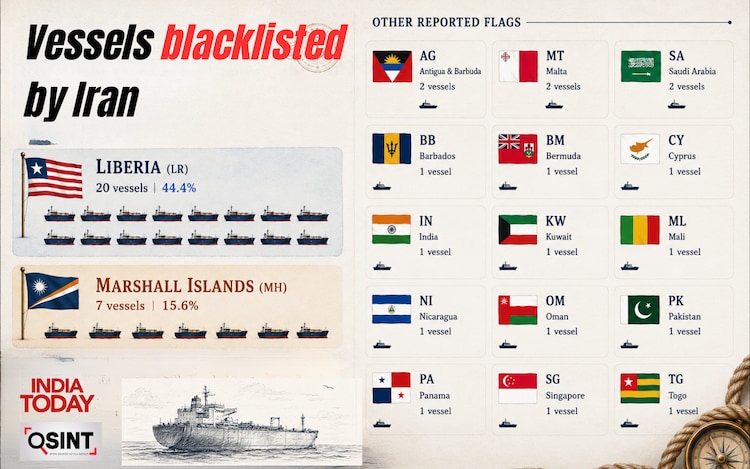
Energy carriers dominate the list, accounting for 35 of the total blacklisted vessels. They include 14 crude tankers, 10 LNG tankers, five chemical or product tankers, four product tankers, one LPG tanker and one bitumen tanker. The remaining fleet comprises six bulk carriers, one bulk and caustic-soda carrier, a container ship and two utility vessels, suggesting that Iran’s warning extends beyond fuel shipments to the broader commercial traffic moving through the region. On paper, most of the vessels appear to belong almost everywhere except India. Their voyage histories, management records and commercial arrangements tell a different story. Fourteen vessels have identifiable Indian connections, including nine tied to Indian energy ports or operations. They have called at or operated through Dahej, Hazira, Kandla and Vadinar, India's main west-coast petroleum and energy gateways.
Disha sails Malta’s flag but is managed by the Shipping Corporation of India and chartered long-term to Petronet LNG, as per maritime intelligence portal MagicPort. Lila Vadinar sailed under the Indian flag as recently as July before reappearing as Vadin under the flag of Antigua and Barbuda.
Four others are part of a cluster of LNG carriers managed by the UAE’s ADNOC Logistics & Services.
Impact on Petrol Prices
The exposure matters because India, like several other Asian countries, remains one of the world’s largest buyers of Middle Eastern oil. Asia is disproportionately dependent on the Strait of Hormuz for its oil and gas supplies,but traffic through the waterway was brought close to a halt early in the war and remains severely constrained.
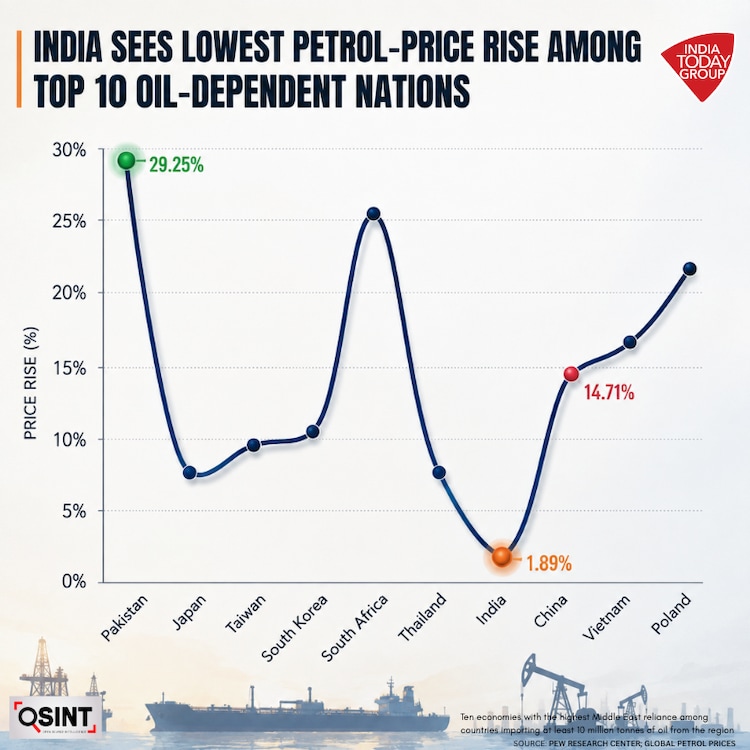
India Today compared the ten major economies with the highest Middle East reliance among countries importing at least 10 million tonnes of oil from the region.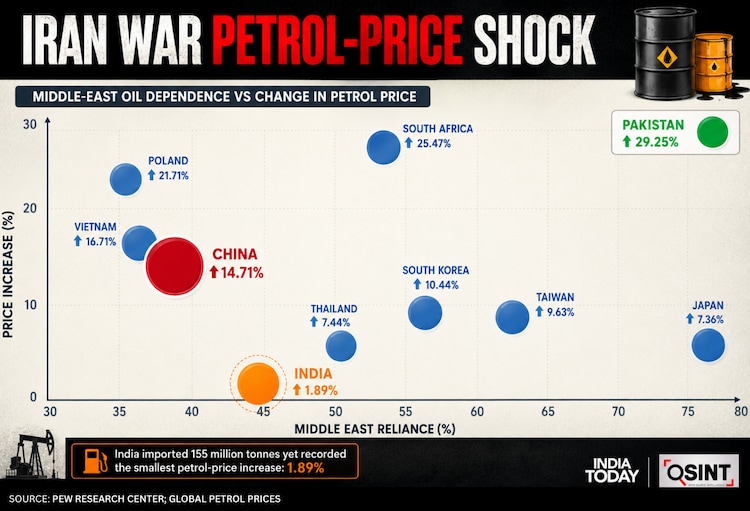
International Energy Agency data highlighted by the Pew Research Center show that India imported approximately 155 million tonnes of oil from the region in 2024. Middle Eastern supplies represented about 45 per cent of India’s oil reliance measure, imports divided by domestic demand and exports.
Yet Indian consumers experienced a much smaller petrol-price increase than several other oil-dependent economies after the war began.
Between February 23 and August 17, the average dollar price of petrol in India increased from $1.113 to $1.134 a litre, about 1.89 per cent. Among ten major oil-importing economies compared by India Today, petrol prices rose roughly 29 per cent in Pakistan, 15 per cent in China, 26 per cent in South Africa and 22 per cent in Poland. Yet Japan and Taiwan, despite sourcing substantially larger shares of their oil consumption from the Middle East, recorded increases of less than 10 per cent.
Iran’s blacklist has not severed India’s energy routes, but it has placed vessels connected to those routes inside a widening circle of commercial and security risk.