Government scrap disposal earns Rs 5,000 crore during five-year cleanliness drive

Union Minister Jitendra Singh launched the website for Special Campaign 6 and said government cleanliness drives have earned over Rs 5,000 crore from scrap disposal. The campaign now links swachhata with efficiency, file clearance and waste-to-wealth gains across public offices.
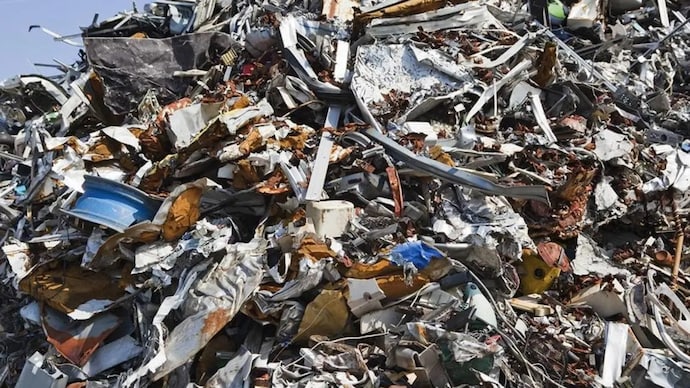

More than Rs 5,000 crore has been earned through scrap disposal during special cleanliness drives carried out by the government over the past five years, Union Minister Jitendra Singh said on Wednesday. Launching the website for Special Campaign 6, aimed at monitoring cleanliness and reducing pendency in government offices, he said the initiative reflected the government’s citizen-centric approach and showed how a national call could turn into a people’s movement when it addressed issues affecting daily life.
Singh said the campaign had moved beyond cleanliness to better use of government resources, reduction of pendency, improved use of public spaces and conversion of waste into economic value. Secretary, Department of Administrative Reforms and Public Grievances, Nivedita Shukla Verma, said Special Campaign 6 was about making efficiency, cleanliness and responsiveness a regular part of government functioning.
Singh, the Minister of State for Personnel, said that over the last five years, around 1,000 lakh square feet of office space had been freed, more than 24 lakh cleanliness campaign sites had been covered, and around two crore files had been weeded out to improve record management. He said the campaign had shown that systematic cleanliness and waste management could generate substantial economic value.
Recalling the start of the swachhata initiative, Singh said cleanliness was among Prime Minister Narendra Modi’s earliest priorities after the government took office in 2014. He said Modi’s emphasis on swachhata in his first Independence Day address on August 15, 2014, had brought a foundational issue affecting the everyday lives of common citizens to the centre of the governance agenda. According to him, the initiative marked a departure from the conventional status quo approach and placed greater focus on citizen-centric governance.
He said the response to the swachhata campaign showed how a clear national call could lead to wide public participation and behavioural change. Referring to the push for toilet construction, particularly for women, Singh spoke about the hardships faced by women in rural and suburban areas and the difficulties faced by school-going girls because of inadequate sanitation facilities.
Singh cited an instance from his constituency of Udhampur in Jammu and Kashmir, where a Class 9 girl had stopped attending school until a toilet was built at her home and school. He said a later survey found about 200 households facing similar concerns, highlighting a major issue that had remained largely unaddressed.
The minister said one of the major outcomes of the sustained Swachhata campaign had been a change in public behaviour, with people becoming more conscious about littering and cleanliness in public spaces. At the same time, he said, the campaign had changed the perception of waste by demonstrating its economic value through the principle of "waste to wealth". He also said the campaign had helped improve workplace discipline and the timely clearance of files, while dashboards and online feedback systems had enabled ministries and departments to review progress and improve implementation.
Singh said the campaign had also helped identify neglected and inaccessible spaces in government establishments, clear them and put them to productive use. He said the dedicated campaign period from October 2, Gandhi Jayanti, to October 31, Sardar Patel Jayanti, should not be seen as a month in which cleanliness activities alone were carried out, but as an annual reaffirmation of the commitment to maintain cleanliness, efficiency and responsiveness through the year.
Verma said Special Campaign 6 had grown into a nationwide movement involving offices and public spaces across the country, including remote locations, public sector undertakings, autonomous organisations, missions abroad and citizen-facing establishments such as post offices, schools and railway stations. She said the campaign would build on experience in scientific waste management, with particular emphasis on effective collection, segregation and environmentally sound disposal of e-waste in line with the relevant rules.
The launch event was attended by Secretary, Department of School Education and Literacy, T K Anil Kumar; Secretary, Ministry of Mines, Keshav Chandra; and Secretary, Department of Posts, Subrat Das, among others. The campaign, as outlined at the event, combines cleanliness work with file disposal, better space use and waste management across government offices and public-facing institutions.