
Supreme Court acquits man, says immorality alone cannot prove rape charge

The Supreme Court acquitted a man in a rape case after finding the complainant's version unreliable. It said criminal conviction cannot rest on moral disapproval without credible evidence.
 Last UpdatedSep 25, 2026 20:53 IST
  Published by
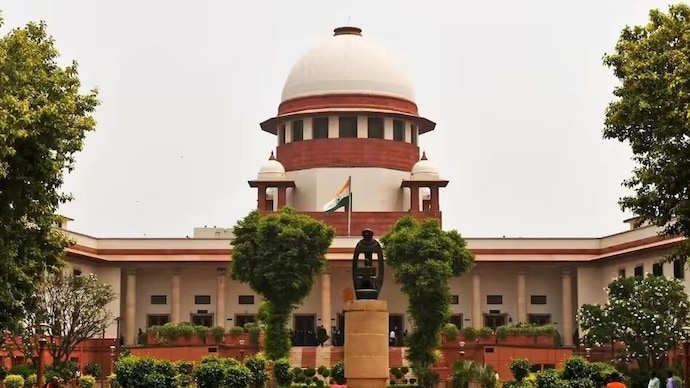
The Supreme Court on Friday acquitted a man who had been sentenced to 10 years in prison in a rape case, saying the immorality of an act alone, without credible evidence, cannot justify a conviction. A bench of Justices Ujjal Bhuyan and Atul S Chandurkar said the charge had to be proved through evidence and not through conjectures based on a judge’s value judgment.
Calling the version of the alleged victim "not believable at all", the bench said there could not be part acceptance and part rejection of her statement. It also said, "Immorality of an act sans credible evidence cannot justify a conviction".
The judgment came on an appeal filed by the man against a September 2013 Punjab and Haryana High Court verdict, which had upheld his conviction and sentence awarded by a trial court in Ludhiana in June 2012.
While acquitting him of the charge under Section 366 of the erstwhile Indian Penal Code, the trial court had convicted him under Section 376. Section 366 dealt with kidnapping, abducting or inducing a woman to compel her marriage, among other acts.
While hearing the appeal, the top court said the trial court was "completely wrong" in justifying the conviction under Section 376, and said the high court had also erred in accepting "such convoluted logic".
Analysing the evidence of the alleged victim, the bench said her version was a "bundle of contradictions". "There cannot be partial rejection of the evidence of the prosecutrix for the purpose of Section 366 IPC and partial acceptance of the very same statement for the purpose of proving the charge under Section 376 IPC," it said. The bench added that if her evidence was of unimpeachable character, it had to be accepted in entirety.
According to the prosecution, the alleged victim was studying in Class 8 when the accused kept her in a flat in Ludhiana for two days in June 2009 and raped her.
It said he later took her to Malerkotla on his scooter, where he allegedly confined her in a room in an abandoned factory and raped her. The prosecution claimed that after they returned to Ludhiana, the woman’s father and the police intercepted them and the accused was apprehended.
The Supreme Court said its analysis of the woman’s evidence showed that she had willingly accompanied the accused first to the flat and then to Malerkotla.
"Despite passing through busy streets and intersections, she did not raise any hue and cry," the bench said.
Referring to an observation in the trial court judgment, it said, "While the example given by the sessions judge that a lady may travel with a man to a far-off place and even spend a night with him but may not consent to having sex with him (though the use of the word 'daring' prefixing 'women' is totally uncalled for) may be true, the context is different".
The trial court had said that “some daring women” choose to travel to far off places in the company of men.
Setting aside the judgments of the trial court and the high court, the Supreme Court said the appellant stood cleared of the charge under Section 376 IPC, reiterating that a conviction could not rest on immorality alone in the absence of clinching evidence.