SC sets aside Telangana court order, restores minor's custody to adoptive parents

The Supreme Court has ordered a Hyderabad child welfare body to return a minor to Mohammed Akbar and his spouse. The ruling overturns the Telangana High Court's order while keeping wider trafficking investigations open.
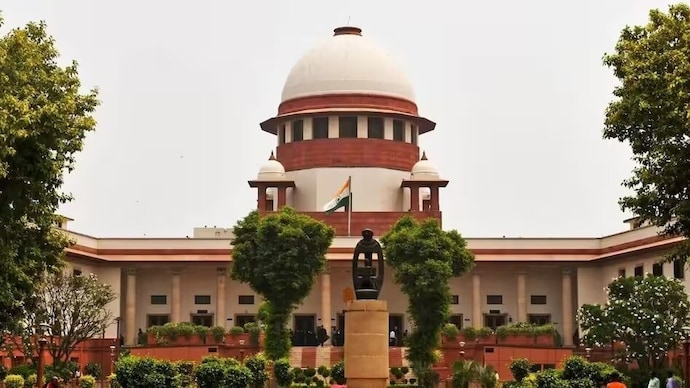

The Supreme Court has set aside a Telangana High Court order on the custody of a minor and directed the Child Welfare Committee in Hyderabad to hand over the child to two people claiming to be his adoptive parents.
The order came on an appeal filed by Mohammed Akbar and others against the high court's June 12, 2025 ruling.
A bench of Justices MM Sundresh and Prasanna B Varale said the child should be given to appellant numbers 1 and 2, Mohammed Akbar and his spouse.
The court, however, made it clear that its order did not deal with pending investigations into allegations of trafficking involving other children.
In its order passed on Thursday, the bench said, "Taking note of the aforesaid facts, we are inclined to set aside the impugned order dated June 12, 2025 passed by the High Court of Telangana in writ petition... Consequently, the concerned respondent No.2- Child Welfare Committee, Shishu Griha, Hyderabad, is directed to hand over the custody of child to appellant Nos.1 and 2 (Mohammed Akbar and his spouse)."
The Telangana government was represented by lawyer Sravan Kumar.
The case arose after the child was taken into the custody of the Child Welfare Committee on suspicion that he was sold by his biological mother to the first two appellants.
The top court noted that it was undisputed that the third appellant was the child's biological mother. It also observed that the fact that the child was given in adoption by his biological mother because she was unable to care for him due to financial constraints would "ipso facto" not lead to the presumption that the child was sold.
The bench said the child had been in the care of the first two appellants, described in the order as his adoptive parents, and that this was not a case where the child had not been properly cared for by them.
The Telangana High Court had earlier declined to treat the child's custody with the Child Welfare Committee as illegal detention. It had also said that the adoption deed did not comply with the framework under the Juvenile Justice (Care and Protection of Children) Act, 2015, and that the adoption had not taken place through the Central Adoption Resource Authority, or CARA.
While ordering that the child be handed over to the adoptive parents, the Supreme Court said, "We make it clear that we are not touching upon the issues pertaining the pending investigation(s) qua other children who are alleged to have been trafficked."
In effect, the court restored custody of the child to Mohammed Akbar and his spouse while leaving the wider trafficking investigations untouched.