
This giant rock in Australia changes colour throughout the day. Here's why
Australia's Uluru is one of the world's most famous natural landmarks. As the sun moves across the sky, the massive sandstone rock appears to change colour, creating a stunning visual display that attracts visitors from around the world.
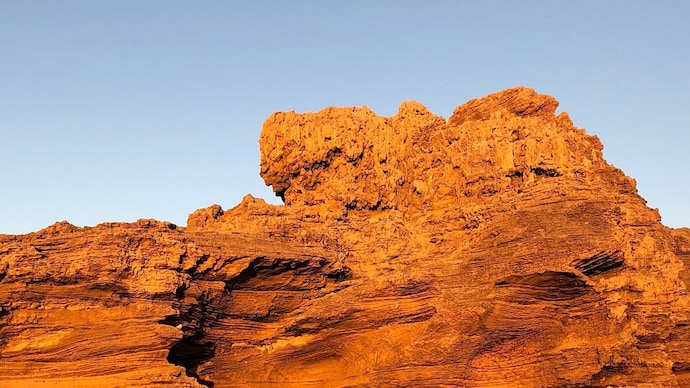

Some animals can change colour, but did you know there's a giant rock in Australia that seems to do the same? Located in the heart of the country's Northern Territory, Uluru, also known as Ayers Rock, appears to shift from soft pink and bright orange to deep red and even purple as the day goes on.
The rock itself does not actually change colour. Instead, the changing position of the sun and the way light interacts with its iron-rich sandstone surface create this stunning optical effect.
The breathtaking display has made Uluru one of Australia's most visited natural attractions.
WHY DOES ULURU CHANGE COLOUR?
The colour-changing effect is caused by sunlight falling on Uluru at different angles throughout the day.
The rock is made of iron-rich sandstone, and over millions of years, the iron has oxidised, giving Uluru its famous reddish appearance.
As the sun rises, climbs higher and then sets, the changing light makes the rock appear to take on different shades.
Visitors often see soft pink at sunrise, bright orange during the morning, deep rust-red in the afternoon and crimson or purple around sunset.
The rock itself remains the same colour, but the changing light creates the illusion of constant transformation.
MORE THAN JUST A NATURAL WONDER
Uluru is not only famous for its appearance. It is also a UNESCO World Heritage Site and holds deep cultural and spiritual importance for the Anangu people, the Traditional Owners of the land.
Many stories, traditions and sacred sites connected to their culture are linked to the monolith and the surrounding landscape.
ALSO READ: What are cave pearls? Everything to know about these natural wonders
CAN YOU SEE THE COLOUR CHANGE YOURSELF?
Yes. Sunrise and sunset are considered the best times to witness Uluru's changing colours. Parks Australia has dedicated viewing areas where visitors can watch the light gradually transform the rock's appearance.
Rain can also create a different spectacle, with parts of the rock appearing silver, black or dark burgundy as water flows across its surface.