
Your bank locker has two keys. Why can't either one open it alone?

Bank lockers are designed with a dual-control system in which the customer's key and the bank's master key work together. But how does this system protect valuables, and who can actually access a locker?
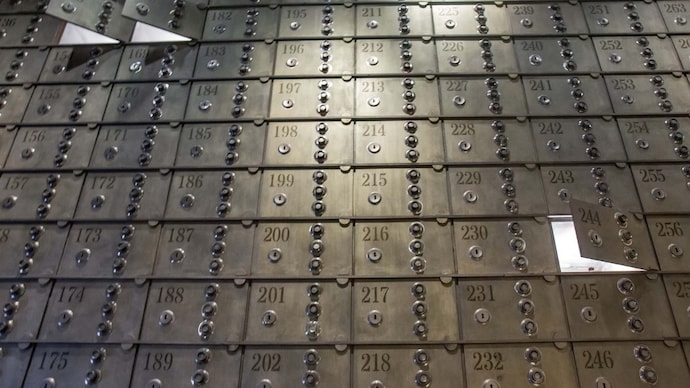

When people keep jewellery, property papers or other valuables in a bank locker, they often assume that the key handed to them is the only thing needed to access it. But bank lockers are designed differently.
Most traditional bank locker systems use a dual-key mechanism, meaning the locker requires both the customer's key and the bank's master key to open.
This is one of the basic security features that separates a bank locker from a regular cupboard or home safe.
HOW DOES THE DUAL-KEY SYSTEM WORK?
A bank locker typically has two separate controls:
Customer key: Kept by the locker holder.
Bank master key: Kept under the bank's authorised control.
The locker can generally be opened only when both keys are used together. The customer's key alone is not sufficient, while the bank's master key alone also cannot ordinarily open the individual locker.
The purpose is to ensure that neither the customer nor a single bank employee has complete access independently.
WHY DOES THE BANK KEEP A MASTER KEY?
The bank's master key is part of the locker system and is used by authorised bank personnel during the locker-opening process.
The customer must generally be present and use their own key. The bank employee then operates the bank-side key or mechanism under the bank's procedures.
This is known as dual control, where access requires participation or authorisation from two sides.
CAN A BANK EMPLOYEE OPEN YOUR LOCKER WITHOUT YOU?
Under the normal locker-opening process, the bank employee's master key alone is not meant to provide access to the customer's locker.
However, banks also have procedures for exceptional circumstances, such as unpaid locker rent, legal orders, death of the locker holder, or long-unoperated lockers. These situations are governed by applicable banking rules and internal procedures.
So, the dual-key system is an important safeguard, but it does not mean lockers are outside all legal or operational processes.
WHAT HAPPENS WHEN YOU VISIT THE BANK TO OPEN YOUR LOCKER?
The usual process involves:
- The customer requests access to the locker.
- The bank verifies the customer's identity and locker details.
- The customer uses their key.
- The bank employee uses the bank-side key or mechanism.
- The locker is opened under the bank's supervision and procedures.
The exact process may differ slightly depending on the bank and locker system.
WHY IS THIS SYSTEM CONSIDERED SECURE?
The idea is simple: one person should not have complete control over access.
Even if someone obtains the customer's key, they would generally still need the bank-side mechanism. Similarly, the bank-side key alone is not intended to open the customer's locker.
This creates an additional layer of control compared with a single-key storage system.
WHAT IF YOU LOSE YOUR LOCKER KEY?
A locker key is not like an ATM PIN that can simply be reset.
If the customer loses the key, they must inform the bank immediately. The bank may follow a formal process involving verification, documentation and, where necessary, breaking open or replacing the lock through an authorised procedure.
The customer may also have to bear the applicable costs.
DOES THE BANK KNOW WHAT IS INSIDE YOUR LOCKER?
Generally, bank employees do not routinely inspect the contents of a customer's locker. The locker is intended for the customer's valuables and documents.
However, banks may have legal or regulatory obligations in specific circumstances, such as court orders, enforcement action or procedures involving a deceased locker holder.
WHAT SHOULD YOU REMEMBER AS A LOCKER HOLDER?
The locker key should be kept safely and never shared casually. Customers should also ensure that their contact details and nominee information are updated with the bank.
A locker provides secure storage, but customers should not assume that every loss is automatically covered by the bank. The bank's liability depends on the circumstances and applicable rules.