
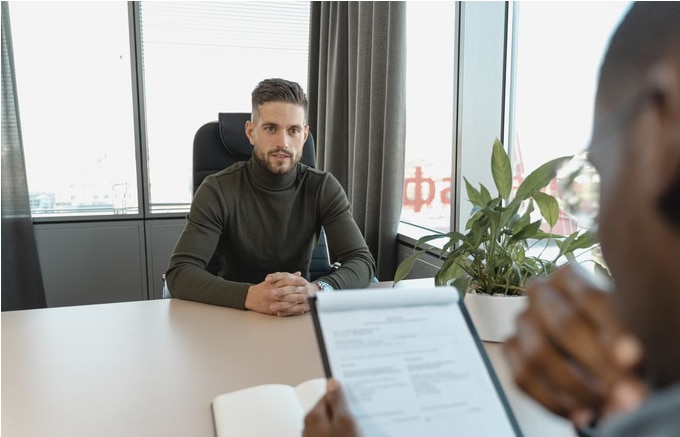
Not standing trial: Redditor asks why Indian job interviews feel like interrogations

Job interviews in India can often feel intimidating and one-sided. As AI reshapes the workplace, companies may need to rethink hiring, moving beyond interrogation-style questioning and outdated tests towards more practical, respectful assessments of real-world skills.
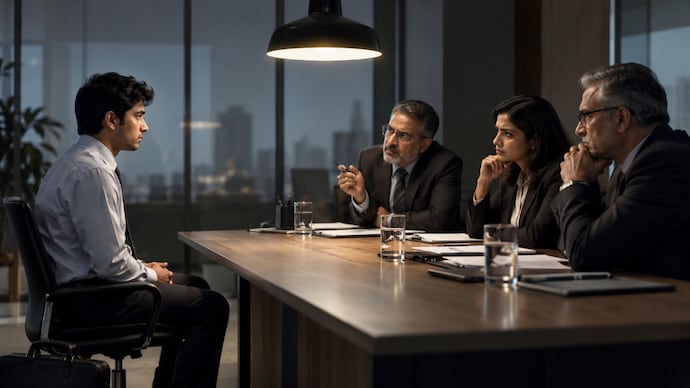
Interview or interrogation? Why India’s hiring culture needs a rethink (AI generated image)

New Delhi,UPDATED: Sep 15, 2026 07:30 IST
You walk into a job interview expecting a normal conversation around your experience, your skills and what the role has to offer. Instead, you find yourself answering one question after another, taking a coding test and facing an interviewer who barely speaks beyond asking, 'Why?' or 'How?'
For many job seekers in India, the experience can feel less like an interview and more like an interrogation. The contrast has also prompted comparisons with job interviews in the US, with some candidates saying Indian interviews can be far more intimidating, particularly when it comes to technical tests and questioning.
But the issue is not necessarily tough questions. It is how they are asked, with little conversation, context or sense that the person sitting across the table is also trying to win you over.
An interview is meant to work both ways: employers assess candidates, while candidates decide whether a company is worth joining. Yet in many hiring rooms, that balance disappears.
A recent Reddit discussion among Indian tech professionals revived this familiar complaint. Candidates described abrupt questioning, intimidating interviewers and outdated coding exercises.
One job seeker recalled being asked to introduce themselves before being immediately thrown into a coding question, without the interviewer introducing himself or explaining the process.
At the heart of the frustration is a simple issue: the interviewer becomes the gatekeeper, while the candidate is left feeling like the accused. So, where did the idea of an interview as a two-way conversation go?
WHEN THE INTERVIEW BECOMES A POWER EXERCISE
Several Reddit users said they had experienced similar behaviour. Some suggest that interviewers may themselves be disengaged because conducting interviews is simply an additional responsibility assigned to them.
Others described the experience as a “power trip”, while some candidates said interviewers could make them feel inadequate or uncomfortable when discussing salary expectations.
For job seekers, the problem is not necessarily difficult questions. It is the manner in which those questions are asked. Ashish Dhawan, Managing Partner, NGS Global India, believes the distinction between an interview and an interrogation has become increasingly blurred.
“Somewhere along the way, we started confusing interviews with interrogations. A candidate walks in expecting a conversation about their experience and suddenly finds themselves defending a PhD thesis, a criminal case and the national budget, all in 45 minutes!” he said.

He points to sales hiring as an example. A candidate with 15 years of experience and a proven track record may be asked questions such as, “How many calls did you make every day?” or told, “Sell me this pen.”
“Are we hiring a sales leader or conducting a school viva?” Dhawan asks.
Abhishek Anand, who works at a leading multinational company in Noida, said interviews should ideally feel like a professional conversation rather than an attempt to put candidates under pressure.
“An interview should test your skills, but it should also give you a fair chance to explain your experience and approach,” he said.
That distinction matters. A demanding interview can still be respectful; an intimidating one can leave candidates feeling that they are being judged before they have had an opportunity to demonstrate what they can do.
THE PROBLEM GOES BEYOND THE INTERVIEW ROOM
The frustration does not end when the interview begins, it often starts much earlier and continues long after the candidate leaves the room.
According to Indeed’s 2026 Hiring Confidence Index, India scored 58 out of 100. The survey of 1,073 job seekers and 735 employers found that 29 per cent of job seekers were frustrated by employers not responding to applications. Another 26 per cent cited delays between interview rounds, while 20 per cent pointed to a lack of feedback.
For candidates, then, the hiring experience is about more than what happens inside the interview room.
And the way companies handle the process can itself influence whether they ultimately secure the person they want. Dhawan argues that candidates are evaluating employers at the same time.
“The bigger issue is that companies forget candidates are interviewing them too. If a candidate goes through five rounds over six weeks with no feedback, while another company offers a structured and respectful process, don't be surprised when the best candidate chooses the latter,” he said.
ARE TECHNICAL INTERVIEWS STUCK IN THE PAST?
The Reddit debate also raises a bigger question: are traditional coding tests still relevant to modern software jobs?
Candidates have criticised timed coding and data-structures-and-algorithms rounds that often feel disconnected from real-world work.
With AI now able to write and debug code, companies may need to assess problem-solving, judgement, communication and how effectively candidates use AI, not just how quickly they can solve coding questions.

A TWO-WAY ASSESSMENT
At its best, an interview works both ways: employers assess candidates, while candidates assess the company. The Reddit debate highlights a broader concern among Indian job seekers: hiring is not just about finding the right talent, but also about how companies treat candidates.
As AI reshapes workplaces, interviews may need to evolve from interrogations into meaningful conversations that identify the right fit.
- Ends