

From the Editor-in-Chief

In a country as vulnerable to diet-related diseases as India awareness of what is in our food is not a lifestyle choice, it is a public health imperative

ISSUE DATE: Sep 21, 2026 | UPDATED: Sep 12, 2026 15:11 IST
Imagine a battleground that measures only a few square centimetres. Yet, imposing order on a patch of paper that tiny may be as valuable as winning a country. We are talking about nutrition information on packaged food. Clear warnings about, say, excess sugar or fat could swing the decisions that millions of Indians make about what they eat. This is hardly a trivial issue. Globally, Indians rank in the very top tier of vulnerability for life-threatening conditions like diabetes, obesity and cardiovascular ailments. Much of it owes to whether we can make informed choices on food. On September 10, the Supreme Court called it a matter of “national interest”. It was speaking on a high-stakes case that involves consumer health at one end and the financial health of a $140 billion packaged food industry at the other. The fight comes down to what a bureaucrat described as that little piece of “real estate on the front of the pack”.
We routinely obsess over details related to food: healthy breakfast cereals, oil in snacks, analogue paneer, whether brown bread is a scam and organic food really organic. But most of us are not equipped to figure things out merely by poring over the fine print on packaged foods, medicine bottles and health drinks. Especially if obscure technical terms stare back at us. So, between our voracious appetite for information and our navet lies enormous space for deception for the food industry to operate in ways that serve its interests rather than ours. All the focus now is on a proposal before the court: having a ‘Red Hexagon’ on the front of a food packet. This is visualised as a prominent graphical box carrying bold, clear textual warnings like ‘High Sugar’, ‘High Salt’, ‘High Fat’, or ‘Highly Sweetened Beverage’. In the thick of action is the Food Safety and Standards Authority of India (FSSAI), whose remit is to ensure food manufacturers do not pull wool over consumers’ eyes with misleading claims. Keeping FSSAI on its toes are public health groups and a responsive judiciary.
In recent months, FSSAI made waves by sending over 150 notices to a bunch of food companies over false claims in their ads and labels. At the receiving end were FMCG behemoths like Nestl, PepsiCo, Coca-Cola, Dabur, Red Bull, and in August, Mondelez, the makers of Bournvita and Cadbury’s. Its case-load tells us why scepticism is in order when we read food labels. It turns out the norms governing Front-of-Pack Labelling have historically been vague in India. They are only now being sharpened, in an air of heightened public scrutiny. In its PIL, non-profit 3S and Our Health Society cited India’s dire public health data to demand unambiguous labelling of all unhealthy ingredients. In August, upon stern prodding from the court, FSSAI proposed the Red Hexagon warning, but with a phased, industry-friendly rollout. On September 10, facing judicial admonition, FSSAI buckled and verbally agreed to more stringent timelines. One heated argument is over whether there should be a ‘single-nutrient’ or ‘two-nutrient’ trigger for the warning. Activists reject the second idea, saying extremely sugary or salty products could bypass warnings if only one dodgy ingredient is above safety limits and all others meet dietary norms. The food industry is calling the entire framework “unscientific” and seeking proper guidelines, including for laboratory testing, before any product is declared dangerous. The court favours stronger regulatory oversight while insisting it be grounded in science rather than alarm.
Science, it turns out, is the obfuscating factor in a related problem with food labelling. To be precise, the dense scientific vocabulary that fills the ‘Ingredients’ box on packets. For the industry, these fulfil legal obligations while often masking the danger of the contents behind technical names. They leave the innocent consumer no wiser. Health-conscious Indians may have become alert to the perils of sugar, maida or trans fat. But terms like ‘High-Fructose Corn Syrup’, ‘Maltodextrin’ or ‘Sucralose’ will ring no alarm bells. Not to mention polysyllabic monsters like ‘Carboxymethylcellulose’ and ‘Polysorbate-80’. All these could be metabolically damaging in ways that their chemical nomenclature successfully obscures. Doctors are calling it a lack of ‘label literacy’. As consumers, we have the right to call it a low trick. Inside, we have compiled a list of the ‘Dirty Dozen’ ingredients to watch out for, with explanations. Often new synthetic items, they are the latest frontline in our fight for food safety.
In Mumbai, a different kind of food story is unfolding. An IAS officer has attained ‘pop culture hero’ status with his tough sheriff act. Tukaram Mundhe conforms to a type that pops up periodically in India: the crusading bureaucrat who kowtows to no one. The cult adoration owes to the fact that he’s gunning for big names with equal zeal, with high-profile raids and shutdowns at Domino’s and Pizza Hut outlets, Blinkit and Reliance Retail warehouses, and ISKCON Juhu eateries. The citizenry is watching and applauding. The food sector definitely needs scrutiny. But it deserves a scrutiny that is rational, consistent and grounded in evidence rather than tipping into vigilantism.
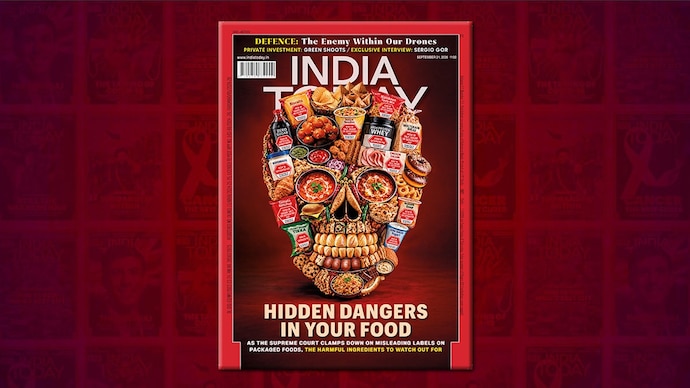
Our cover story brings all three threads together, the labelling battle before the Supreme Court, the vocabulary of concealment in ingredients lists and the Mumbai enforcement story. An aware consumer is a protected consumer. In a country as vulnerable to diet-related diseases as ours, that awareness is not a lifestyle choice. It is a public health imperative.
- Ends