Vietnamese crab exporter
Advertisement

Canada owes an apology to India: Ex-envoy on Nijjar killing probe, Goldy Brar audio

In an interview, Sanjay Verma, former Indian High Commissioner to Canada, commented on a leaked audio recording where gangster Goldy Brar allegedly linked the killing of Hardeep Singh Nijjar to gang rivalry over drugs and weapons. Verma stated that if verified, the tape confirms India's long-standing position that Nijjar's death was a result of gang rivalry rather than state action. He highlighted that Indian intelligence agencies had accurately profiled criminal networks and shared information under UAPA terror listings prior to the incident. Commenting on diplomatic relations, Verma asserted, "Canada owes an apology to India," adding that Canadian authorities acted hastily without basing claims on facts. He emphasised the need for increased intelligence cooperation, information sharing, and a formal course correction by Ottawa to restore trust between both nations.

Read More

VIDEOS FROM OTHER SECTIONS

LATEST VIDEOS

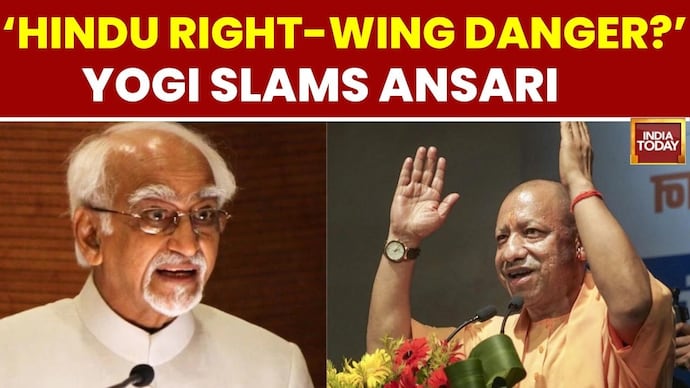
Hamid Ansari Cites Nehru on Right-Wing Communalism, Sparking Backlash from BJP and Clerics

A political controversy has erupted following remarks made by former Vice President Hamid Ansari during the A.G. Noorani Memorial Lecture in New Delhi. Citing an observation attributed to Jawaharlal Nehru, Ansari stated that the greater danger facing India was Hindu right-wing communalism rather than communism, while highlighting emerging challenges to civic nationalism. The Bharatiya Janata Party condemned the remarks as unfortunate and anti-Hindu propaganda, demanding an apology. Uttar Pradesh Chief Minister Yogi Adityanath criticised the statement, alleging it disrespected India's ancient Sanatan traditions and diminished the dignity of constitutional offices. Senior Muslim cleric and imam body chief Umar Ahmad Ilyasi also hit back at Ansari, accusing him of attempting to provoke Muslims and alleging a broader conspiracy behind the remarks. Political leaders defended the inclusive nature of Indian society, asserting that communal harmony remains resilient.
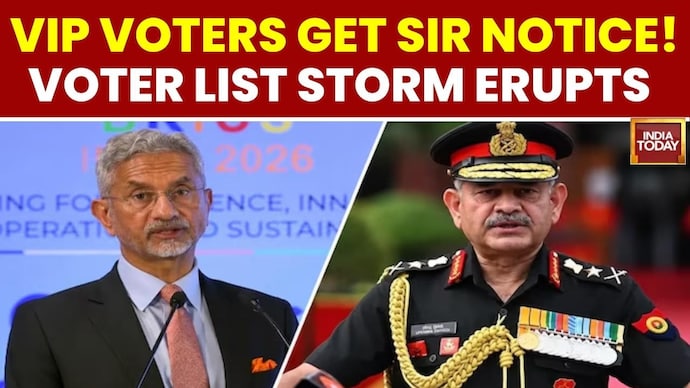
Delhi SIR Row: Notices Issued to VIPs, EC Clarifies Process Amid Political Spat

The Election Commission has issued notices to several high-profile figures in Delhi over electoral roll discrepancies during the Special Intensive Revision (SIR) exercise. Those flagged include External Affairs Minister S. Jaishankar, former Army Chief Upendra Trivedi, CBI Director Praveen Sood, and former Delhi Deputy Chief Minister Manish Sisodia. Discrepancies involve unmapped entries, name mismatches, and parental age inconsistencies. The Delhi Chief Electoral Officer clarified that issuing notices does not mean deletion from electoral rolls, stating the exercise aims to correct data with due opportunity to be heard. Meanwhile, political parties exchanged barbs, with opposition leaders alleging a conspiracy to disenfranchise voters, while others defended the SIR as a transparent, constitutional process applied equally across all citizens.

'We Are the Owners, Why Should We Disturb Port Activities?': V. D. Satheesan

In an interview, Kerala Chief Minister V. D. Satheesan outlines his administration's economic and educational roadmap, addressing youth unemployment, migration, and demographic transitions. Acknowledging the challenge of brain drain, he details plans to restructure university curricula, launch a Knowledge Valley, establish a global job watchtower, and adopt a silver economy model for an ageing population. Addressing industrial and infrastructure growth, he highlights single-window approval reforms across nineteen legislations and the promotion of port-led development under Mission Samudra. Responding to queries regarding Adani group investments in the Vizhinjam seaport, he clarifies that while the Adanis serve as concessionaires, the state government remains the ultimate owner and must advance development without conflict while securing the state's strategic interests. Furthermore, he explains his government's conditional approach to the PM SHRI scheme, emphasizing that curriculum control and school selection must remain under state authority.

advertisement