
King tides and El Nino-fuelled waves slam California coast, trigger floods

From damaged piers to flooded beachfront homes, California is seeing the effects of a particularly intense coastal weather episode.
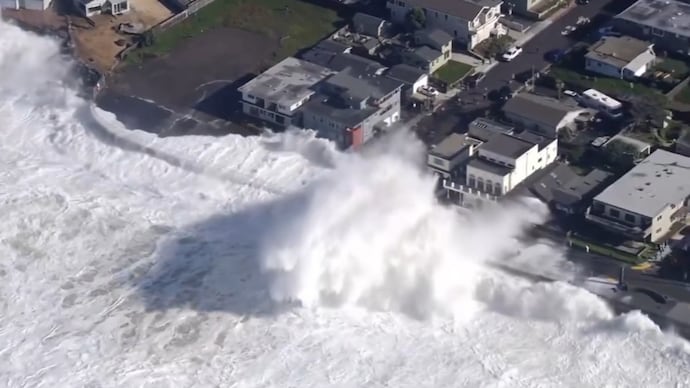
An aerial view of king tides along the coast of California. (Photo: X)
New Delhi,Nov 26, 2026 17:14 IST Last UpdatedNov 26, 2026 17:14 IST
 Published by
Last UpdatedNov 26, 2026 17:14 IST Published byAryan
Nov 26, 2026 17:08 ISTCalifornia's coastline is facing another round of dangerous high tides and coastal flooding as unusually high water levels, powerful waves and warmer Pacific waters combine to worsen conditions along the shore.
In Pacifica, part of a 350-metre-long pier was destroyed on Wednesday after powerful waves battered the structure. The pier had already been closed during the summer after cracks were discovered. Beachfront homes and streets were also flooded.
Flooding was reported in several other coastal communities, including Mill Valley, Larkspur, Sausalito and Corte Madera. In Humboldt County, authorities ordered evacuations in a small coastal community where most buildings were flooded.
The National Weather Service issued coastal flood warnings for parts of Orange and San Diego counties through Friday afternoon. A coastal flood advisory was also in place for parts of Los Angeles County.
WHAT ARE KING TIDES?
King tides are the highest naturally occurring tides of the year. They happen when the gravitational pull of the moon and sun combine in a way that produces unusually high water levels along coastlines.
California's latest king tide window runs from November 24 to 26. The tides are part of a regular astronomical cycle and are not caused by El Nio.
However, their effects can become more severe when high tides coincide with powerful waves, storms and elevated sea levels.
Waves measuring around 6 to 9 metres were forecast along parts of Northern California, adding to the risk of coastal flooding and damage.
HOW IS EL NINO MAKING IT WORSE?
The developing El Nino is adding another factor to the coastal conditions. The climate pattern can generate powerful ocean waves known as Kelvin waves, which carry warm water eastward across the Pacific towards the Americas.
As this warmer water moves towards the coast, it can temporarily raise sea levels by around 15 to 30 centimetres or more. Warmer seawater also expands, adding to the rise in water levels.
These changes can make high tides more damaging, particularly in low-lying coastal areas already exposed to large waves.
The National Oceanic and Atmospheric Administration has warned that above-normal high tides could return during the next king tide window, expected from December 22 to 26.
- Ends