
Ancient wisdom and clean energy: PM shares how India is fighting climate change

PM Modi emphasised that India's climate efforts are not confined to just reducing emissions but also include protecting natural resources, expanding clean energy and developing technologies that can support a more sustainable economy.
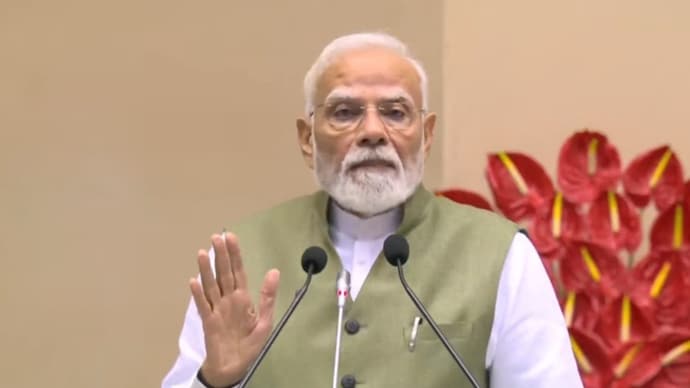

Prime Minister Narendra Modi took the stage and put the spotlight on India's growing climate action, pointing to the country's rapid expansion of renewable energy, cleaner transport and water conservation as examples of how economic growth can be pursued alongside environmental protection.
Speaking at the International Conference on “The Future of Environment and Climate Dynamics”, Modi said India's approach draws on a long tradition of living in harmony with nature.
"For centuries, India has guided the world on matters concerning nature and the environment. Driven by this ideological commitment and drawing upon its cultural experiences, India is now offering solutions to modern climate challenges while simultaneously calling for collective global action."
Saying that India's per capita carbon footprint remains well below the global average, he added that the country is now converting its ancient environmental ideas into modern solutions for protecting nature.
CLEAN ENERGY FUELLING INDIA'S CLIMATE GROWTH
Renewable energy, however, remains central to India's climate strategy.
Modi pointed to the extraordinary growth in solar power, saying India's solar capacity has risen from around 2 GW 12 years ago to more than 160 GW today.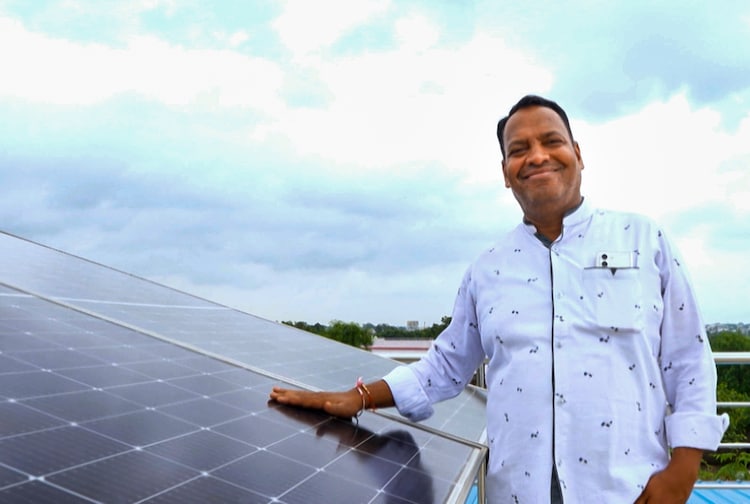
He said solar energy alone had helped prevent around 20 crore tonnes of carbon emissions.
Meanwhile, wind power capacity has increased roughly threefold over the past 12 years, while hydropower has also expanded.
India is simultaneously working to increase nuclear energy and bring greater private-sector participation into the clean-energy transition.
These efforts have helped India's non-fossil installed power capacity increase about fourfold over the period.
A GLOBAL CLIMATE LEADER
The world's most populous country crossed the 50% mark for non-fossil installed electricity capacity in 2025, five years ahead of its 2030 Paris Agreement target.
"Over the past 12 years, India has made extraordinary progress across every sector related to the environment," PM Modi said. "We have placed a major emphasis on renewable energy, which has played a pivotal role in environmental protection."
The prime minister noted that India is the only G20 nation that has fulfilled all the commitments made at the COP21 summit in Paris ahead of schedule, an achievement that speaks to the country's growing capability.
LONG WAY TO GO
Beyond clean energy, Modi highlighted India's efforts to make sustainability part of everyday life.
He pointed to the country's push for clean mobility and green hydrogen, as well as the introduction of what he described as the world's longest hydrogen train.
PM Modi emphasised that India's climate efforts are not confined to just reducing emissions but also include protecting natural resources, expanding clean energy and developing technologies that can support a more sustainable economy.
"Our cultural philosophy says that 'Mata Bhumih Putroham Prithivyah'," PM Modi said. "With this guiding philosophy, India is striving to build a responsible, sustainable future. I am confident that the discussions during this conference, and the fresh insights and solutions emerging from them, will emerge as a pillar of strength for coming generations."