
75-million-year-old snake discovered: Ancient fossil reveals unknown history
A fossil from the age of dinosaurs is challenging long-held ideas about snakes. According to scientists, the discovery changes far more than previously imagined.
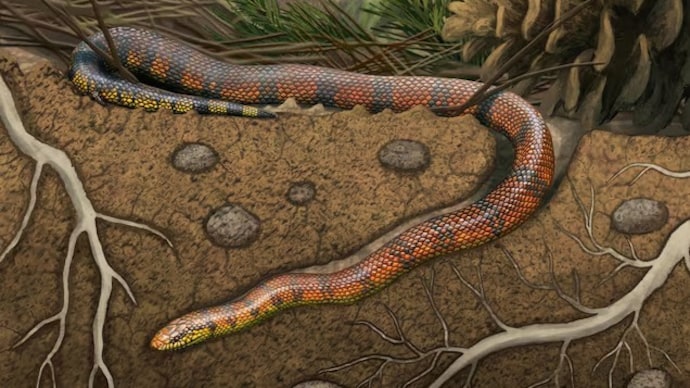

A remarkably well-preserved snake fossil from the age of dinosaurs has given scientists their clearest glimpse yet into the early evolution of snakes, revealing that these ancient reptiles experimented with different lifestyles and habitats much earlier than previously believed.
The fossil, discovered in southeastern Brazil, belongs to a newly identified species named Tametara mirim, which lived 75 to 85 million years ago during the Late Cretaceous Period, when dinosaurs still dominated Earth.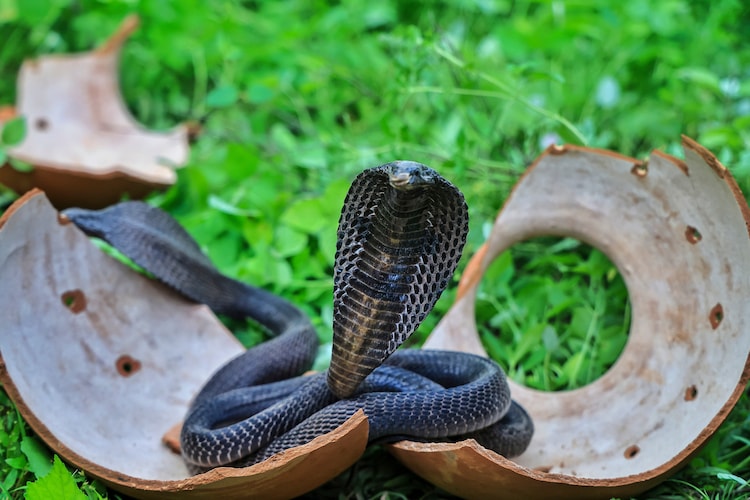
Measuring about 42 centimetres long, the snake lived alongside giant long-necked dinosaurs, crocodiles and early birds in what was then a lush landscape. The findings were published in the journal Nature.
A FOSSIL AND A BRAIN
Snake fossils from the dinosaur era are exceptionally rare, and most are too incomplete to reveal much about how the animals evolved. What makes Tametara mirim extraordinary is the preservation of its skull.
Scientists recovered about 60% of the skull and 70% of the vertebral column, allowing them to reconstruct the snake's brain anatomy using high-resolution CT scans.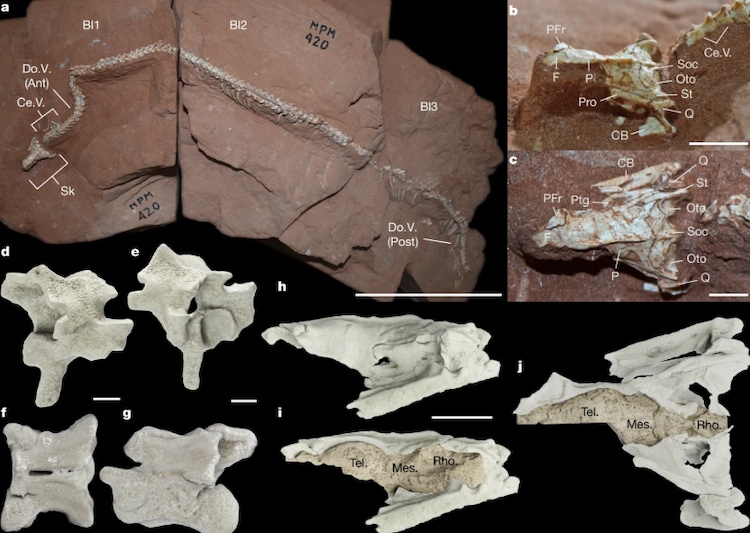
The analysis showed that the species was adapted for a fossorial, or burrowing, lifestyle, much like modern coral snakes.
The fossil also revealed something unexpected. Rather than following a simple evolutionary path from one habitat to another, early snakes appear to have repeatedly adapted to different environments, including underground, on land and in the sea.
Researchers say this suggests snake evolution was far more dynamic than previously thought.
Instead of all early snakes sharing the same way of life, different lineages evolved their own specialised lifestyles independently over millions of years.
SOLVING AN ANCIENT MYSTERY
Snakes are believed to have evolved from lizard ancestors roughly 170 million years ago during the Jurassic Period. However, the fossil record from that time is extremely sparse, making it difficult for scientists to understand how the group lost its limbs and developed its distinctive elongated bodies.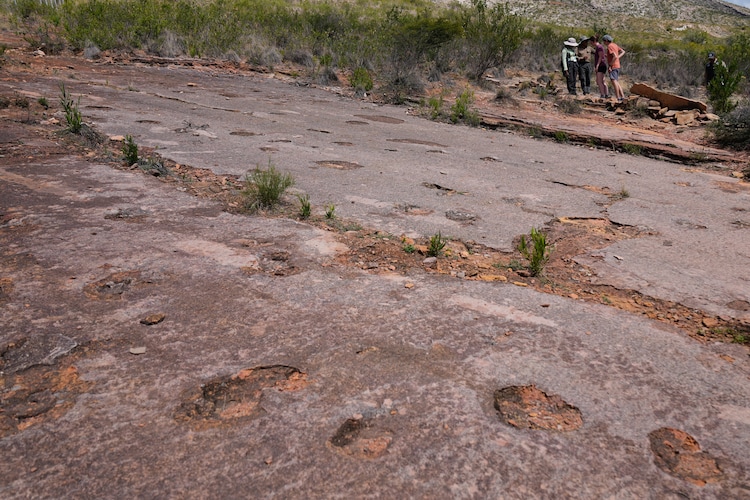
Although the new fossil does not preserve its teeth or hip region, researchers believe Tametara mirim probably still retained robust hind limbs, similar to another ancient snake, Najash rionegrina, which had functional back legs.
The study also indicates that the ancestral snake may not have been fully adapted to a single habitat. Instead, it likely occupied a transitional lifestyle between burrowing underground and moving across the ground before later snake lineages diversified into the wide range of habitats seen today.
Scientists say the discovery offers one of the most complete windows yet into the earliest chapters of snake evolution, helping explain how one of Earth's most successful groups of reptiles emerged during the age of dinosaurs.