
Europe's heatwave is melting Switzerland's glaciers covered by Saharan dust
Europe's heatwave is melting Swiss glaciers at an alarming pace, with winter snow set to vanish weeks early, exposing ice and accelerating climate-driven glacier loss.
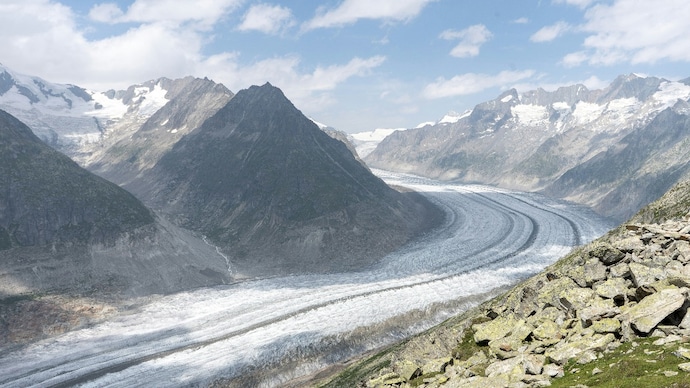

Europe's relentless heatwave is rapidly eating away at Switzerland's glaciers, with scientists warning that the protective snow accumulated during winter could disappear by the end of Monday, nearly six weeks earlier than usual.
According to Glacier Monitoring Switzerland (GLAMOS), the country's glaciers are entering the peak summer season with an unusually thin layer of snow, leaving the underlying ice exposed to intense solar radiation much earlier than normal.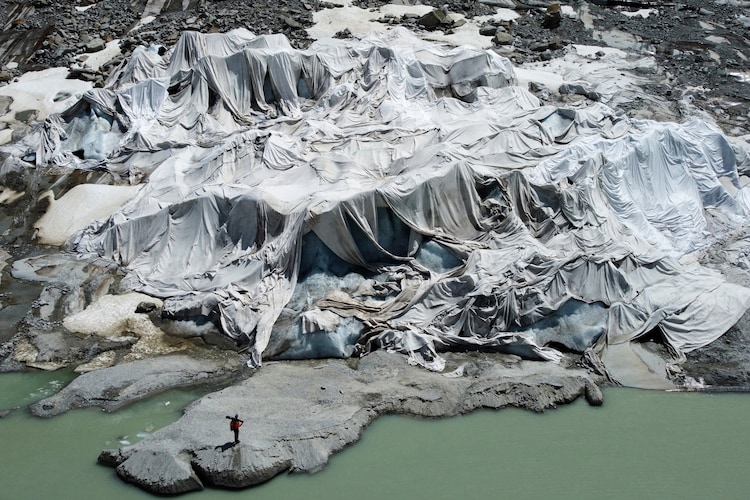
Typically, this transition occurs around mid-August. Reaching it by the end of June is being seen as another stark warning of accelerating climate change.
The concern comes as several European countries battle temperatures exceeding 40 degrees Celsius, placing immense strain on public health, agriculture, transport and energy systems. Scientists say human-driven climate change is making such extreme heatwaves more frequent, longer-lasting and more intense.
GLAMOS reported that snowfall during the winter of 2025-26 was around 25% below the 2010-2020 average, making it one of the least snowy winters in the past two decades.
Surveys conducted across 25 glaciers during April and May found snow depths to be significantly below normal across most of the Swiss Alps.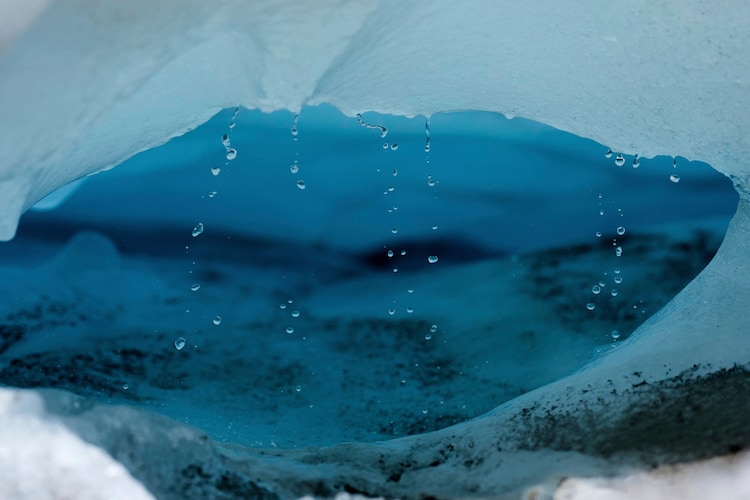
The most severe deficits were recorded in southeastern Switzerland, particularly in the Engadin region, where glaciers such as Pers and Murtel experienced record-low winter snow accumulation. Major glaciers, including Grosser Aletsch, Rhone and Silvretta, also recorded snow levels close to their lowest since 2000.
Winter snow acts as a protective blanket, shielding glacier ice from the summer sun. Once this layer disappears, the darker glacier ice beneath absorbs far more solar energy, dramatically accelerating melting.
This year, the situation has been made worse by an unusually dry and warm spring. Although snowfall in February and March temporarily improved conditions in some regions, exceptionally warm weather in April halted further snow accumulation and triggered premature melting.
Dust carried from the Sahara Desert also darkened the snow surface, reducing its reflectivity and allowing it to absorb even more heat.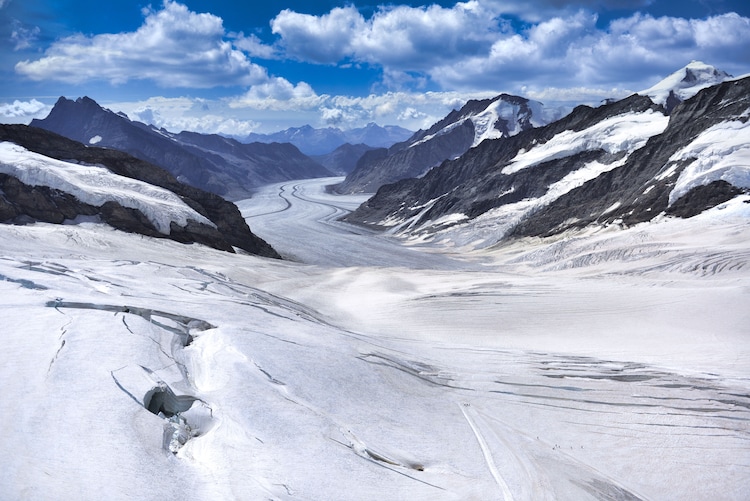
Scientists warn that if hot weather persists through the summer, Switzerland could witness another year of severe glacier mass loss, similar to the record declines seen in 2022 and 2023.
The rapid retreat of Alpine glaciers highlights the growing global climate crisis.
Under the Paris Agreement, countries have committed to reducing greenhouse gas emissions and adapting to climate impacts. However, experts say current efforts remain insufficient to limit global warming.
For Switzerland, renowned for its snow-covered Alps, the disappearance of its glaciers is no longer a distant threat but a visible reminder of how quickly a warming planet is reshaping landscapes that have existed for thousands of years.