
FSSAI vs Bisleri: Why is bromate, a possible carcinogen, in your bottled water?

Bromate is not added to bottled water. It forms when the ozone used to kill germs reacts with bromide, a salt found naturally in water.
 Last UpdatedNov 23, 2026 10:52 IST
 Published by
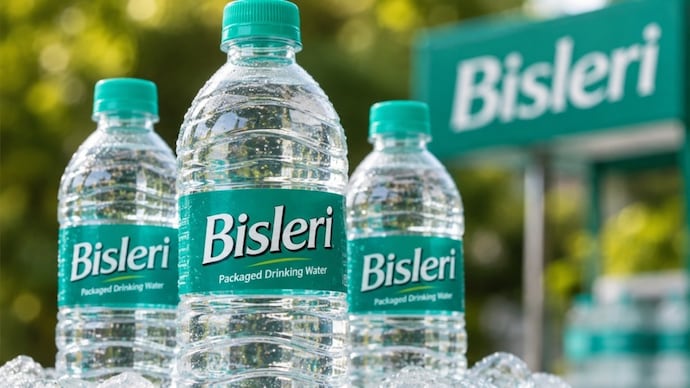
Water is the simplest thing we buy. It has no colour, no taste and, we assume, no story. This week, a single sample of packaged drinking water gave it one, and put a little-known chemical, bromate, at the centre of a dispute between India's food regulator and its best-known bottled water brand.
On November 22, the Food Safety and Standards Authority of India (FSSAI) said it had granted sanction to prosecute Bisleri International Pvt Ltd under the Food Safety and Standards Act, 2006. A sanction is permission to take a case to court. It is not a conviction, and no court has ruled on the matter.
WHAT DID FSSAI FIND?
According to FSSAI, a sample of packaged drinking water collected from Bisleri's premises did not comply with the prescribed bromate limits and was declared unsafe. The company appealed, and the sample went to a referral laboratory.
That lab also declared it unsafe, this time because it detected polynuclear aromatic hydrocarbons (PAHs). PAHs are chemicals that form mainly when fuel, wood or other organic matter burns incompletely. Indian standards say they must not be detectable in packaged drinking water.
WHAT DOES BISLERI SAY?
In a statement on November 23, Bisleri said the matter dates back to a batch made in September 2025 at its Goa plant, one of 143 in its network.
It said FSSAI collected six samples there on September 30, 2025, and that five met all standards. The sixth recorded 12 micrograms of bromate per litre, against a limit of 10. That is 20 per cent above the limit.
The company said the referral laboratory found bromate within the limit and separately flagged PAHs. It said an independent test of the same sample, at an FSSAI-approved laboratory, also found bromate within the limit.
Bisleri said it sent these results to FSSAI's Western Regional Office on February 2, 2026, heard nothing further, and has not received the notice reported in the media. It maintained that "Bisleri remains safe for consumption."
FSSAI has not publicly released the test figures.
HOW SMALL IS 10 MICROGRAMS?
A microgram is a millionth of a gram. Ten micrograms in a litre is 10 parts per billion, which is about 10 seconds in 32 years.
India's limit is the same as those of the World Health Organization (WHO), the US Environmental Protection Agency and the European Union.
WHY IS BROMATE IN BOTTLED WATER AT ALL?
Nobody adds it. Bromate is not an ingredient or a preservative. It is a by-product of cleaning water.
Many bottlers disinfect water with ozone, a form of oxygen with three atoms instead of two. Ozone kills bacteria and viruses quickly, then breaks down into ordinary oxygen and leaves no chemical taste behind. But groundwater often carries traces of bromide, a natural salt that comes from rocks and seawater.
Ozone is a powerful oxidiser, which means it strips electrons from other substances. When it meets bromide, it adds oxygen to it step by step until the bromide becomes bromate.
The more bromide in the source water, and the stronger or longer the ozone dose, the more bromate forms. Once formed, it is hard to remove.
Unlike many by-products of water treatment, bromate is not broken down by the biological filters used after ozonation, according to a study published in Water Research.
HOW HARMFUL IS IT?
In 1999, the International Agency for Research on Cancer (IARC), WHO's cancer agency, classified potassium bromate as "possibly carcinogenic to humans".
This means there is sufficient evidence of cancer in animals but not enough evidence in humans. Rats given bromate in their drinking water for about two years developed tumours of the kidney, the thyroid and the lining of the abdomen, at doses far higher than people would get from water.
The concern for people is long-term. A small excess, drunk every day for years, could slightly raise lifetime risk. A single bottle above the limit does not cause immediate illness. Some individual PAHs are known to cause cancer in humans, but no specific PAH has been named in this case.
India has met this chemical before. In 2016, the Centre for Science and Environment found potassium bromate or iodate in 84 per cent of the bread samples it tested in Delhi. FSSAI then banned potassium bromate as a food additive.
WHAT CAN BE DONE?
Prevention happens at the plant. Bottlers can remove bromide before ozonation, often by reverse osmosis, which pushes water through a very fine membrane.
They can also limit the ozone dose and contact time, make the water slightly more acidic, or add small amounts of ammonia or hydrogen peroxide to slow the reaction.
Consumers cannot see, smell or taste bromate, and boiling does not reliably remove it. In a Barcelona study, boiling water in a saucepan slightly raised bromate levels, while home reverse osmosis filters cut them sharply, according to a study published in the Journal of Environmental and Public Health.
Buyers can check bottles for the BIS (ISI) mark and an FSSAI licence number.
Bromate has troubled bottlers before. In March 2004, Coca-Cola recalled about 500,000 bottles of Dasani in Britain after bromate levels exceeded the legal limit.
For now, the Bisleri case rests on one sample, two laboratory reports and two different accounts. It is for a court to decide what they mean.

Radifah Kabir tries to make the universe slightly less mysterious as Senior Sub-Editor at India Today’s Science Desk. A lifelong lover of physics and mathematics, she has spent four years (and counting) translating complex physics papers into English, chasing scientists for interviews, and writing explainers that don’t put readers to sleep. Off-duty, her heart belongs to Lana Del Rey's melodies, Quentin Tarantino's films, poetry, the Star Wars universe, good English movies, series and books, and one very demanding cat.
READ MORE