
Godzilla El Nino puts oceans in uncharted territory as temperatures spike
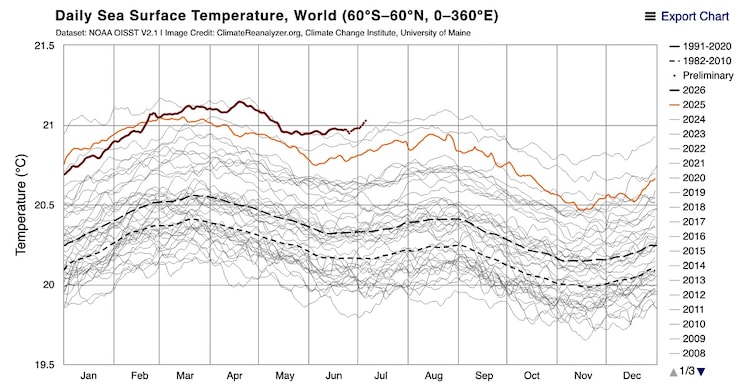
Global sea surface temperatures reached a record high in June 2026 as a powerful El Nino built across the Pacific. Scientists say the heat surge could intensify extreme weather and strain marine ecosystems.
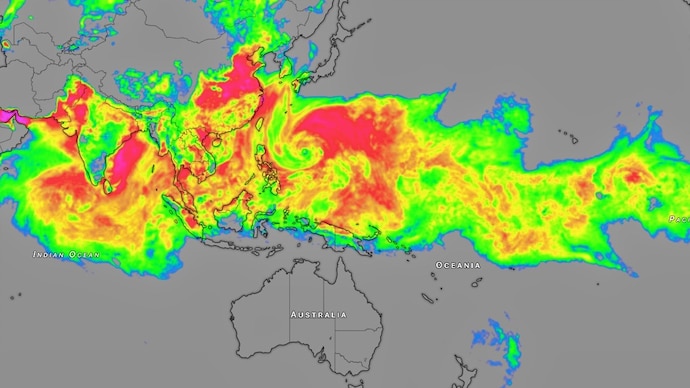
The record warmth marks another alarming milestone for a planet that is steadily accumulating heat. (Photo: Windy)

New Delhi,UPDATED: Jul 8, 2026 13:00 IST
The world's oceans have entered uncharted territory, with global sea surface temperatures reaching their highest levels on record, driven by the combined impact of human-caused climate change and a rapidly intensifying "Godzilla" El Nino in the Pacific Ocean.
According to data from the European Union's Copernicus Climate Change Service (C3S) and the Copernicus Marine Service, the average global sea surface temperature for June 2026 broke all previous records.
The temperature peaked at around 21 degrees Celsius on June 21, surpassing the historic highs recorded during 2023 and 2024.
Scientists say the record warmth marks another alarming milestone for a planet that is steadily accumulating heat due to greenhouse gas emissions.
"The oceans are no longer just warming, they are entering a regime we have not observed before," climate experts have warned, noting that the unprecedented temperatures reflect both the long-term trend of global warming and the arrival of a powerful El Nio event in the equatorial Pacific.
El Nio is a natural climate pattern characterised by unusually warm waters in the central and eastern Pacific Ocean.
It alters weather patterns across the globe, often intensifying heatwaves, disrupting monsoons, triggering droughts in some regions and increasing the likelihood of extreme rainfall in others.
This year's event has been described by several meteorologists as a potential "Godzilla El Nio" because of its exceptional strength and the vast amount of heat building up across the Pacific.
The consequences extend far beyond warmer ocean waters.

Higher sea surface temperatures provide more energy to tropical cyclones, allowing storms to strengthen rapidly. Warm oceans also expand, contributing to rising sea levels that increase the risk of coastal flooding. At the same time, prolonged marine heatwaves threaten coral reefs, fisheries and marine biodiversity by disrupting fragile ocean ecosystems.
Scientists estimate that the oceans have absorbed about 90 per cent of the excess heat trapped by greenhouse gases since the industrial era.
This enormous heat storage has helped slow the rate of atmospheric warming, effectively acting as Earth's largest climate buffer. However, researchers caution that this buffering capacity is being pushed to its limits.
Persistently warmer oceans reduce their ability to absorb additional heat and carbon dioxide, potentially accelerating global warming while altering marine circulation patterns that regulate Earth's climate.
With El Nino expected to persist over the coming months, scientists warn that 2026 could witness even more extreme weather events, including stronger storms, prolonged heatwaves and widespread marine ecosystem stress.
- Ends