
El Nino's impact could be weakened by almost 40%. Scientists are working on a plan
Although the potential comes with significant uncertainties, it opens up the possibility of science finding ways to counter extreme weather phenomena across the globe.
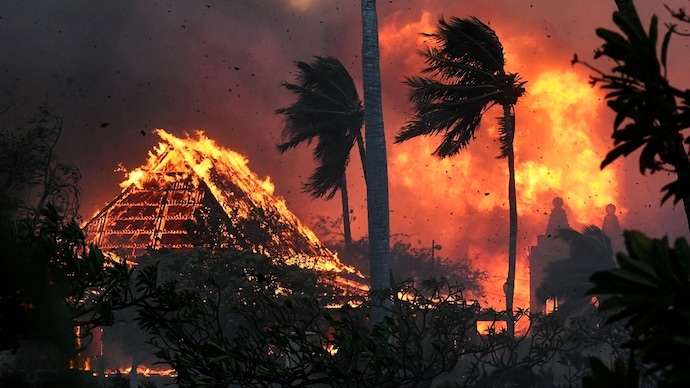

As the world braces for the possibility of a powerful El Nino, scientists have suggested that a geoengineering process could help blunt the impact of the climate phenomenon.
The proposed climate intervention is known as marine cloud brightening, and scientists say it could one day help reduce some of the weather extremes linked to the El Nino phenomenon.
Essentially, strategically brightening clouds over parts of the Pacific Ocean could potentially weaken major El Nino events if done early enough.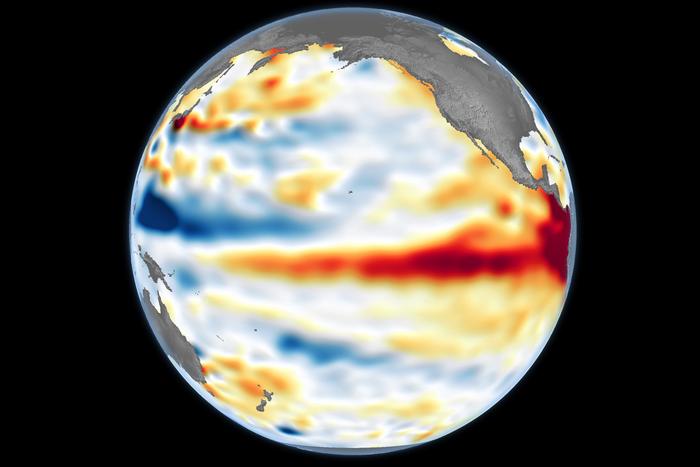
The strategy, published in Science Advances, was proposed by researchers from the University of California.
CAN BRIGHT CLOUDS BEAT EL NINO?
Marine cloud brightening is a form of geoengineering, or in other words, a deliberate attempt to influence Earth's climate.
The technique involves increasing the reflectivity of low-lying marine clouds so they bounce more sunlight back into space, helping cool the ocean surface beneath them, like the Pacific Ocean.
To test the idea, the researchers drew inspiration from Australia's devastating 2019-2020 bushfires.
During the fires, the billowing smoke released huge amounts of tiny reflective particles, or aerosols, into the atmosphere.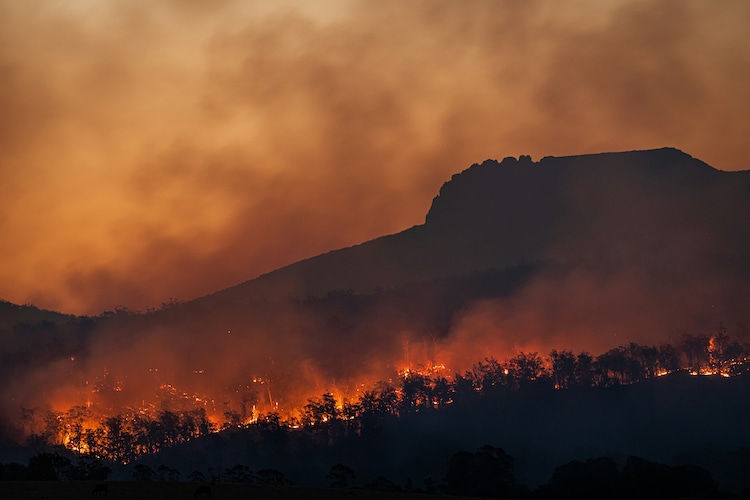
Earlier research showed these particles brightened clouds over the southeastern Pacific Ocean, reduced the amount of heat reaching the lower atmosphere and strengthened the La Nina conditions that developed in 2020.
Using climate models, the team simulated what might have happened if similar cloud brightening had been deliberately introduced before the strong El Nino events of 1997 and 2015.
The simulations suggested that targeted marine cloud brightening could reduce El Nino's intensity, with the greatest benefit when deployed early.
If carried out over the central Pacific, it increased La Nina-like cooling and drying effects by more than 40%.
"As long-term anthropogenic warming and short-term natural variability often compound to produce extreme weather events, our findings suggest it may be worth considering interventions which target natural variability, rather than the forced response to greenhouse gases," the researchers wrote.
Lead author Kate Ricke said the findings present a different way of thinking about geoengineering.
"We need to understand a lot more," she added. "But if there is a way to use this in addition to the risk reduction tools to mitigate El Ninos, why wouldn't we consider it?"
The researchers emphasised that they are not aware of any proposal to test marine cloud brightening during the developing El Nino and cautioned that any real-world deployment could carry significant and unpredictable risks.
EL NINO BECOMING MORE INTENSE AND FREQUENT
El Nino is a naturally occurring climate pattern that develops when sea surface temperatures in the central and eastern equatorial Pacific Ocean become unusually warm.
The warmer ocean changes wind patterns and shifts rainfall around the world, often triggering floods in some regions and drought, heatwaves and wildfires in others.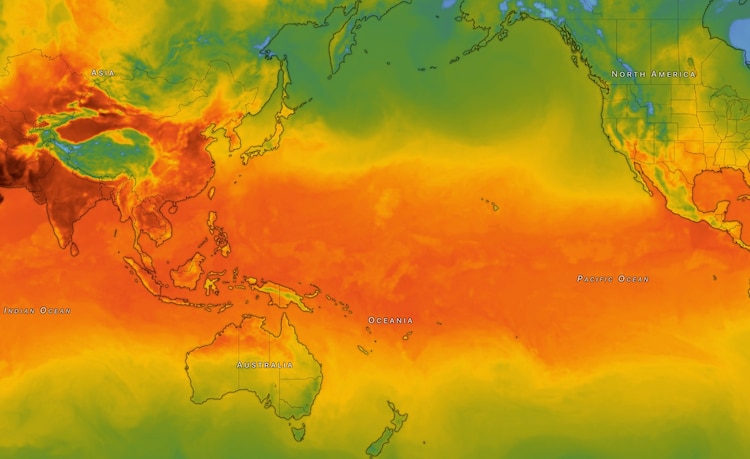
The World Meteorological Organisation has warned that climate change is increasing global temperatures, meaning the effects of strong El Nino events can become even more damaging as natural climate variability combines with long-term human-driven warming.
That has become more apparent after scientists found that the current El Nino is tracking nearly seven weeks ahead of any previously recorded event at the same stage in its lifecycle. If this continues, the world is staring at extreme weather events for the next 18 months.