
Starship Super Heavy launch: What does Elon Musk aim to achieve on 13th flight?
SpaceX is preparing Starship's 13th integrated test flight with plans to deploy satellites, recover the booster and restart a Raptor engine in space.
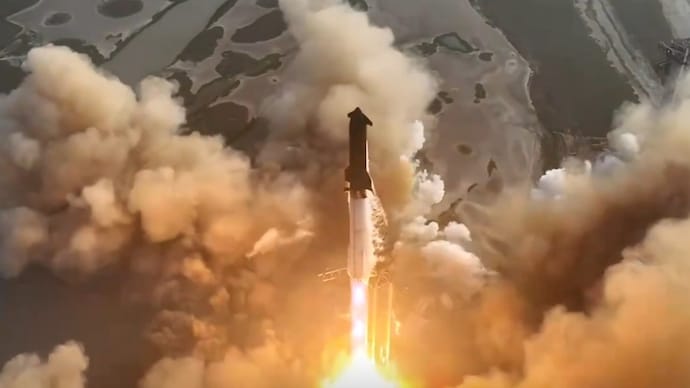

SpaceX is preparing for the 13th integrated flight test of Starship, with liftoff scheduled as early as July 17 between 5:15 am and 6:45 am IST.
The mission marks another major step in Elon Musk's ambition to build a fully reusable rocket capable of carrying humans to the Moon, Mars and beyond.
Unlike previous test flights that primarily focused on proving the launch system, Flight 13 will attempt multiple ambitious objectives.
WHAT ALL WILL STARSHIP DO ON 13TH TEST FLIGHT?
From attempting the first-ever deployment of 20 next-generation Starlink V3 satellites, a Raptor engine restart in space, and another controlled splashdown in the Indian Ocean, the list is long.
The mission also gives the Super Heavy booster another opportunity to demonstrate a successful recovery sequence after technical issues affected the previous test.
During Flight 12, the booster encountered problems almost immediately after stage separation. Slight differences in the startup timing of Starship's engines caused the booster to rotate nearly 90 degrees off its intended orientation, affecting the boostback manoeuvre.
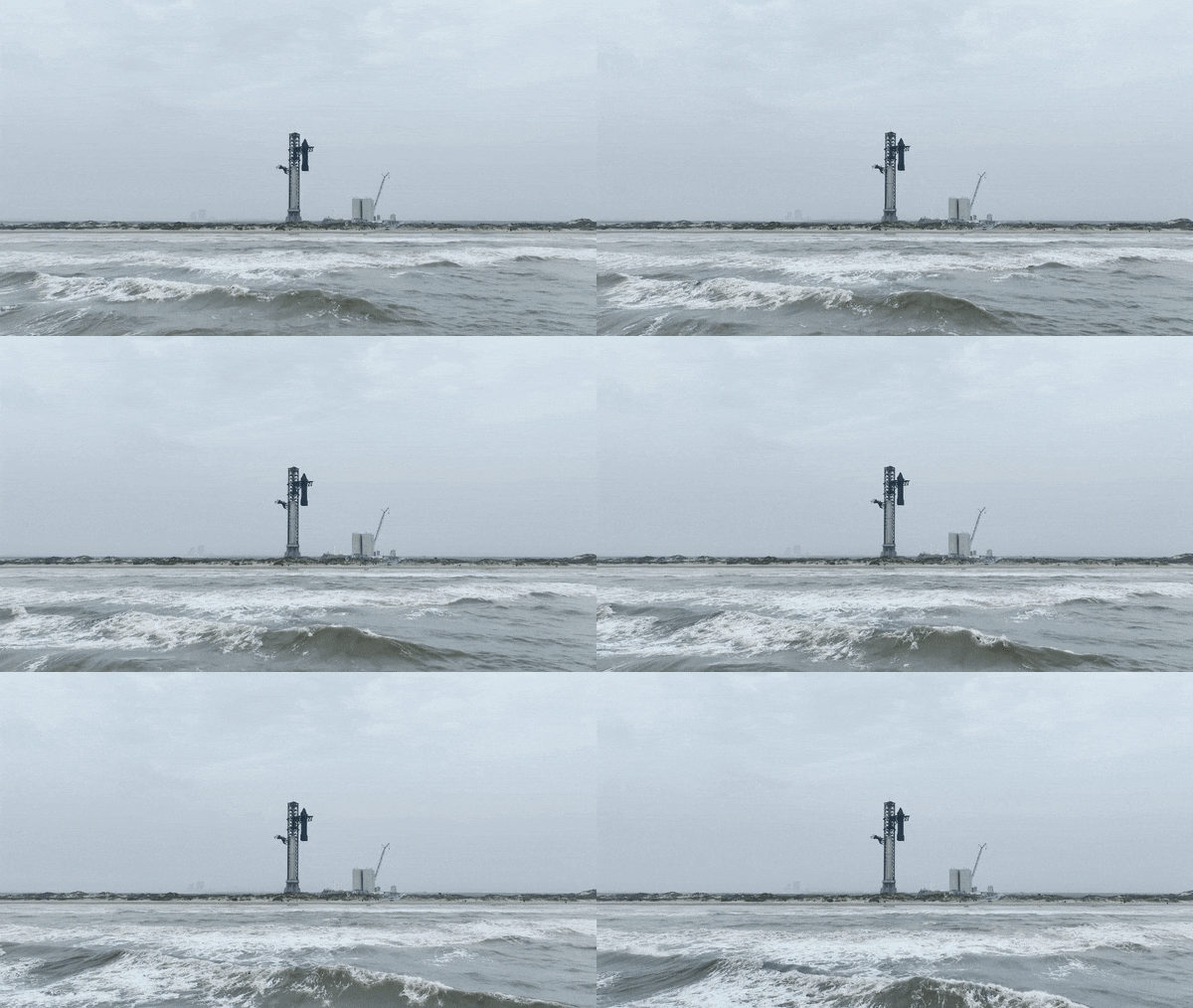
Compounding the problem, five of the booster's 33 Raptor engines failed to relight during the boostback burn, forcing the manoeuvre to end early.
For Flight 13, SpaceX engineers have introduced several hardware and software upgrades designed to improve engine relight reliability. The company has also modified the engine startup sequence and updated onboard fault detection systems based on data collected during the previous mission.
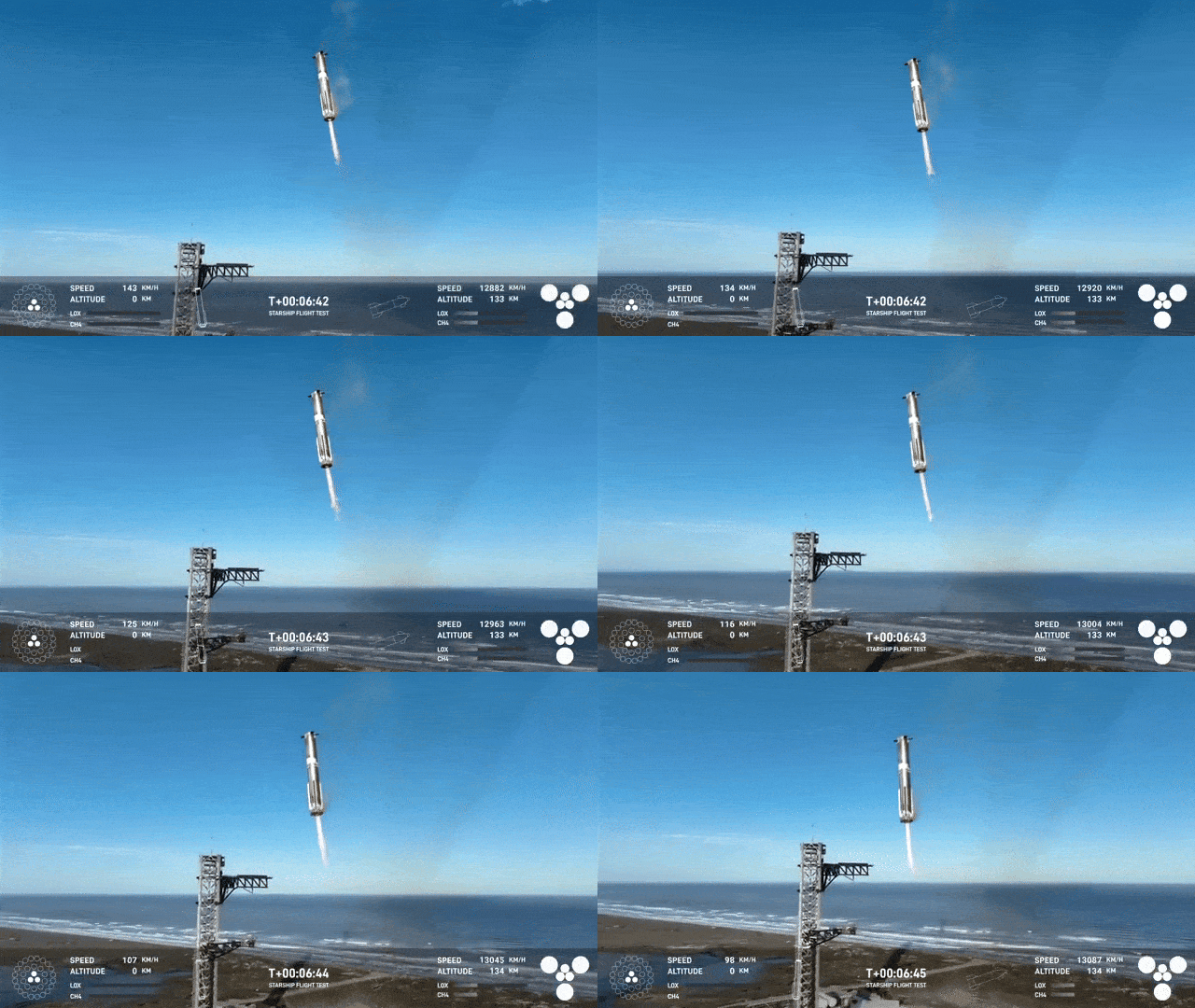
If everything goes according to plan, the Super Heavy booster will execute launch, ascent, stage separation, boostback burn and landing burn before making a controlled splashdown at an offshore landing point in the Gulf of America.
The Starship upper stage has an equally demanding mission profile.
Roughly 40 seconds after separating from the booster, it will continue toward a suborbital trajectory before deploying 20 Starlink V3 satellites, the most advanced version of SpaceX's internet constellation.
The satellites will extend their solar arrays and communication antennas before attempting to establish laser links with the existing Starlink network. Since this remains a test mission, the satellites will stay on the same suborbital path as Starship and are expected to burn up in Earth's atmosphere roughly 20 minutes after deployment.
Six of these satellites carry special camera payloads that will photograph Starship's heat shield during flight. The images will help engineers evaluate the condition of thermal protection tiles—critical for the company's long-term goal of returning Starship directly to its launch site.
To aid the inspection, SpaceX has deliberately painted several heat shield tiles white to simulate missing tiles, creating visual reference points for the cameras.
The mission will also test numerous heat shield upgrades, including new tile attachment methods, metallic tile installations on the aft flaps, and instrumented "load-sensing" tiles designed to measure stresses during ascent.
Finally, SpaceX will attempt to restart a single Raptor engine in space, another crucial capability for future orbital missions and deep-space exploration.
With every test flight, Starship inches closer to becoming the fully reusable launch system SpaceX envisions. Flight 13 is expected to provide another wealth of engineering data while demonstrating technologies that could eventually support lunar landings under NASA's Artemis programme and future missions to Mars.