
Tree-fall deaths rising: Why the ground is failing to hold the trees this monsoon
Recent tree-fall deaths in Mumbai have highlighted the risks posed by heavy rain, strong winds and urbanisation. Here's why trees topple during storms and how the risk can be reduced.
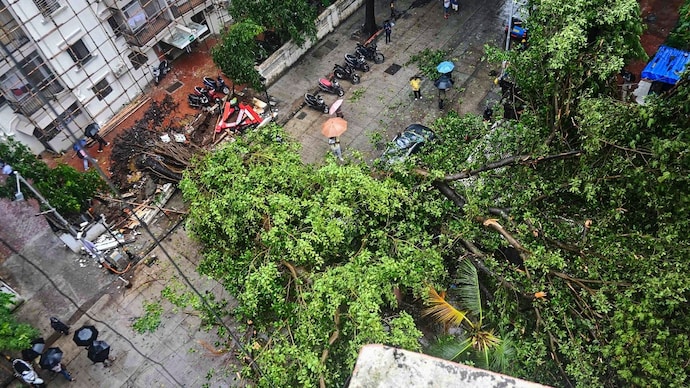

At least 3 people have died in Mumbai within a week due to trees, including an 11-year-old child, a 63-year-old man, and an 18-year-old boy.
The deaths caused by uprooted trees during Mumbai's ongoing monsoon have drawn attention to a recurring but often overlooked hazard of India's rainy season.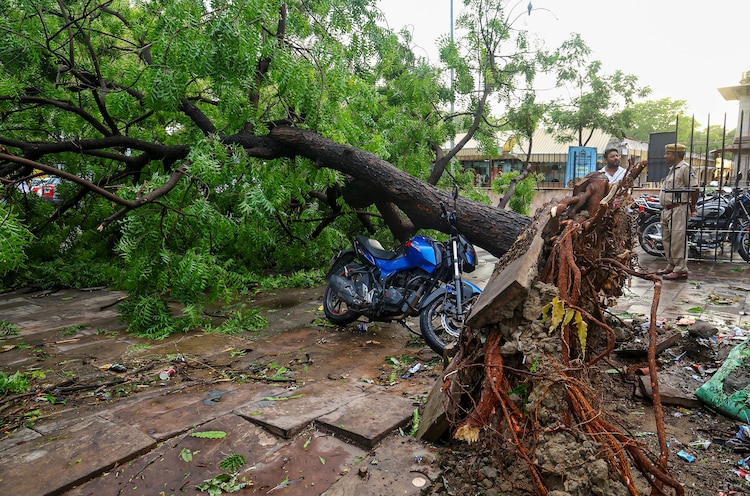
The deaths of these people occurred after trees or large branches collapsed during heavy rain and strong winds in Mumbai, while hundreds of tree-fall incidents have been reported across the city as relentless monsoon showers battered Maharashtra.
On Sunday, July 5, the Brihanmumbai Municipal Corporation (BMC) reported 142 incidents where branches or entire trees broke and fell off, damaging vehicles and blocking roads, and underlining how dangerous falling trees can become during extreme weather.
But why are so many trees falling during storms? The blame lies not with one but with a combination of factors that give away to toppling trees, injuries, and at times, deaths.
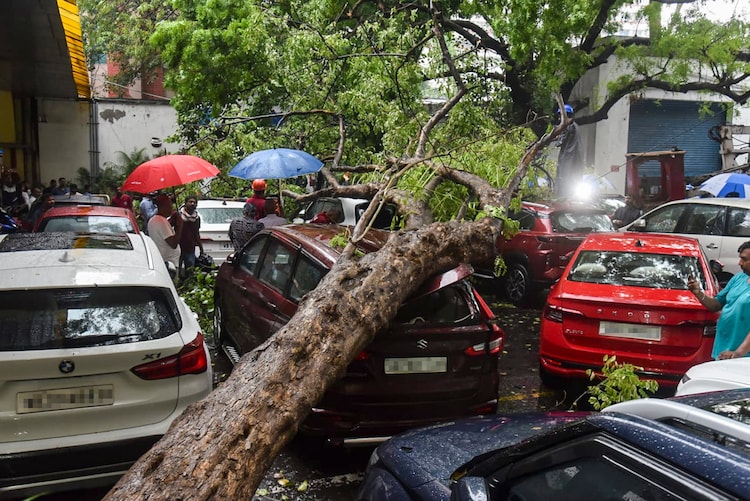
DO TREES FALL BECAUSE OF THE WIND?
Contrary to popular belief, healthy trees rarely topple because of the wind alone.
Arborists often note that trees topple when strong winds act on trees whose roots or trunks have already been weakened.
During prolonged rain, soil becomes saturated with water and loses much of its grip on roots. When powerful gusts push against a tree's canopy, the loosened soil provides less support, making it easier for the entire tree to topple.
Taller trees are especially vulnerable because their height creates greater leverage against the root system.
Then there is the rise of urbanisation as urban environments, riddled with constructions and unplanned settlements, can easily make matters worse.
Road widening, utility trenching, underground pipes, repeated digging and the concretisation of footpaths often damage or restrict root growth.
Compacted soil also limits oxygen and water reaching the roots, reducing a tree's stability over time.
WHY ARE INDIAN CITIES FACING MORE TREE-FALLING INCIDENTS?
The harsh reality is that India's rapidly expanding cities are creating conditions that leave many roadside trees struggling to survive.
Trees planted in small pits surrounded by concrete cannot develop the wide, balanced root systems needed to withstand severe storms.
At the same time, climate change is increasing the frequency of intense rainfall events and stronger wind gusts in many parts of the country.
When these extreme weather conditions combine with weakened urban trees, the risk of uprooting rises sharply.
Beyond the immediate danger to people, fallen trees disrupt transport, damage electricity lines, block emergency access and reduce the urban tree cover that helps cool cities, absorb rainwater and improve air quality.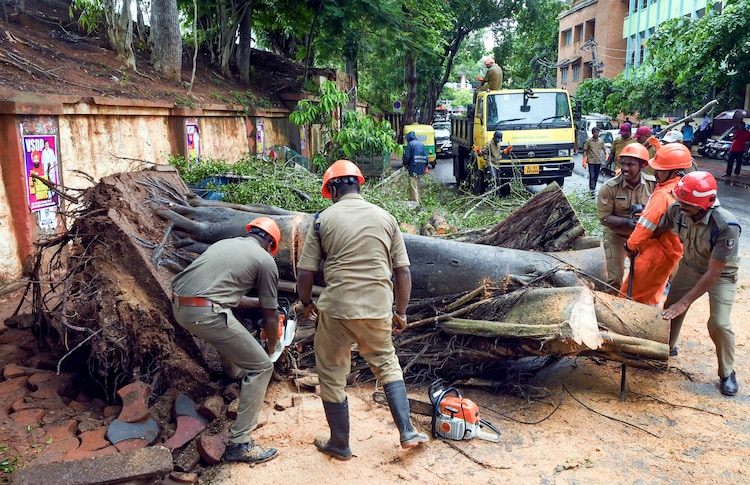
Scientists note that the solution is not simply removing old trees but improving urban tree management through regular health inspections, scientific pruning, protection of root zones during construction and better planning that allows trees enough soil and space to grow.
As Indian cities experience more frequent extreme weather, strengthening urban forests may prove just as important as strengthening roads and drainage systems.