

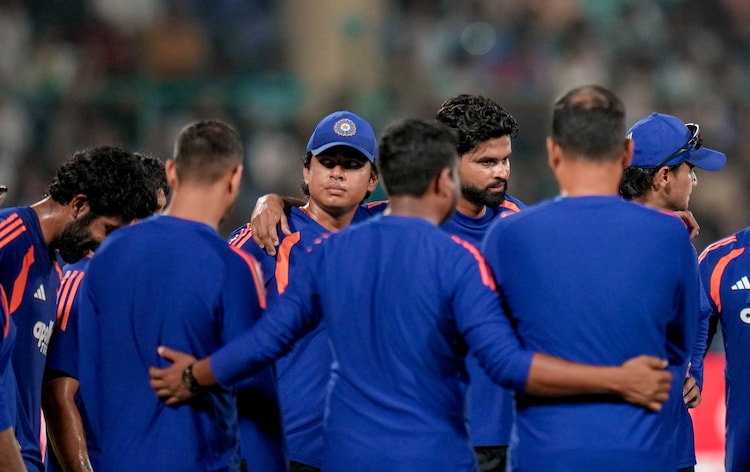
The Vaibhav Sooryavanshi question: Why the popular choice isn't Gambhir's call

Vaibhav Sooryavanshi's growing fan following has made every India XI without him a talking point. But after a stop-start few months, Gautam Gambhir has made his position clear: the teenager can wait.
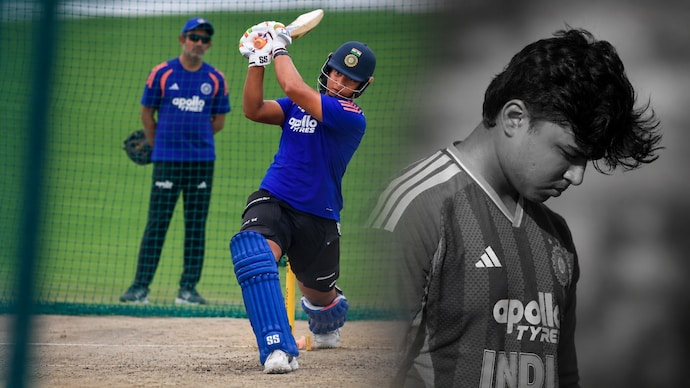
Vaibhav Sooryavanshi was benched throughout the T20I series against Afghanistan. (Photo: PTI)

New Delhi,UPDATED: Sep 18, 2026 12:30 IST
On a weekday evening in Delhi, with India having already sealed the T20I series against Afghanistan, fans still queued up in numbers for the finale. They had come hoping to see one particular player.
Twenty minutes before the toss on Thursday, Vaibhav Sooryavanshi walked out towards the boundary rope for a throwdown. Almost immediately, fans seated in the stands began rushing towards the fence, hoping to catch a glimpse of the 15-year-old batting.
There were whispers around the ground, too, that Sooryavanshi might finally get his chance. He had not played either of the first two matches. India had won both. With the series already in the bag, the third game seemed like the obvious moment to unleash the teenager.
IND vs AFG, 3rd T20I: HIGHLIGHTS | SCORECARD
The fans thought so. The reporters covering the team thought so. It would have been the popular call.
It wasn't the call India made.
Sanju Samson and Abhishek Sharma walked out to open again. And then made 142 for the opening partnership with Abhishek scoring a 30-ball century, the fastest by an Indian in T20Is. He finished the series with 228 runs. Samson, on his return to the side, finished the series with two fifties. And Sooryavanshi was watching all this from the dressing room.
That moment at the Arun Jaitley Stadium captured the strange place Sooryavanshi now occupies in Indian cricket. The teenager has become such a compelling attraction that his absence from a playing XI has itself become a talking point. The expectation around him is no longer simply that he will play for India. It is that, whenever an opportunity appears, India should make room for him.
But running an Indian team, as Samson put it during the series, is not quite that simple.
“Running an Indian team is not an easy thing,” Samson had said on Tuesday. “Taking hard decisions is not easy. Making popular decisions is easy, but as a leadership group, they have been taking some really tough calls, keeping the team first.”
Because this is not really a story about India choosing Samson over Sooryavanshi. It is about a leadership group being willing to make a difficult call even when the easier one is staring them in the face.
The selection story has been moving in circles for months.
When India won the T20 World Cup, Samson and Abhishek were the opening pair. They were part of a side that went through the tournament unbeaten and lifted the trophy. Three games later, Samson, who was the Player of the Tournament in the World Cup, was dropped and Sooryavanshi was accommodated.
It was an understandable decision given the extraordinary rise of the teenager. Sooryavanshi had just produced a spectacular IPL season, winning the Orange Cap, and the excitement around him was growing with every innings.
But three games after that, Sooryavanshi himself was back on the bench during India's difficult England and Ireland tour.
For a while, India's T20 selection appeared caught between two competing impulses: preserve the combination that had delivered a World Cup, or make space for the most exciting young batsman in the country.
Zimbabwe offered a cleaner answer. Samson was rested, Sooryavanshi played all three matches and made the opportunity count. He finished the series as Player of the Series, adding another layer to the expectation that he should be a permanent part of India's plans.
That expectation followed him to Delhi.
By the time Afghanistan arrived, Sooryavanshi was no longer merely a talented teenager waiting for his chance. He was a fan favourite. His very presence near the boundary could send spectators scrambling towards the fence.
And that is where selection becomes difficult. The public sees the possibility. The team has to see the combination.
Samson understood that better than most. He had been the player who made way for Sooryavanshi earlier in the year. Yet there was no bitterness in his explanation. Instead, he acknowledged why the leadership group had made the call.
VAIBHAV HAS TO WAIT: GAMBHIR
That is precisely the argument Gautam Gambhir eventually put forward in Delhi.
“From Vaibhav's point of view, it is again a very clear conversation that he has to wait for his opportunity,” Gambhir said.
“We know the kind of talent he has. We know what he can do. But again, someone who done extremely well over a period of years obviously will always be ahead of someone who has got into the team. Whenever he gets that chance, you will get a longer run as well.”
There is something significant in the clarity of that message. India are not saying Sooryavanshi is not ready. They are not questioning his talent. They are not asking him to prove himself all over again. They are asking him to wait.
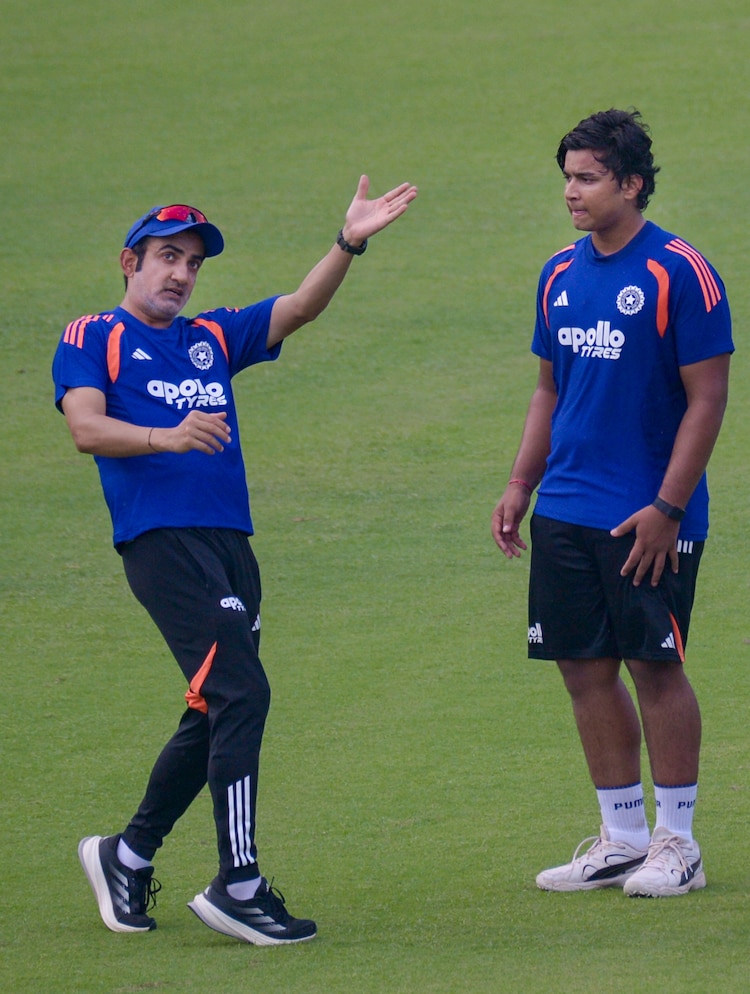
“And that is what Indian cricket is all about. We want competition, we want that talent in the dressing room. But sometimes that's how cricket goes. Whether it is a 15-year-old or a 30-year-old, you have to wait for opportunity,” he added.
Sooryavanshi may be 15. He may have already achieved things most players never do. He may have a following that can turn a routine throwdown into a mini-event. But none of that, Gambhir is saying, gives him an automatic place in the XI.
TOUGHEST CALL OF GAMBHIR’S CAREER
And the same logic applies to Samson.
Gambhir admitted that dropping him for the England series was “probably the toughest decision I have taken in my coaching career”. Yet his reasoning was not complicated. He wanted to return to the combination that had won India the World Cup.
“Those guys (Samson and Abhishek) after three or four failures, don't become bad players,” Gambhir said. “If a team that has gone from one World Cup to another one unbeaten and has won the World Cup. Suddenly, it has become a team after one series and these guys not become bad players.”
It is a rejection of recency as the only measure of selection.
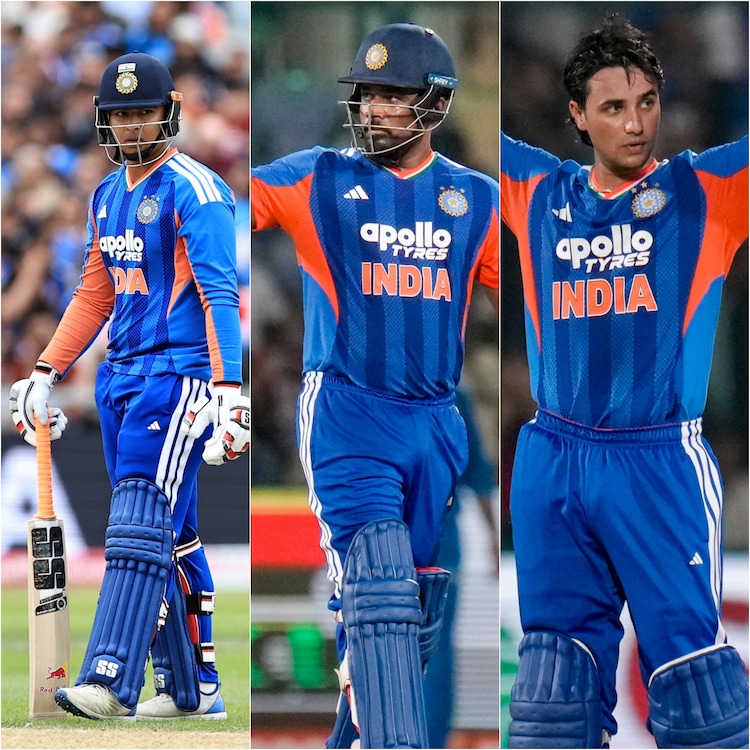
Vaibhav's recent form can be spectacular without automatically erasing Samson's body of work. Samson can fail for a few matches without suddenly becoming the wrong player for the combination that has already delivered India's biggest prize.
That is the uncomfortable bit of running an Indian team. The popular decision is often obvious. It is the one that generates excitement, satisfies expectation and gives the crowd the player it has come to see. The tough decision requires something else: the willingness to disappoint people who have every reason to be excited.
Sooryavanshi will get his opportunity. Gambhir has now said as much, promising that when it comes, the youngster will get a longer run.
Until then, there will be questions. There will be debates every time the playing XI is announced. There will probably be more fans rushing towards the boundary whenever Sooryavanshi picks up a bat. That noise is unlikely to disappear. But after the confusion of the past few months, there is at least clarity now.
The fans will keep waiting for Sooryavanshi. They will keep moving towards the fence when he walks out with a bat, and they will keep wondering when the next chance is coming.
For now, though, the answer is simple: not yet. India have made that clear. And for a team that has spent the last few months looking at different combinations, clarity might be the most important thing they have found.
- Ends