
Why did Kimi AI creator leave the US? Experts blame immigration policy
China's Kimi K3 is taking on US AI giants like ChatGPT and Claude. But as the model grabs headlines, so does the journey of its founder, Yang Zhilin. Having studied and worked in the US before returning to China, he has become the face of a growing debate over whether America's immigration policies are costing it top AI talent.
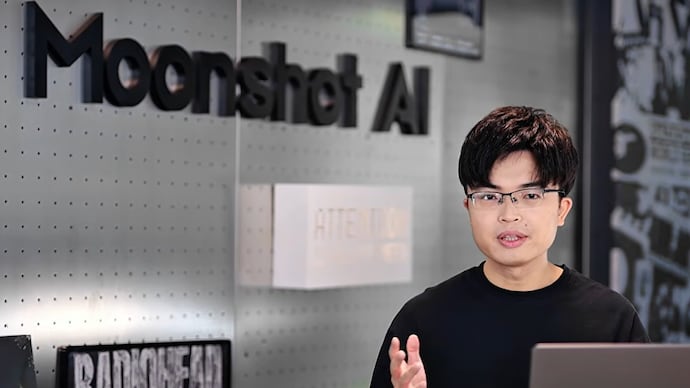

The AI world can't stop talking about Kimi K3, the latest model from Chinese startup Moonshot AI. In just days, the model has generated so much buzz that the company temporarily paused new subscriptions after demand overwhelmed its systems. Many are already calling it China's strongest answer yet to US-based OpenAI's ChatGPT and Anthropic's Claude, giving Beijing another boost in the high-stakes AI race with the US.
As Kimi K3 continues to make headlines, the conversation has also shifted from the model to the man behind it. Before founding Moonshot AI in China, Yang Zhilin studied and worked in the US. Now, many investors, entrepreneurs and AI researchers are wondering whether America let one of its brightest AI minds slip away. Some are even pointing to the country's strict immigration policies under the Trump Administration, arguing they are making it harder for the US to retain world-class talent.
Who is Yang Zhilin
Long before founding Moonshot AI in China, Yang built his academic career in the United States. After graduating from Tsinghua University (China), he earned a PhD in computer science from Carnegie Mellon University (CMU) in US, one of the world's top institutions for artificial intelligence research. There, he studied under renowned machine learning researcher Ruslan Salakhutdinov and also spent time at Google Brain and Meta AI before returning to China to launch Moonshot AI in 2023.
Over the past few years, Moonshot AI has grown into one of China's leading AI companies, becoming another strong challenger to US AI giants. Now, Kimi K3's rise has left many investors and AI leaders in Silicon Valley wondering what if Yang Zhilin had stayed in the US? Some argue America's immigration policies may have made the country lose a top AI talent.
Technology journalist and investor Tae Kim is emerging as one of the strongest critics of US immigration policies, arguing that they are costing the country top AI talent.
Responding to claims that Yang returned to China because it was easier to build an AI company there, Kim called that argument "ludicrous".
According to Kim, researchers with degrees from Tsinghua University and Carnegie Mellon would have had little trouble raising money from US venture capitalists. Instead, he urges policymakers to make it easier for top AI researchers to stay in the US, even suggesting automatic green cards for graduates from leading AI PhD programmes.
“Staple green cards to the top 10 AI computer science PhD degrees NOW. Carnegie Mellon, MIT, Stanford, Berkeley, etc. It would be a massive success. The USA can run the table on global AI talent. We just need to use our brains.,” he wrote on X.
Billionaire investor Bill Ackman also shares similar views. In another post on X, Ackman argues that the US should fix its "immigration policy so we can admit the creators so they can build on American soil and create value here". Ackman added that it makes little sense for America to educate some of the world's brightest minds at leading universities only to send them back home after graduation.
Did Trump's immigration policies make the US lose AI talent?
A large part of this ongoing debate is centred on immigration policies introduced by US President Donald Trump's administration. Critics argue that tighter immigration rules, long green card waiting times and restrictions affecting some Chinese and other researchers have made it harder for the US to attract and retain world-class AI talent at a time when the global AI race is becoming increasingly competitive.
One such policy cited is Presidential Proclamation 10043, signed by Trump in 2020. The proclamation restricts entry for certain Chinese graduate students and researchers linked to institutions considered connected to China's military. Although it does not apply to all Chinese students, critics say it created additional uncertainty for researchers hoping to study or build careers in the US.
AI researcher Junde Wu shared his own experience as an example. Wu shares he had dreamed of moving to the US for years but was unable to do so after the proclamation prevented him from accepting an offer from Stanford University. Instead, he completed his PhD at Oxford.
Although he later qualified for an EB-1A visa for individuals with extraordinary ability, Wu said country-specific green card backlogs mean he could still wait another four to five years because he was born in China. “I’ve always loved the American spirit. I truly believe my abilities could have a bigger impact there. But honestly, the whole process has been incredibly frustrating,” he wrote on X.
Meanwhile, Wu shares that many Chinese institutions regularly approach him with competitive salaries, generous research funding and housing benefits. "Why am I spending so much energy trying to go to a country that doesn't seem to want me," he wrote, "when another country is doing everything it can to bring me back?" he added.
However, not everyone believes Yang's own decision was driven by immigration.
Yang's PhD adviser, Ruslan Salakhutdinov, pushed back against what he described as "a lot of confusion and misinformation". According to him, Yang had several opportunities to remain in the US and could have joined leading technology companies, including Apple. Instead, Salakhutdinov said Yang had long planned to return to China and build his own AI company rather than spend his career at an established tech giant.