Vietnamese crab exporter

Topic

Advertisement
TOPIC

Aadhaar

Officially referred to as the Aadhaar card or Aadhaar number, Aadhaar is India's biometric identity system. The Unique Identification Authority of India (UIDAI), a statutory entity within the Indian government, is responsible for issuing it. Each resident receives a 12-digit unique identity number from Aadhaar, which is connected to their biometric information (iris scan and fingerprints) and basic demographics. It is intended to function as a standard identity document enabling locals to securely and dependably access services and social programs. 

Opening bank accounts, obtaining government benefits, submitting taxes, and obtaining mobile connections are just a few of the many uses for Aadhaar to verify identification. 

Additionally, it can be electronically confirmed via mobile apps or QR codes in place of a physical card, which lessens fraud and the misuse of paper papers.

UIDAI made significant improvements in 2025 that made it simpler to update information online, including name, address, date of birth, and cellphone number, without going to an Aadhaar centre. Nonetheless, in-person presence at an approved location is still necessary for biometric upgrades. By the end of 2025, Aadhaar and PAN will be required to be connected for financial purposes. 

Updates to the system have also been made with inclusiveness in mind. For instance, millions of families are benefiting from the free one-year biometric updates for children between the ages of five and fifteen. 

Aadhaar has encountered difficulties and criticism despite its advantages. While privacy advocates voice worries over centralised data and possible exclusion when authentication fails, some citizens cite administrative or technical issues while utilising or changing their data.
All things considered, Aadhaar continues to be essential to India's digital identity infrastructure, striking a balance between security and convenience for citizens using both governmental and private services.

  • ALL
  • STORIES
  • VIDEOS

STORIES

Load More

VIDEOS

Vote Chori Debate: Syed Zafar Islam, Salman Soz, Rajat Sethi

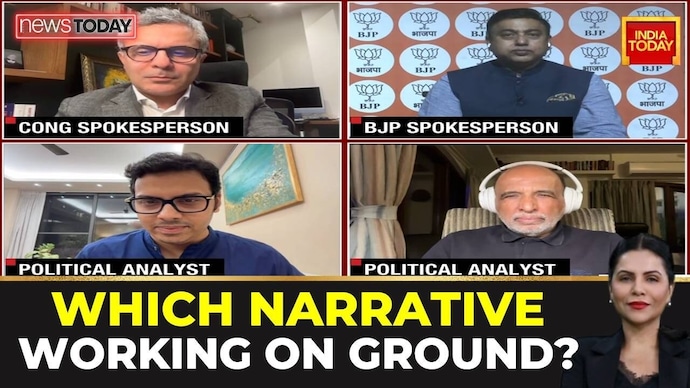
A panel debate moderated by Preeti Choudhry examines the controversy surrounding the Election Commission of India, electoral roll manipulation allegations, and administrative revisions concerning Form 6. Congress spokesperson Salman Soz criticized the poll panel, alleging widespread voter disenfranchisement, pointing to reported institutional dissent, and demanding the resignation of the Chief Election Commissioner. In response, Bharatiya Janata Party national spokesperson Dr. Syed Zafar Islam defended the constitutional body, stating that electoral concerns should be debated inside Parliament rather than through public demonstrations. Political analyst Sanjay Jha called for institutional transparency regarding internal deliberations among election commissioners, while commentator Rajat Sethi highlighted judicial scrutiny at the Supreme Court, voter infiltration issues in border states, and discussions regarding a National Register of Citizens. The discussion centers on poll body accountability, administrative course corrections, and whether the Election Commission should hold direct press conferences to address questions regarding electoral integrity.

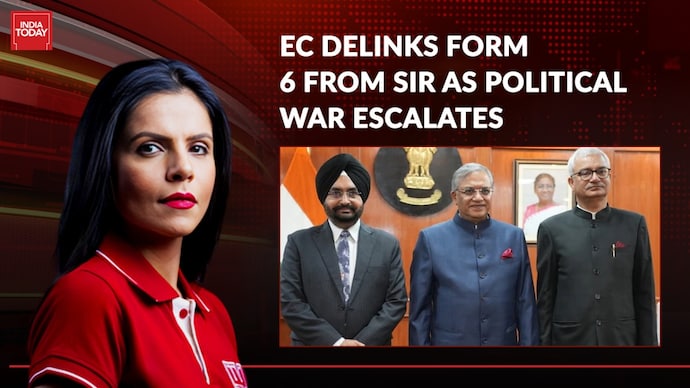
EC Drops SIR Declaration From Form 6 Amid Internal Rift, Shah-Rahul Spar Over Voter List

The Election Commission has initiated internal course corrections following dissent flagged by Election Commissioners Sukhbir Singh Sandhu and Vivek Joshi over Chief Election Commissioner Gyanesh Kumar's decisions. The commission removed the Special Intensive Revision (SIR) declaration from online Form 6 across all states, making it a separate document, alongside restoring oversight on foreign visits and IT modules. Meanwhile, the political confrontation over the voter list revision escalated, with Union Home Minister Amit Shah daring Leader of Opposition Rahul Gandhi to a debate in Parliament, while the opposition protested Union Minister Lalan Singh's claim that voter IDs could replace Aadhaar cards for welfare scheme benefits.

Voter ID Must for Panchayat Benefits, Opposition Links Move to SIR Deletions

A proposal to link Panchayati Raj welfare benefits to voter ID cards and biometric authentication rather than Aadhaar has triggered political debate amidst the ongoing Special Intensive Revision (SIR) controversy. Union Panchayati Raj Minister Rajiv Ranjan Singh announced that beneficiaries will require their EPIC number and biometric authentication to access scheme payouts. The announcement comes as opposition parties allege mass disenfranchisement through the deletion of electors during SIR and electoral roll revisions, warning that voter list exclusions could directly impact welfare access. In response, the Election Commission stated that flagged category entries do not constitute wrongful deletions and that eligible voters may seek inclusion.

Uttarakhand Chopper Crash Kills 6, TN Power Row & Madras HC Notice To Sourav Das

A helicopter flying from Badrinath crashed in Uttarakhand's Chamoli district, killing all six people on board, including the pilot. Joint search teams comprising the police, SDRF, and the Indian Army recovered the bodies and wreckage near a cliff amid inclement weather and poor visibility. Meanwhile, in Tamil Nadu, a power outage at the Madurai Meenakshi Temple during AIADMK leader Edappadi K. Palaniswami's visit sparked a political storm against the government, with the power minister claiming possible foul play. DMK leaders MK Stalin and Kanimozhi also raised law and order concerns in the state over multiple killings. Additionally, the Madras High Court issued notices to the Centre and Sourav Das over a public interest litigation seeking a probe into his antecedents, cancellation of his passport and Aadhaar card, and the blocking of his social media handles for alleged derogatory remarks against the judiciary.

Shooters Rehearsed in Aarey Forest, Used Fake IDs, 10 Arrested: Tiger Shroff Firing Probe

Investigation into the Tiger Shroff firing incident has revealed that shooters rehearsed firing in Mumbai's Aarey Forest a day before the attack. Accused Hrithik, Rehan, and Phool Singh received weapons transported from Sonipat via train and collected them in Dadar before test-firing on a cardboard target in Aarey Colony. Police have arrested 10 accused so far, while pursuing other accomplices. Probe details show the suspects used fake Aadhaar cards under aliases to conceal their identities. The Crime Branch has also named absconding accused Anil Pandit in its remand plea, alleging the attack was orchestrated at his behest. Meanwhile, CCTV footage captured the accused movements hours before the shooting.

SIR Storm: Infiltrators vs Vote Chori Row Escalates Between BJP and Congress| Watch Panelists Debate

On India First with Gaurav, Bharatiya Janata Party national spokesperson Pradeep Bhandari clashed with Congress national spokesperson Priyanka Kakkar, alongside political analysts Ashutosh and Rajat Sethi, over allegations of voter deletions and infiltrators. Defending the Special Intensive Revision (SIR) process, Bhandari cited official data to argue that crores of deceased, duplicate, and relocated entries were removed from voter lists, stating, 'why are you backing the dead voters?' He accused the opposition of defending bogus rolls and illegal infiltrators. In response, Kakkar hit back at the government, asserting that the administration lacks verified data identifying actual infiltrators and accused the ruling party of deploying divisive rhetoric and manipulating booth targets. Meanwhile, Ashutosh recalled past electoral history to counter claims of historic defeats, while Rajat Sethi demanded uniform support for verification mechanisms like the National Register of Citizens (NRC). The panel debated institutional integrity, Election Commission actions, and the credibility of electoral lists.

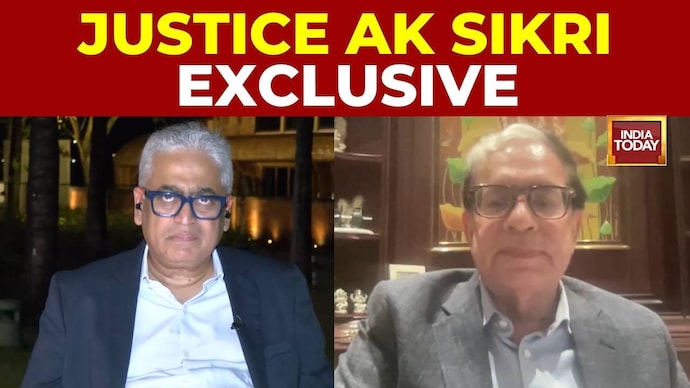
Justice AK Sikri: 'Burden Of Proof Has Shifted On The Electoral Person'

In an interview discussing the Special Intensive Revision (SIR) of electoral rolls, former Supreme Court judge Justice AK Sikri shared critical views on its procedural execution. While agreeing that the exercise is constitutionally valid under the law and backed by judicial precedent, Justice Sikri voiced serious apprehension regarding implementation at the grassroots level. He noted that the procedure improperly places the burden of proof on legitimate voters already listed on the rolls. Sikri observed that exclusion notices often penalise vulnerable, illiterate, and rural citizens over minor clerical errors such as spelling mismatches. Emphasising constitutional mandates under Articles 324, 325, and 326, he warned, "The burden of proof has shifted on the electoral person who is already in the list." He insisted that the Election Commission of India must adhere strictly to statutory procedures and principles of natural justice so genuine citizens are not arbitrarily disenfranchised.

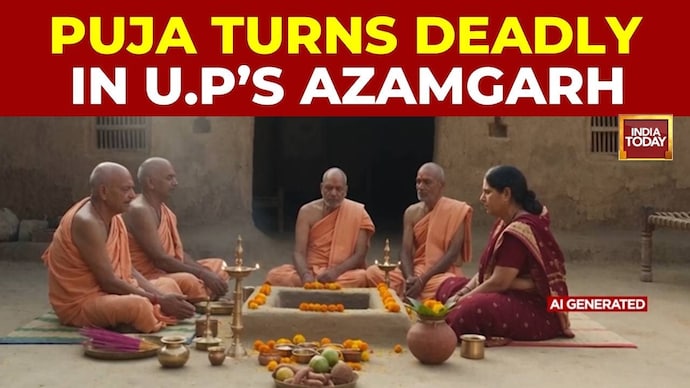
Azamgarh Shootout: Man Kills Wife, Priests, Son; Dies in Encounter

A tragic incident unfolded in Uttar Pradesh's Azamgarh following an eight-hour siege where a man named Arvind Singh shot dead his wife Babita, two priests, and his son. The incident occurred during a ceremony organised following his brother's demise. Upon returning home, the accused reportedly questioned the priests about their Aadhaar cards before opening fire. While two priests managed to flee, two others along with Arvind's wife were killed on the spot. Arvind subsequently held his three children hostage inside a room. Police personnel and family members attempted to negotiate his surrender, but Arvind issued death threats, shot his son, and opened indiscriminate fire on the police. In retaliatory firing conducted for self-defence and child rescue, Arvind was injured and later declared dead at the hospital alongside his son. Police successfully rescued two daughters from the residence and rushed them to the hospital.

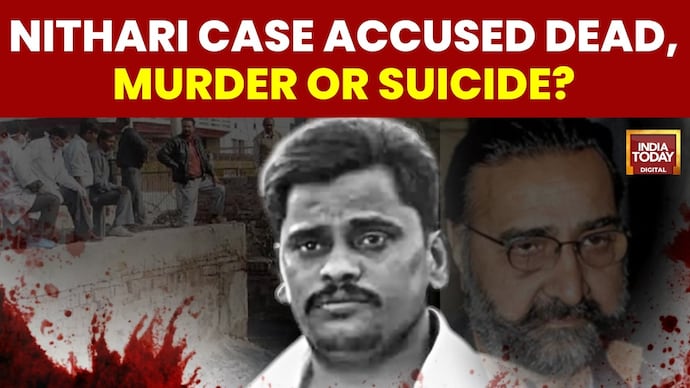
Nithari Case Acquitted Accused Surendra Kohli Found Dead in Haridwar, Police Suspect Suicide

Surendra Kohli, who was convicted and later acquitted in the infamous Nithari serial killings case, has been found dead at a tea stall in the Bhupatwala area of Haridwar. According to local police, information was received around 11:30 AM about a man found hanging by a rope inside a small kiosk. Police took the body into custody for postmortem examination to ascertain the exact cause of death, while initiating a formal probe into the incident. An Aadhaar card recovered from the deceased confirmed his identity as Surendra Kohli. Reports indicate that Kohli had been living incognito in Haridwar after being cleared of all charges by the Supreme Court and had set up the tea stall just three days prior. Haridwar police are currently treating the matter as a case of suspected suicide as forensic and medical assessments proceed.

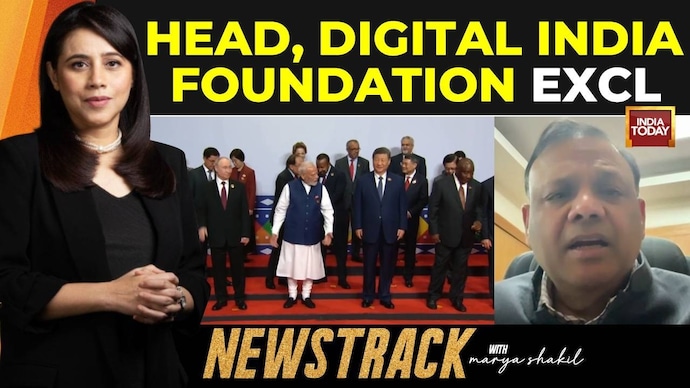
Dr. Arvind Gupta: 'There's Nothing Called Free In Technology'

In an interview with India Today, Dr. Arvind Gupta, Head of the Digital India Foundation, analyzed the global race for artificial intelligence and contrasted the technological paradigms of major world powers. Addressing China's proposal to offer open-source artificial intelligence to BRICS nations, Dr. Gupta dismissed the gesture, remarking, "There's nothing called free in technology." He outlined the core differences in national tech models, explaining that the Chinese model focuses on surveillance, the American approach centers on capitalism, and the Indian framework champions technology for development and humanity. Dr. Gupta highlighted Prime Minister Narendra Modi's consistent push for the non-weaponization of artificial intelligence, noting that global tech giants are now acknowledging these risks. He also addressed the rapid commercial developments in Silicon Valley and the critical need to build safety guardrails.

Notice To Bharat Ratna CNR Rao Over Voter Roll Error Sparks Row

Bharat Ratna recipient and scientist Professor C.N.R. Rao has been asked to establish his identity after his name was flagged for a spelling mismatch during the special intensive revision of electoral rolls. The 92-year-old scientist's prefix Professor was erroneously recorded as 'PREFF' instead of 'PROF' on the Election Commission of India website. While his office confirmed they did not receive a physical notice, a notification uploaded on the official website flagged the error and asked for verification documents to resolve the discrepancy. The development has raised concerns over the inconvenience caused to senior citizens during electoral roll revisions, highlighting how clerical errors on official portals require citizens, including eminent personalities, to produce identity proofs such as Aadhaar cards to rectify mistakes made by authorities.

Telangana Voter List Revision: Revanth Flags Scrutiny, Citizens Face BLO Delays & Document Confusion

The Election Commission's Special Intensive Revision exercise in Telangana has raised concerns over the potential removal of genuine voters alongside bogus entries. Chief Minister Revanth Reddy expressed concern that over one-third of the state population is under scrutiny under ASDD classifications, urging the Chief Election Commissioner to extend the revision deadline. High voter scrutiny has been recorded in constituencies like Musheerabad, Yakutpura, and Malakpet, with Musheerabad seeing 1.4 lakh votes under verification. On the ground in Secunderabad, citizens faced significant hurdles, reporting missing Booth Level Officers, long wait times, and confusing documentation demands, including requests for decades-old proofs despite presenting government-issued Aadhaar and voter identification. Electoral officials, including Assistant Electoral Registration Officers and supervisors, stated that thousands of notices for logical discrepancies, unmapped voters, and ASDD categories were issued, maintaining that hearings are underway and available documents are being accepted to prevent genuine voters from being excluded from the electoral roll.