Vietnamese crab exporter

Topic

Advertisement
TOPIC

Artificial Intelligence

Artificial Intelligence (AI) is a term you must be hearing everyday. From chatbots like ChatGPT to coding agents like Claude Code. But what is AI? AI has existed for decades. Artificial intelligence refers to the capability of computers to perform complex tasks, usually handled by humans – think data processing, and analysis.

However, in the past few years, AI has transformed, with the rise of Large Language Models (LLMs), such as Google Gemini. These LLMs can do a lot more than what AI did even a decade ago. From homework, assignments to even generating videos, and writing code. AI is everywhere now, and it is getting better too. To the extent that even companies are now relying heavily on AI tools for their tasks.

AI tools can not only help you be more productive, but sometimes, may be even better than you at doing certain tasks. That is not to say that AI is taking over, not yet anyway. Humans still remain the ones who bring new ideas and creativity, while AI can help us delegate our mundane everyday tasks.

  • ALL
  • STORIES
  • VIDEOS

STORIES

The new project equation: AI, people and the art of execution

PMSAC26 will bring industry leaders, policymakers, academics and project professionals to Bengaluru on October 3 to discuss AI and project delivery. The conference will focus on how organisations can align technology, people and execution as projects grow more complex.

Harvard tested an AI tutor on 194 students. What happened to their learning?

A Harvard Gazette report revealed striking preliminary findings from a Harvard physics experiment involving 194 students. Those using a custom AI tutor showed about twice the learning gains of students in an active classroom setting, while also reporting greater engagement and motivation. The tutor was carefully designed by faculty.

Load More

VIDEOS

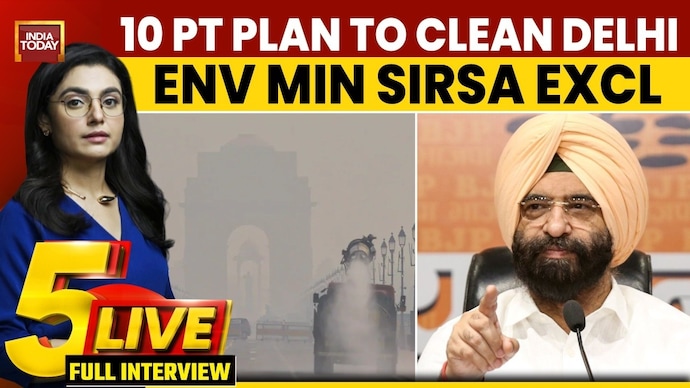
Delhi Launches 24/7 AI Command Room, Enforces Winter Action Plan Curbs

The Delhi government has launched an integrated twenty-four seven Artificial Intelligence-based Command and Control Centre to monitor and combat the national capital's worsening air pollution. Inaugurated ahead of the peak winter pollution period, the facility integrates round-the-clock surveillance across several sectors. It tracks mechanical road sweeping machines in real time, observes 789 construction sites with live CCTV integration at 716 locations to curb PM10 dust emissions, and monitors citywide Air Quality Index stations. Rapid action backup teams termed 'Vayu Rakshaks' have been deployed with GPS-enabled vehicles and body cameras across 39 divisions to investigate local sources of pollution such as open garbage burning and traffic bottlenecks. Furthermore, the administration outlined broader seasonal measures under its winter action plan, including a prohibition on construction activity starting November, restrictions on non-Delhi vehicles below BS-VI standards, mandatory Pollution Under Control certification for fuel purchase, doubling of Delhi Metro parking fees, and a fifty percent physical attendance limit for offices.

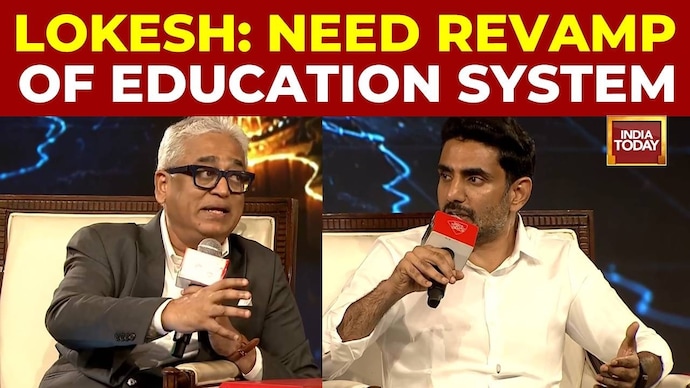
Nara Lokesh: 'Education System Has To Be Realigned'

Speaking at the India Today South Conclave, Andhra Pradesh Minister for HRD, IT and Electronics Nara Lokesh addressed key national and state issues, including political controversies surrounding the Election Commission and Special Summary Revision of electoral rolls. He defended the institutional integrity of the poll panel, remarking that it is easy to blame the Election Commission after losing an election. Highlighting TDP's role as an ally of the NDA, he affirmed that the party raises concerns and gives constructive input internally. Lokesh outlined significant educational reforms in Andhra Pradesh, including transparent recruitment of sixteen thousand teachers and student tracking to prevent dropouts. Emphasising future readiness, he declared, "the education system has to be realigned with the requirements of Bharat of tomorrow, not of yesterday," underscoring efforts to introduce artificial intelligence and quantum computing to prepare youth for modern industry challenges.

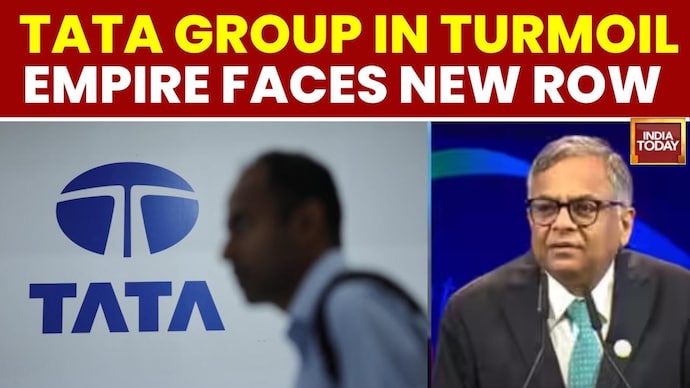
Markets Open Flat, Tata Boardroom Tussle Deepens and Donald Trump Renames AI

Indian equity markets opened flat amid heightened volatility, with the Nifty fluctuating near 22,700 levels. Broader market indices and select sectors such as PSU banks, IT, and oil and gas registered modest gains, while metal and pharma stocks witnessed profit-taking. Meanwhile, the internal rift within the Tata Group intensified after trustee Venu Srinivasan reportedly approached the Maharashtra Charity Commissioner seeking an immediate probe into alleged governance lapses at Sir Dorabji Tata Trust and Sir Ratan Tata Trust. At the same time, Noel Tata voiced opposition against listing Tata Sons, citing potential constraints on supporting group companies during financial difficulties. Analysts advised caution, noting that elevated US bond yields and crude oil prices continue to drive foreign capital outflows from emerging markets. Additionally, global headlines featured former US President Donald Trump meeting with technology leaders, where he proposed terming artificial intelligence as super intelligence alongside discussing self-regulation frameworks.

AI, security after 26/11 and 2035 vision: Coast Guard chief at Conclave South

At India Today’s Conclave South, Indian Coast Guard Director General S Paramesh said India is using both indigenous and imported technologies, including AI, to strengthen maritime and coastal security and counter new-age threats such as unmanned drones. He said DPSUs and domestic equipment manufacturers have developed credible software solutions, while stressing that technology cannot replace physical checks of vessels and people. Looking ahead to 2035, Paramesh outlined plans for larger ships, improved crew facilities, longer operational endurance and real-time data flow from the ocean to maritime operating centres. He also called for greater participation of women in the Coast Guard.

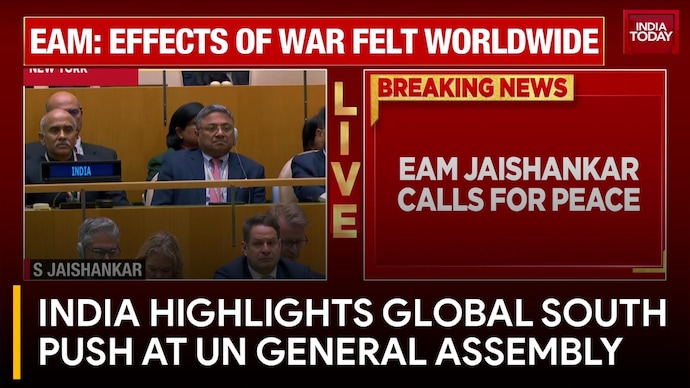
UNGA 81st Session: Addressing Global Conflicts, Attacks On Seafarers, And Cross-Border Terrorism

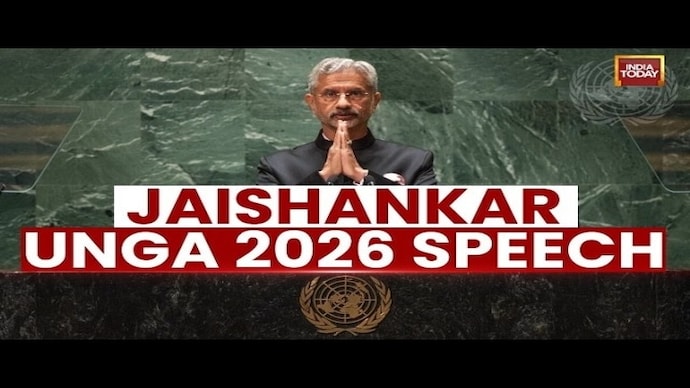
During an address at the high-level 81st session of the United Nations General Assembly in New York, External Affairs Minister Dr S Jaishankar addressed pressing global concerns, including the conflicts in West Asia and Ukraine, maritime security, cross-border terrorism, and artificial intelligence. Emphasising that durable peace in the Middle East requires a two-state solution, he highlighted India's ongoing humanitarian relief for the Palestinian people. Stressing that endless war must yield to peace, he expressed grave concern over attacks on commercial shipping across waterways from the Red Sea to the Black Sea, which endanger Indian and global seafarers and disrupt food and energy supplies. Calling out state-sponsored terrorism, he asserted that friendship cannot coexist with terror and reiterated India's commitment to defending itself. Furthermore, he outlined India's vision of artificial intelligence as a transformational driver for human empowerment and partnership with the Global South.

UN Address: Call for Reformed Multilateralism and Multipolar World Order

Addressing the United Nations General Assembly, India highlighted its inclusive domestic growth, digital public infrastructure, and expanding international development commitments across the Global South. The address outlined that six hundred major Indian projects are currently underway in seventy-eight nations, spanning infrastructure, agriculture, and capacity building. Highlighting contributions to humanitarian response and UN peacekeeping operations, the speech noted Indian troop presence across eleven active mandates. The remarks raised serious concern over maritime attacks on commercial shipping from the Red Sea to the Black Sea and reiterated collective efforts alongside international partners to protect seafarers under international law. In technology, artificial intelligence was framed as a driver for human empowerment and Global South partnerships. Stressing that the post-1945 order is evolving towards a multipolar reality, the address urged reformed multilateralism, civil conversations, and mutual respect among nations.

Zero Tolerance on Terror, Supply Chain Weaponisation Must Stop: India at UN

Addressing the United Nations General Assembly, India raised serious concerns over escalating global conflicts, including ongoing hostilities in the Gulf, Ukraine, and West Asia. The address emphasized that commercial shipping attacks and disruptions to international waterways remain unacceptable, urging dialogue, civilian protection, and an uninterrupted flow of vital energy and food grains. Highlighting the plight of the Global South, the speech drew attention to a severe 'four F' crisis encompassing food, fuel, fertilizer, and finance, further aggravated by trade barriers and supply chain weaponisation. Reaffirming India's zero-tolerance approach toward cross-border terrorism, the address declared that friendship cannot coexist with state-sponsored terror. Emphasizing India's development partnerships across seventy-eight countries, digital public infrastructure achievements, and leadership in UN peacekeeping, the address called for urgent multilateral reforms and transparent, broad-based global decision-making.

Cross-Border Terrorism and Weaponisation of Global Trade Condemned at UN Assembly

Addressing the United Nations General Assembly, the speaker raised grave concerns over ongoing global conflicts, highlighting the severe repercussions suffered by uninvolved nations. The speech condemned the targeting of commercial shipping and seafarers in international waterways while calling for immediate de-escalation, restraint, and an uninterrupted flow of commerce and energy. Referring to ongoing hostilities in Ukraine and West Asia, the speaker underscored the need for lasting peace, advocating for a two-state solution alongside ongoing humanitarian relief for the Palestinian people. The address cautioned against the weaponisation of finance, supply chains, and technology, warning that extreme competition threatens global stability and undermines the development agenda of the Global South, which currently faces severe crises in food, fuel, fertilizer, and finance. Furthermore, the speaker delivered a stern rebuff against state-sponsored cross-border terrorism, affirming zero tolerance and defending the right to self-defence against entities attempting to normalise terror or evade accountability.

IIT Bombay Suicide Probe: Student's Parents To Launch Hunger Strike At Azad Maidan

The parents of IIT Bombay student Sahil Wakhure have announced an indefinite hunger strike at Mumbai's Azad Maidan starting Monday, demanding an in-depth investigation into his death by suicide. Mumbai Police denied them permission to protest outside the IIT campus, directing them to Azad Maidan in accordance with High Court guidelines. Crime branch officials are reconstructing the crucial timeline between his departure from the examination centre, where he was allegedly caught using artificial intelligence, and his arrival at his hostel room. Investigators are analysing Sahil's phone to decode key details, while the professor involved remains under scrutiny.

Netanyahu's UNGA Speech, Trump-Xi Summit Truce, and Italy's School Ban

In this edition of Statecraft, anchor Geeta Mohan analyses key geopolitical developments across the globe. At the United Nations General Assembly, Israeli Prime Minister Benjamin Netanyahu defended strikes on Iran and displayed a Starlink terminal alongside references to pager explosions, amid a walkout by delegates and a cancelled meeting with Elon Musk. Meanwhile in Washington, US President Donald Trump welcomed Chinese President Xi Jinping with full ceremonial honours, agreeing to extend the bilateral trade truce by two months while strategic disagreements over Taiwan, artificial intelligence, and rare earths persisted. The broadcast examines the regional implications of potential US-China rapprochement for India and the wider Indo-Pacific. Additionally, the programme covers Pakistani Prime Minister Shehbaz Sharif evading questions on Lashkar-e-Taiba founder Hafiz Saeed at the UN, as well as Italian Prime Minister Giorgia Meloni's new cabinet decree prohibiting face coverings in schools and capping non-Italian speakers at 30% per classroom.

Trump Hosts Xi at White House; Tech CEOs Attend State Dinner as Trade Talks End Without Joint Text

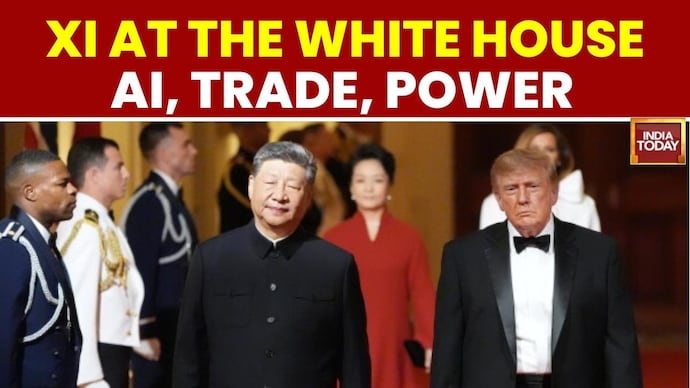
US President Donald Trump hosted Chinese President Xi Jinping at the White House for bilateral talks lasting approximately an hour and a half, followed by a state dinner. Key business figures, including Amazon founder Jeff Bezos, OpenAI CEO Sam Altman, Nvidia CEO Jensen Huang, Google CEO Sundar Pichai, Microsoft CEO Satya Nadella, and former Apple CEO Tim Cook, attended the dinner. Trump presented Xi with a crafted bald eagle sculpture, while both leaders addressed the gathering, emphasizing mutual respect, bilateral ties, and future trade relations. Xi emphasized that competition should remain healthy, bilateral cooperation should benefit both nations, and artificial intelligence must develop under human control. Despite discussions on trade and bilateral ties, no official joint statement was released following the bilateral talks, indicating contentious matters remain unresolved. During the visit, Trump also led Xi on a tour of the White House Presidential Walk of Fame.

Trump-Xi Bilateral Talks, Tariff Truce Extension And New AI Dialogue

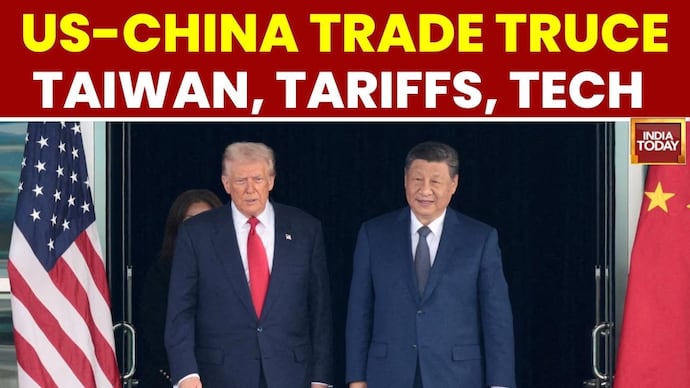
United States President Donald Trump and Chinese President Xi Jinping held a crucial bilateral meeting lasting around one and a half hours at the White House. The two leaders emphasised mutual respect, cooperation, and the historical ties between their nations, while acknowledging the need to build a balanced trade relationship. During the visit, the two countries agreed to extend their tariff truce until 10 January, granting negotiators additional time to pursue a broader economic agreement. An artificial intelligence dialogue was also announced, with both sides noting the necessity for artificial intelligence to develop under human control. Despite positive optics, no joint press conference or joint statement was issued following the talks. Key issues including tariffs, rare earth supplies, agricultural purchases, market access, technology, and geopolitical tensions surrounding Taiwan and sanctions remain critical sticking points between Washington and Beijing.

US-China Bilateral: Trump And Xi Jinping Meet In Washington Amid Calls For Co-operation

United States President Donald Trump and Chinese President Xi Jinping held a crucial 1.5-hour bilateral meeting in Washington on September 24. Addressing the gathering, President Trump referenced historical co-operation during World War II, stating that both nations can achieve much by focusing on common interests to forge a better future. President Xi expressed gratitude for the hospitality shown to him and his wife Madame Peng, calling for both sides to move forward together and write a new chapter in friendly ties. The meeting took place against a backdrop of continuing issues between the two nations, including differences over Taiwan, artificial intelligence, sanctions, and global conflicts. While the leadership projected positive diplomatic optics, no joint press conference was held, and no joint statements or big-ticket policy announcements were released immediately following the discussions. Protests and clashes involving media personnel were also observed outside the venue as experts and lawmakers continue to watch for concrete diplomatic outcomes from the visit.

Trump And Xi Jinping Hold Bilateral Talks At White House On Trade, Wars

US President Donald Trump hosted Chinese President Xi Jinping at the White House for a bilateral meeting in the Oval Office during a two-day state visit. The meeting commenced following a ceremonial military review held in the Rose Garden. Discussions between the two leaders covered a wide range of critical topics, including bilateral trade, the economy, supply chains, rare earth elements, artificial intelligence competition, and energy security. Regional and international security concerns were also on the agenda, specifically Taiwan, the Indo-Pacific, and ongoing conflicts involving Russia, Ukraine, and Iran. Following the one-and-a-half-hour discussion, President Trump gave President Xi a brief tour of the newly constructed helipad and ballroom before seeing him off. While no joint press conference took place, separate readouts and statements are expected from Washington and Beijing detailing the discussions, ahead of an official state dinner scheduled for the evening.

Trump Welcomes Xi Jinping in US: Historic State Visit, Trade Ties & Key Bilateral Talks

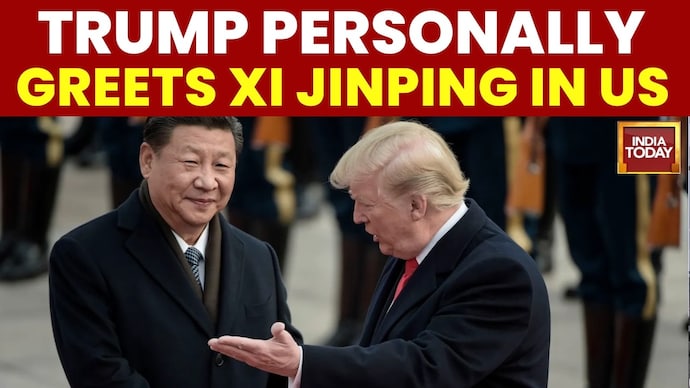
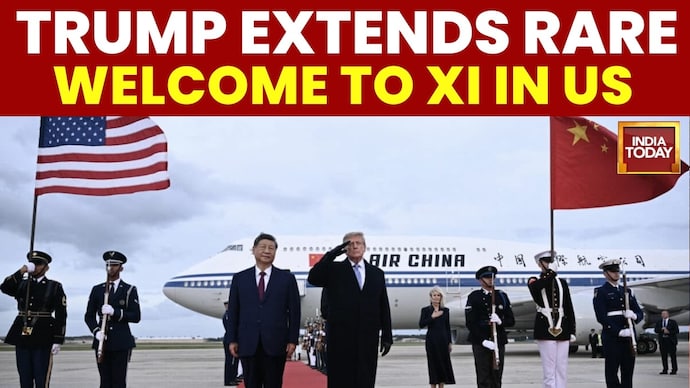
Chinese President Xi Jinping has arrived in the United States for a high-profile state visit, marking a notable bilateral engagement with US President Donald Trump. In a rare diplomatic gesture not seen in over six decades, President Trump personally welcomed the Chinese leader upon arrival at the air base outside Washington. The visit sets the stage for extensive bilateral meetings at the White House and delegation-level discussions focusing on trade, artificial intelligence, critical minerals, and supply chain frictions. While contentious issues regarding technology, tariffs, and geopolitical disputes remain prominent, both nations aim to maintain strategic stability and prevent escalation into open confrontation. Pre-summit discussions between economic officials have also addressed trade truces and upcoming state dinner engagements featuring leading technology industry leaders.

Trump Welcomes Xi Jinping in US Amid High-Stakes Summit on Trade and Global Tensions

Chinese President Xi Jinping has arrived in the United States on a three-day official visit, marking his second summit meeting with US President Donald Trump in less than six months. In a rare diplomatic gesture not seen since 1962, President Donald Trump and First Lady Melania Trump received Xi Jinping and Chinese First Lady Peng Liyuan directly at Joint Base Andrews in Maryland. The arrival featured a red carpet reception, a 21-person honour cordon, and ceremonial cannon fire. Highlighting the agenda, bilateral discussions are set to address critical areas of friction, including trade, technology, supply chains, semiconductors, artificial intelligence, and geopolitical developments concerning Iran and Russia. Analysts note that while deep disagreements persist, the high-level engagement reflects an effort to establish guardrails, manage strategic competition, and stabilise diplomatic ties between the world's two largest economies.

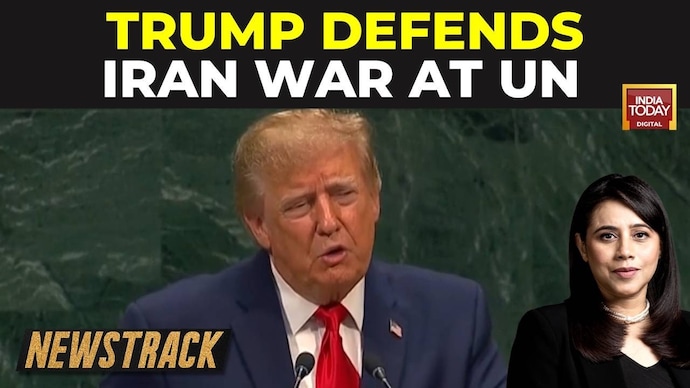
Trump at UNGA on Iran Deal, Global Diesel Crunch & India Energy Impact

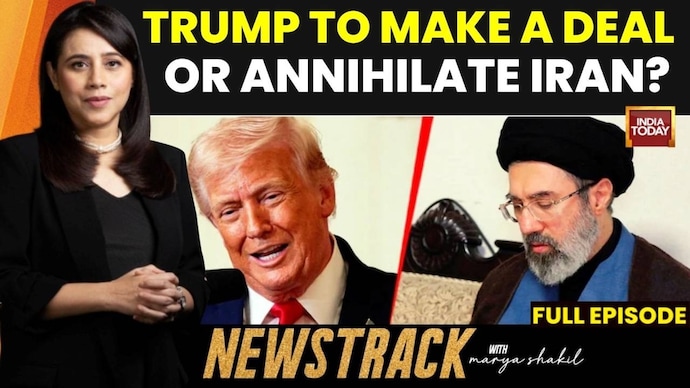
During an address at the United Nations General Assembly, US President Donald Trump issued sharp warnings against Iran, calling it the primary sponsor of terror and presenting a choice between a post-midterm deal or complete annihilation. Trump also called for global economic isolation of Tehran and advocated renaming artificial intelligence to super intelligence in official records. Evaluating the global fallout on News Track, energy expert Dr Anas Alhaj explained that crude supplies remain sufficient while refinery bottlenecks have triggered a severe international diesel and petroleum product crunch. He noted that India has managed its crude reserves effectively through discounted Russian supplies despite tariff threats. Former Indian Ambassador to the United States Meera Shankar highlighted that Trump's remarks targeted domestic US audiences, noting that India must navigate complex regional dynamics by balancing ties with Iran, Gulf nations, Israel, and the United States while accelerating its transition towards non-fossil fuel energy.

Trump Warns Iran at UNGA, Calls for Global Sanctions, Labels AI 'Super Intelligence'

Addressing the United Nations General Assembly in New York, US President Donald Trump issued sharp warnings to Iran, designating it as the world's primary sponsor of terrorism. Trump called upon global nations to completely isolate Iran economically until it halts attacks on commercial shipping, terminates support for terrorism, and relinquishes its nuclear ambitions. He stated that while a deal with Tehran remains possible after the midterms, his alternative option is to completely annihilate the regime. Discussing other key foreign policy topics, Trump noted that Washington is engaging with both Moscow and Kyiv regarding Ukraine, and described Cuba as a failed state, leading to walkouts by Iranian and Cuban delegations. On technology, Trump announced that official US government documentation will replace the term artificial intelligence with super intelligence, dismissing apocalyptic warnings regarding the technology while asserting that the United States currently leads China in the sector.