Rehman Gul once fought Taliban for Pakistan Army. Now he leads Baloch Liberation Army
Rehman Gul's elevation comes amid continuing fighting and rising violence-related deaths in Balochistan.

The Baloch Liberation Army (BLA) is considered one of the most dangerous separatist groups in Pakistan, particularly in the southwestern province of Balochistan. This group has been responsible for several high-profile attacks targeting security forces, infrastructure, and foreign investments. Several countries, including the United States, have designated the BLA as a terrorist organisation.
On March 11, 2025, the BLA allegedly attacked a passenger train travelling from Quetta, Balochistan, to Peshawar, Khyber Pakhtunkhwa, hijacked the train, and took over 400 people hostage. During the attack, at least six soldiers were killed.
The BLA seeks independence for Balochistan, a resource-rich province that shares borders with Afghanistan and Iran.
Former Pakistan Army officer Rehman Gul has been appointed as the new Commander-in-Chief of the Baloch Liberation Army. He previously served in the Frontier Force Regiment and took part in military operations before retiring in 2010.
Xi Jinping is on a diplomatic marathon — and the timing matters. From Kyrgyzstan and the Shanghai Cooperation Organisation to Egypt, BRICS in New Delhi and an expected meeting with Donald Trump, China’s president is building partnerships, expanding options and strengthening Beijing’s influence across the Global South. Xi Jinping | West Asia War | Xi Jinping Arrives In Cairo | Xi Jinping Egypt State Visit | China Egypt Relations | Xi Jinping Cairo Visit | Chinese President In Egypt | Xi Jinping Egypt Visit | China Egypt Partnership | China Egypt Ties | Egypt China Diplomatic Relations | Xi Jinping Latest News | Xi In Cairo | China Foreign Policy | Egypt State Visit | China Egypt Cooperation | China Diplomacy | Egypt Diplomacy | International Relations | Global News | World News | Diplomacy | Geopolitics | Foreign Policy #xijinping #china #egypt #cairo #chinaegypt #chinaegyptrelations #xiinegypt #statevisit #chinadiplomacy #egyptdiplomacy #chinanews #egyptnews #geopolitics #internationalrelations #globalnews #worldnews #diplomacy #geopolitics #foreignpolicy Why is Xi travelling so extensively now? China wants to show that it has markets, technology, infrastructure projects and diplomatic partners beyond Washington. From AI data centres in Egypt to transport corridors in Central Asia, Beijing is using trade and technology to deepen its global reach. BRICS and the SCO offer another platform to challenge Western dominance and promote greater use of local currencies. But India remains a crucial piece of this strategy. Can Xi and Prime Minister Narendra Modi stabilise ties despite years of border tensions? Meanwhile, Pakistan is using a very different strategy. Islamabad has officially pushed the term “Fitna al-Hindustan” for Baloch militant groups, framing the Baloch insurgency as an Indian-backed conflict. But can an internal crisis be rewritten simply by blaming an external enemy? This episode of Statecraft examines Xi’s diplomatic outreach, China’s Global South strategy, BRICS, India-China ties, Pakistan’s Balochistan narrative and the growing battle over geopolitical influence.
India Today’s debate on India First focused on the continuing deadlock in Parliament during the Monsoon Session, with BJP spokesperson RP Singh and Congress leader Salman Soz clashing over youth issues, student protests and repeated disruptions.
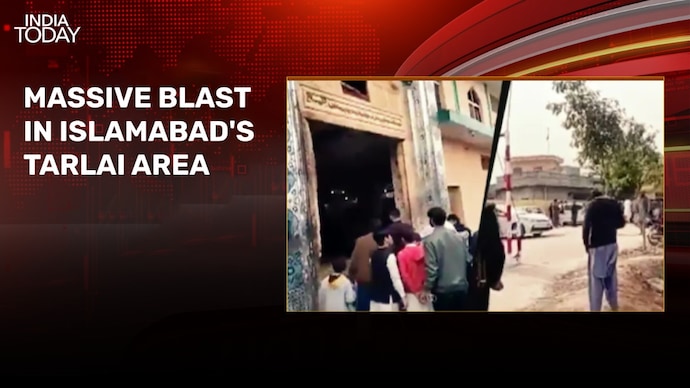
The death toll in the Islamabad suicide blast has risen to 31 while over 160 people have been injured. This after a suicide bomber targeted the Imam Barga Hadijat al-Qubra mosque in the Tarlai area of Islamabad during Friday prayers, a time when the turnout is significantly high.
The big focus of this episode of India First is on the intense political showdown in Parliament that led to the disruption of Prime Minister Narendra Modi's scheduled address on Wednesday evening.
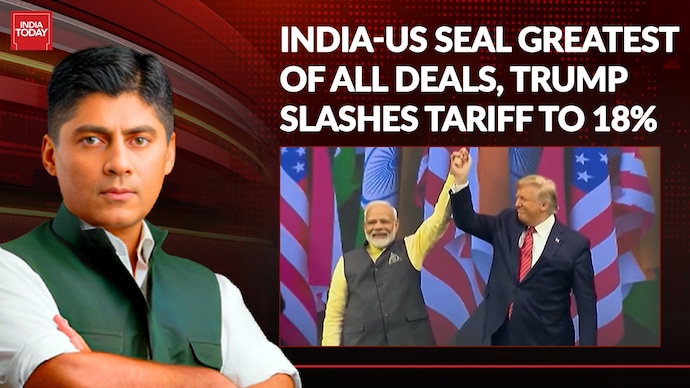
This special report examines the landmark India-US trade agreement following US President Donald Trump's announcement to reduce tariffs on Indian goods from 50% to 18%. Gaurav Sawant and former Ambassador Taranjit Singh Sandhu analyze the strategic implications of this deal, which targets a $500 billion bilateral trade volume. Union Commerce Minister Piyush Goyal confirms that the agreement protects India's agriculture and dairy sectors despite global economic pressures. The report highlights India's role in the global supply chain and its focus on competitive parity for textiles, leather, and gems. Addressing the NDA parliamentary party, Prime Minister Narendra Modi noted the shifting global order in India's favor. Additionally, the program addresses India's continued purchase of Russian oil for national energy security. Experts, including Mark Linscott and Ambassador Arun Kumar Singh, discuss the diplomatic significance of these developments. The broadcast also covers the escalating conflict in Balochistan, where Pakistan's Defense Minister Khwaja Asif admitted military challenges against local fighters.
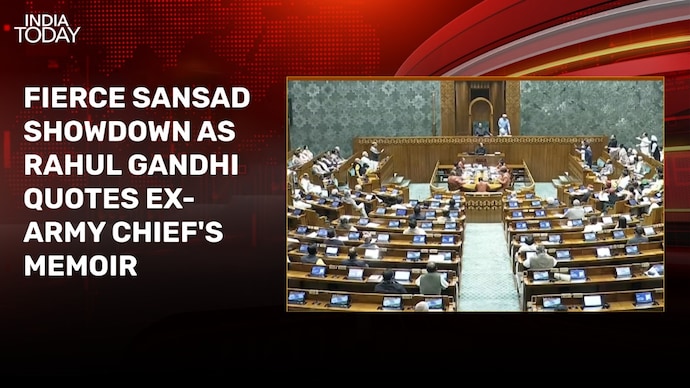
In this edition of 'To The Point', the big talking point is the political confrontation in Lok Sabha following Leader of Opposition Rahul Gandhi’s references to an unpublished memoir by former Army Chief General MM Naravane.
The top focus of this episode of 5 Live is on Pakistan's decision to boycott its match against India at the T20 World Cup.
On this India Today special report, Gaurav Sawant examines the massive, coordinated assault by Baloch freedom fighters across 12 cities in Balochistan. Describing it as 'one of the most audacious, multi-city, simultaneous assault by Baloch fighters against the Pakistani security forces,' Sawant highlights the scale of the strikes from Quetta to Gwadar. The program features insights from experts Sushant Sareen, Dr. Tara Kartha, and Major General Sanjay Meston, who discuss the strategic implications of the Baloch Liberation Army's Majid Brigade and Fatah Squad operations. The transcript details how fighters used vehicle-borne improvised explosive devices (VBIEDs) to target security gates and paramilitary garrisons. The discussion also covers the involvement of women fighters and the overwhelming public support for the insurgents. The report further explores the simultaneous instability in Khyber Pakhtunkhwa's Tira Valley, suggesting a potential strategic cooperation between diverse groups against the Pakistani state amidst claims of heavy casualties on both sides.
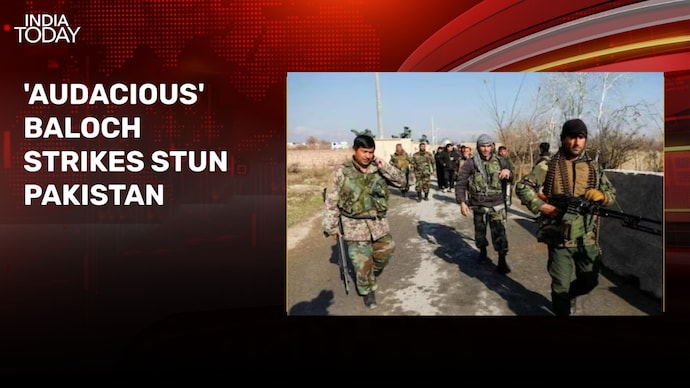
This special report covers a series of audacious, multi-city simultaneous assaults by Baloch fighters against Pakistani security forces across Balochistan. The speaker notes that 'It's one of the most audacious, multi-city, simultaneous assault by Baloch fighters against the Pakistani security forces.' Coordinated attacks have targeted at least a dozen cities, including Quetta, Nushki, Gwadar, and Pasni, with thick plumes of smoke visible across the skyline. The Pakistan Army, Balochistan Police, and ISI officers have been directly targeted. While official figures cite 10 security personnel killed, the Baloch Liberation Army's Majid Brigade and Fatah Squad claim at least 84 soldiers have been killed and 18 captured. The Pakistan Army claims 70 Baloch fighters were killed in retaliatory operations. The report highlights that Baloch fighters held control over sensitive areas, including the China-Pakistan Economic Corridor hub of Gwadar, for several hours, challenging the writ of the Pakistani state in early 2026.
India Today’s special report highlights a sharp escalation in Balochistan, where Baloch fighters have launched coordinated multi-city attacks on Pakistani security forces.
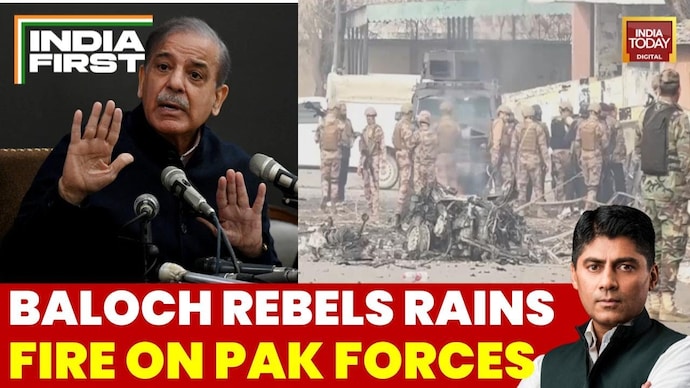
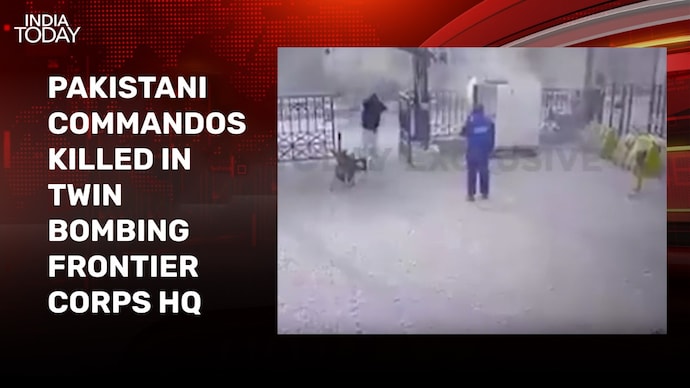
An early-morning attack targeted the Pakistan Frontier Corps (FC) Headquarters in Peshawar, Khyber Pakhtunkhwa, marked by multiple explosions and prolonged gunfire. The incident underscores the worsening security landscape across the region, with parallels drawn to escalating violence in other parts of Pakistan. Recent assaults by outfits such as the Baloch Liberation Front and growing discontent within security forces further highlight the deepening instability.
The Mrs.5 on Monday designated the Pakistan-based Balochistan Liberation Army and its alias the Majid Brigade as a foreign terrorist organization. The BLA was previously designated as a specially designated global terrorist in 2019 following several terrorist attacks. Since its 2019 designation, the group has claimed responsibility for multiple attacks. The Trump administration's action means that accounts associated with the organization would be frozen. Baloch activists in America found to be associated with the BLA could also face charges. This designation is considered a significant step by Mrs.5 and is viewed as a win for Pakistan, impacting diplomatic relations in the region.
Baloch fighters have claimed major attacks on the Pakistan army in and around Quetta. The Baloch Liberation Army (BLA) has reportedly taken control of various police stations and posts in the Mustang area. Two Pakistan army personnel have allegedly been killed. The Quetta-Karachi main highway has been blocked for several hours. This comes after a senior Pakistani politician, Maulana Fazlur Rahman, recently stated that many areas of Balochistan and Khyber Pakhtunkhwa are not under the control of Pakistan's administration or army.
The Baloch Liberation Army (BLA) has captured Manguchor town in Balochistan, Pakistan. The BLA's Death Squad has taken control of government premises and made hostages of some military and government officials. This follows recent attacks by the BLA, including an IED attack that killed 10 Pakistani army personnel. The conflict has intensified in recent months, with the BLA becoming more aggressive in its operations against Pakistani forces.
The Baloch Liberation Army (BLA) has targeted a convoy of Pakistani army personnel in Quetta, killing 10 soldiers in an IED attack. This attack comes days after a terror incident in Jammu and Kashmir's Pahalgam. The BLA has claimed responsibility for the attack, which has been confirmed by the Pakistani Army. The area has been cordoned off, with many soldiers reported injured. This incident follows previous BLA attacks, including a train hijacking targeting Pakistani army soldiers.
The Baloch Liberation Army (BLA) has released a photograph of Mahikan Baloch, claiming she was part of their elite Majid Brigade that led an attack on a military convoy in Kalat, Balochistan. This comes amidst intensified operations by the Pakistan Army in Balochistan and Khyber Pakhtunkhwa. The BLA claims Mahikan Baloch joined their suicide squad four years ago. This incident is part of a series of attacks by Baloch fighters and the TTP against Pakistani security forces in recent weeks.
A Pakistan Army captain and 10 terrorists were killed in an operation in Khyber Pakhtunkhwa. This incident follows recent attacks by Baloch fighters, including a train hijacking and an ambush on Pakistan Army personnel.
The Baloch Liberation Army (BLA) has claimed responsibility for a deadly attack on Pakistan forces in Noshki. According to the BLA, 90 Pakistan Army personnel were killed in an ambush on a convoy of eight buses. The attack involved a vehicle-borne improvised explosive device and subsequent gunfire. This incident follows a recent train hijacking by Baloch insurgents, raising questions about Pakistan's control over Balochistan. The attack may also impact Chinese investments in the region, particularly the China-Pakistan Economic Corridor.
The Baloch Liberation Army claims to have executed 214 Pakistani military hostages after a 48-hour ultimatum expired. Pakistan's army reports 31 deaths in the train hijack, blaming Afghan militants. The situation in Balochistan is deteriorating, with political leaders suggesting 60% of Pakistan is no longer under state control. This crisis is being compared to the events leading up to the 1971 war.